Posted in Movie Review

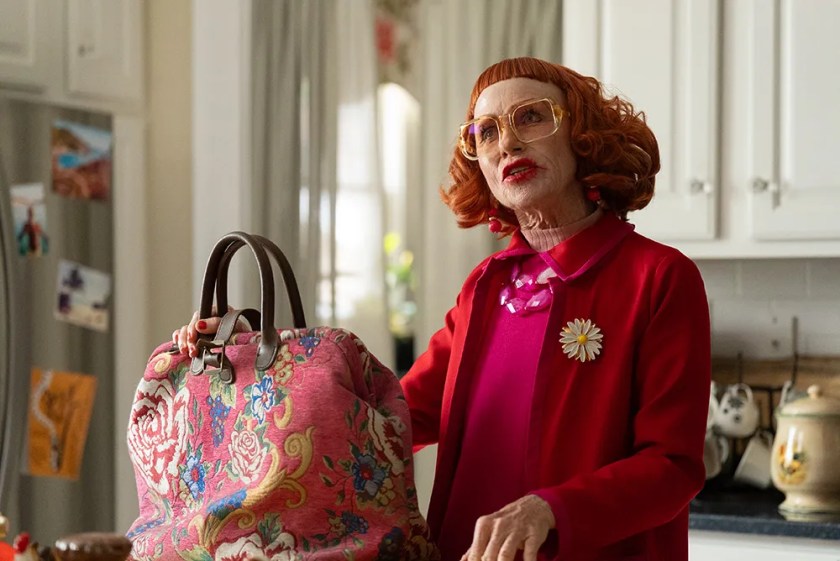
Wicked: For Good

Rating: 3 out of 5.

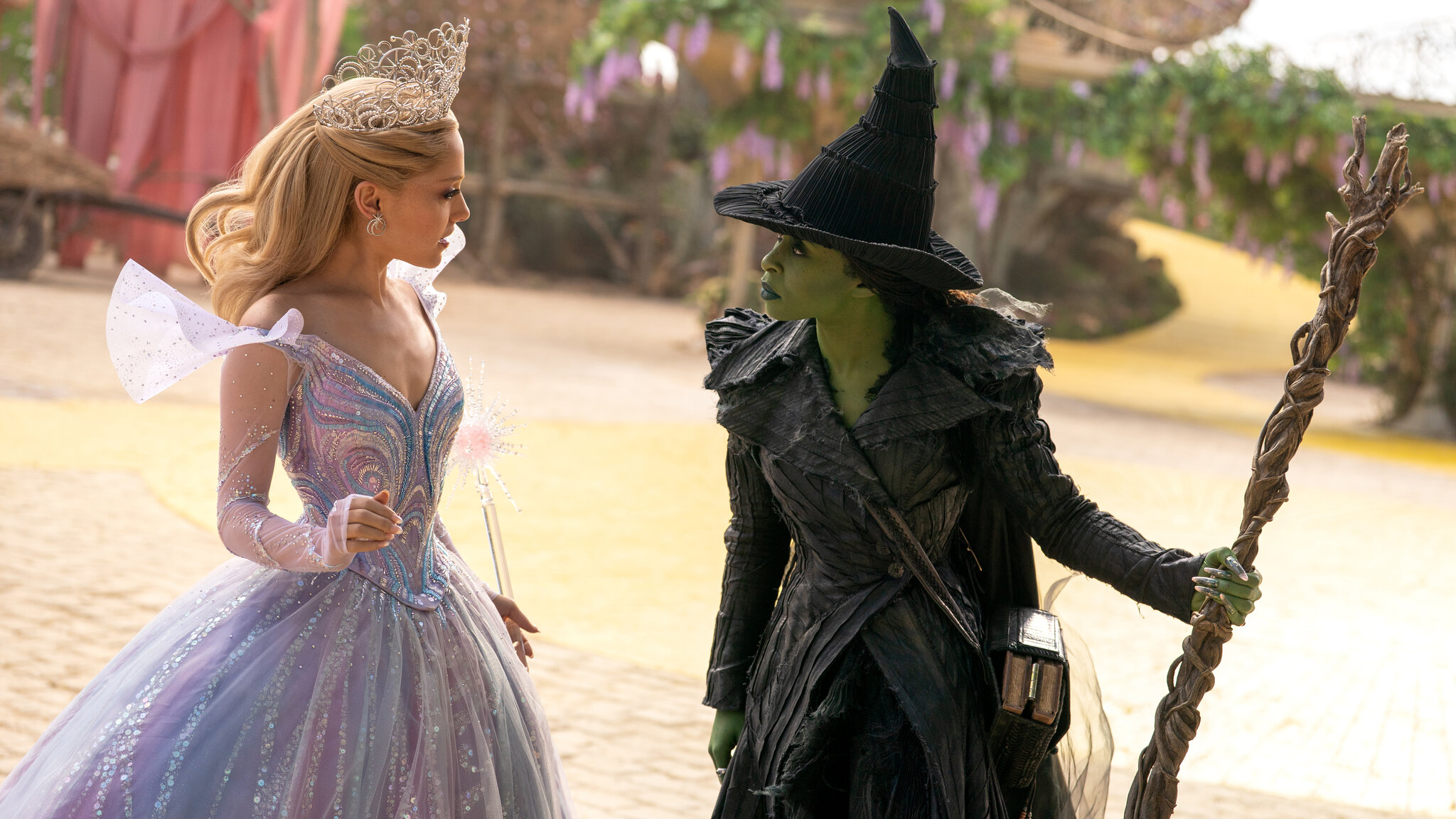
It’s a pretty flat experience. No need to beat around the bush. The two new songs (not in the stage production) written by the original musical composer Stephen Schwartz (“No Place Like Home” and “The Girl in the Bubble”) are pretty mid compared to the caliber of songs expected from this artist. The rest of the songs don’t really hit either, except “For Good” which director Jon M. Chu couldn’t have ruined if he tried. This entire underwhelming feeling very much speaks to the many directorial missteps from Chu. The film ends up being one more focused on getting to the end of a story, than continuing to build on the aspects of Wicked which connected so strongly with so many. Now, there will definitely be those who will enjoy Wicked: For Good, but the connection/experience won’t be anywhere close to how they felt coming out of the theaters in 2024. 

The story: Desperately attempting to liberate the enslaved animals of Oz, Elphaba (Cynthia Erivo) is now considered an enemy of the state, with Madame Morrible (Michelle Yeoh) proclaiming “she will kill us all” at every given opportunity. The anti-animal propaganda from the Wizard (Jeff Goldblum) is working as the animals who haven’t been captured yet are fleeing, while Elphaba attempts to get them to stay and fight back. Glinda (Ariana Grande) is struggling between becoming the beloved “good witch” she’s always wanted to be and coming to Elphaba’s defense. And Fiyero (Jonathan Bailey) who is set to marry Glinda, still longs for Elphaba.

The two leads continue to have undeniable chemistry and their performances are solid, although every supporting character seems to have been reduced and stripped of anything that made them interesting. The story itself continues to carry the same anti-fascist overtones and personally I did appreciate the darker tone this movie took when displaying sequences of persecution, bigotry and manufacturing consent. This is also a two hour and seventeen-minute movie and to Chu’s credit it never felt particularly long, even during the final hour and change as the storytelling unfortunately stumbles down the yellow brick road towards its finale.  Aside from the final song, this is the portion of the film which I would deem a bit of a clunky mess. While the story makes sense and the final hour plus does promise a spark with the arrival of the Dorothy character, this is also where the pacing begins to jump around wildly making the journey awkward, confusing, rushed with certain details glossed over and hollow during scenes written to elicit a strong reaction. It’s as if an invisible fast forward button was pressed in a frustratingly distracting way.

Final Thought: If watched together, parts one and two would be nearly five hours long. I’ve never seen the Broadway production, but I’ve read it’s under three. I would guess this is the underlying reason as to why Wicked: For Good feels the way it feels. Sure, there are bits and pieces here that work and it looks like hundreds of millions of dollars. And because this story is an extension of the first half, the tale is a good one; maybe only pissing off the “keep politics out of my movies” crowd. It’s clearly not a stand-alone film; God help anyone who tries to follow what’s happening here without having seen part one and 1939’s The Wizard of Oz. Again, I won’t be surprised if someone were to tell me they enjoyed this movie. It’s all just so tied to Wicked that it’s impossible not compare the two. And in doing so, this half of the story is mostly (and it pains me to say this) borderline forgettable.

Posted in Top Ten List

My Top Ten Favorite Movies of 2024

Written by Markus Robinson

Movies that just missed my list (11-25):

25. Challengers

24: Lisa Frankenstein

23. Inside Out 2

22. Green Border

21. Evil Does Not Exist

20. Your Monster

19. The First Omen

18. Ghostlight

17. Thelma

16. I Saw the TV Glow

15. The Substance

14. Exhibiting Forgiveness

13. A Different Man

12.  Sing Sing

11. Hundreds of Beavers

Top Ten

10. Love Lies Bleeding

A lesbian love story set in small town 1980’s USA (Louisville). Jackie (Katy O’Brian) is an idealistic female body builder, passing through town with dreams of winning an upcoming body building competition in Las Vegas and earning enough money to make it to California. Lou (Kristen Stewart) is a women hardened by the corrupt town she calls home, as well as a secret life she’s desperately attempting to get away from. Lou works at a gym and it’s love at first sight when she spots Jackie from across the room. They quickly move in together finding hope in each other’s existence. But in this town full of violent men (the most dangerous of these men is Lou’s estranged father (Ed Harris), a psychotic gangster) their love story will be tested. What the movie becomes is a violent revenge story with surrealist elements. And truthfully, the story itself is pretty sparse. But it’s the direction from Rose Glass that allows Love Lies Bleeding to be a far more intriguing film than it undoubtably was on paper. She presents her unabashedly sexual, queer, and at times grotesque vision of the quest for the American dream quite well, centering two leads who give two commanding performances.  Glass makes it a point to focus on these strong women who are not at all helpless, but surrounded by an environment made unsafe due to the brutality of men.

9. Smile 2

I was a fan of the original, but honestly didn’t expect much from Smile 2. I don’t think many did. But as you’ve probably figured out by now, not only did I enjoy this sequel, but I was blown away by how much better it was than the original. Parker Finn is back writing and directing Smile 2 and he definitely went into this production with a specific vision on how to expand the story. Continuing only days after the last film ends, the smile demon virus thing has infected pop icon Skye Riley (played in award worthy fashion by Naomi Scott) as she is about to launch a global comeback world tour, having been out of the public eye in the wake of a huge scandal. If you don’t remember how this whole smile demon works, it’s basically an entity that jumps from host to host by making the infected kill themselves in front of a witness, who then becomes infected themselves by said demon. The newly infected are then terrorized by hallucinations of smiling people for a couple of days (the demon feeds on fear) and then the process starts all over again. There are so many things that Finn gets right here. This movie is nonstop horror entertainment. When I say non-stop, I mean I saw this movie at 10pm (way past my bedtime) and I stayed wide awake, eyes glued to the screen the entire time. The horror choreography aspect of this is fantastic as well, some sequences reminding me of Roman Polanski’s Repulsion, including one horror dance sequence which was uncomfortably amazing. But the best move Finn makes is having his protagonist be a pop star. It’s an absolute stroke of genius. We not only get a great dramatic performance from Scott, but a vocal performance as well. Yes, there are songs and they are low-key bangers. This could’ve easily been a horror musical. Her being a pop star also gives us a completely satisfying ending that made me immediately want a Smile 3. In fact, with a runtime of two hours and seven minutes, Smile 2 is one that I could’ve watched two more hours of.

8. We Grown Now

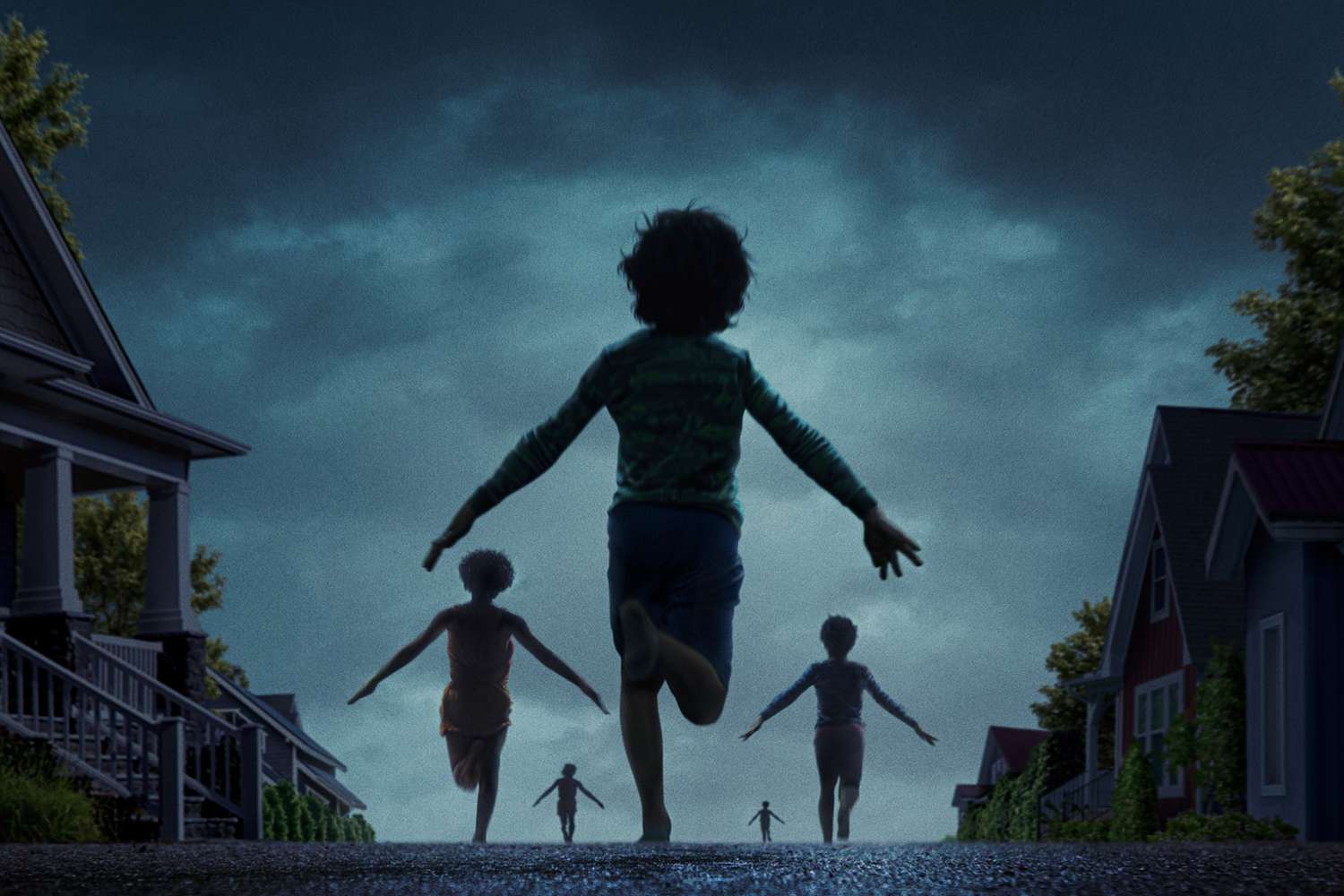
As a Black man, throughout my decades of movie watching there are things I don’t come across nearly as much as I’d like to. One of which are sensitive Black movies centering around boys. And so, when I find one, it goes right onto my list. We Grown Now was that movie for me in 2024. Set in Chicago’s Cabrini-Green housing in 1992, a place known for being one of the largest public housing communities in the nation. This is a sensitive movie about two young Black boys growing up in that community, processing the world around them. They are best friends and inseparable. Malik (Blake Cameron James) is a dreamer, believing there is a greater world outside of the projects. He lives with his grandmother, little sister and mom (Jurnee Smollett, who is also a producer on this film). His mom struggles as the main breadwinner, with a goal of getting a job that moves them out of Cabrini-Green for good. Eric (Gian Knight Ramirez) lives with his father (Lil Rel Howery) and older sister who is about to leave for college. He is a depressed and defeated child. His grades are low and he has come to believe that he was born in Cabrini-Green and will die there. Writer/director Minhal Baig gives us a personal look into their lives, as we watch the toll this place takes on them. The film’s slower pace asks us to spend some time with Malik and Eric as they watch the people they respect go through hardships and as they themselves process loss, violence, trauma, joy and love. In one scene we watch them cut class and visit an art museum. In another they both stand in front of the fence of the public housing complex they live in and shout “I exist”. Sure, it’s overly sentimental at times, but the movie and this type of storytelling feels completely lived in. These people existed and I was grateful for every moment I had with them.

7. The People’s Joker

The People’s Joker tells the coming of age story of an aspiring clown/comedian who later goes by the name Joker the Harlequin (Vera Drew), as she comes out as a trans woman and finds her place in the world. All of this is set in a version of the DC universe where Batman is a bad guy and an Alex Jones-style political commentator (voiced by Tim Heidecker) is continuously playing on the television set. As a child she is sent to Arkham Asylum by her verbally abusive mother and given a drug that dulls her to the world. As an adult, this becomes her way of masking. Deciding to leave home for the big city (Gotham) to become a comedian (during a time where Batman has outlawed comedy) she befriends a group of “misfits” (all Batman villains) and decides to start an anti-comedy stand up theater in order to skirt the law. There is also a love story subplot that is so perfectly not for the cis-gaze. The love story is presented as the most personal aspect of the film while still keeping true to the notoriously abusive dynamic between the Joker and Harley Quinn in the comics.  Director/co-writer/editor and star of this movie, Vera Drew has constructed a unique trans story told by way of parody and created by the very community it’s portraying (imagine that). And how she gets around the copyright laws is nothing short of brilliant. Paying homage to the DC Universe while also paying respect to the trans community by way of humanizing portrayals, the literal bleeping out of a deadname, a plethora of references and cutting humor pointed at the heteronormative world and visuals that are aesthetically counterculture; utilizing a mixture of green screen, animation and puppetry. The People’s Joker is the best written satire I saw all year and couldn’t imagine this story being told any other way.

6. Heretic

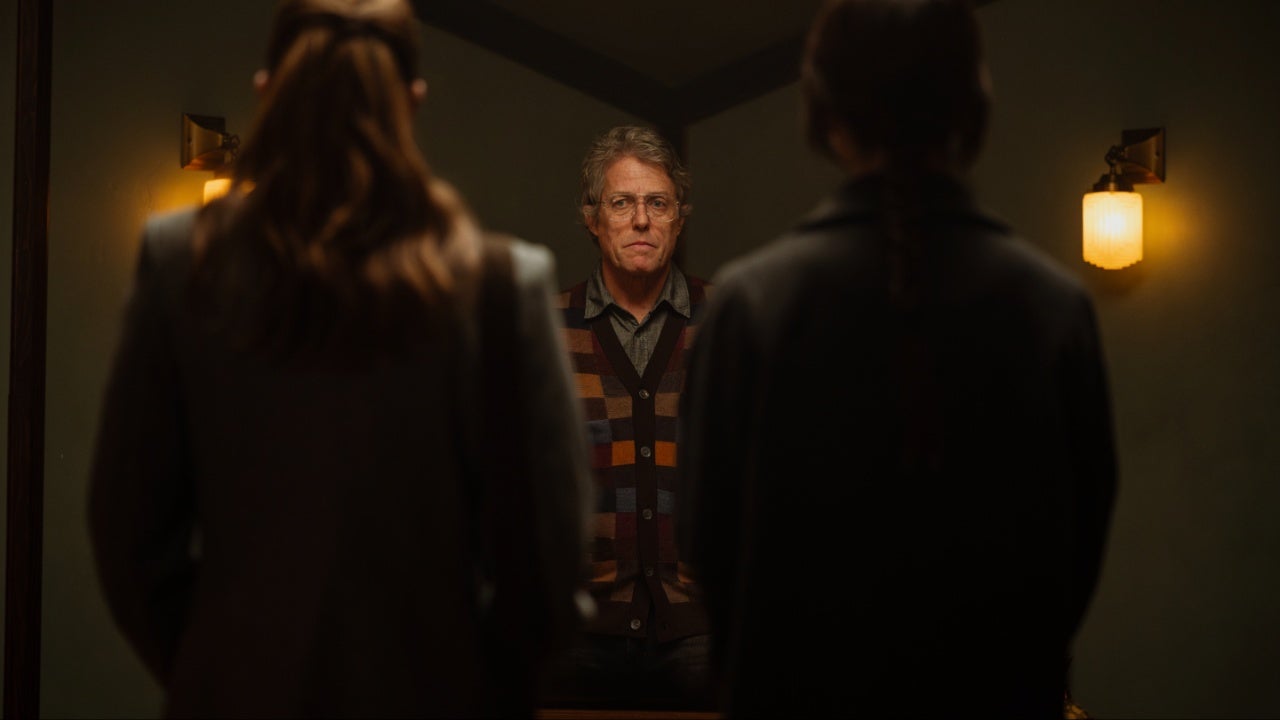
Heretic tells the story of two Morman missionaries, Sister Paxton (Chloe East) who was born into the church and Sister Barnes (Sophie Thatcher) who is a convert. They arrive at Mr. Reed’s house on a rainy afternoon, as he’s requested to hear about the church. Mr. Reed is played by Hugh Grant in my favorite performance of his career.  Grant’s performance is completely irresistible and even though he’s essentially a wolf luring in these little red riding hood characters, it’s nothing short of a delight to watch him effortlessly take over every scene he’s in. Anyway, he invites them in, but they are reluctant at first, informing him that they need another woman present in order to enter his home. He assures them that his wife is in the other room baking a blueberry pie. They enter eager to get out of the rain. Mr. Reed is one part hospitable and charming and one part creepy debate lord. Once the girls begin to talk with him, they quickly realize that he knows more about religion than they do. It seems to be his obsession. The girls become uncomfortable with the types of questions he begins asking them. At times he ridicules their faith and at one point he claims to have discovered the one true religion. Also, there is still no sign of his wife. And a candle on the coffee table which Mr. Reed had lit is labeled “blueberry pie”. Soon after, they discover they are locked in. But Mr. Reed gives them an option for escape. Two doors in the back of his house. One marked “belief” and the other marked “disbelief”. They simply have to choose. Why I spent so much on this set-up is because it’s absolutely indicative of how tantalizing, meticulous and wonderfully intricate this cat and mouse script is throughout. Starting off as a horror of politeness and complicity, as the movie evolves filmmakers Scott Beck and Bryan Woods navigate us through what becomes a theological thriller that was absolutely made for people like me. If you’re a little nerd and this kind of religious debate stuff is enjoyable to you, then Heretic will scratch that itch mighty good.

5. Wicked: Part 1

Who am I fooling? Everyone reading this has already seen Wicked, so I’ll make this short. Wicked is basically The Wizard of Oz fan fiction, “and make it a musical”. And it’s everything I could’ve asked for from a big-screen adaptation, is what I said both times I paid to see this in theaters. It begins with Galinda (Ariana Grande) announcing the death of the Wicked Witch, who we discover is named Elphaba (Cynthia Erivo). The film is told as a flashback, recounting the young misunderstood Elphaba, treated badly because she was born with green skin and her subsequent and unlikely friendship with Galinda. This is a two hour and forty minute “part one” that again, I saw twice because it’s so good. Also, being instantly engaging doesn’t hurt. Props to director Jon M. Chu for delivering a vision that sucks audiences in whether you’ve seen the stage play or not.  Every single choreographed musical number works in the exact way you need it to in order to compliment these beloved songs. Nobody is Kristin Chenoweth, but Grande gets damn close, nailing the cadence and mannerism that define her as this self-absorbed lead mean girl. She earns every hair toss. Erivo is a powerhouse both vocally and theatrically. Jeff Goldblum is Goldbluming. In fact, when he enters the film in the final thirty minutes is when things really take flight (pun intended). Not to say that the first two-plus hours wasn’t selling, but the third act is perfection and is everything everyone you know has hyped it up to be. If you cry at the end of this, I DO NOT BLAME YOU.  Side Note: There are many sociopolitical themes throughout the film which elevate the story into something very politically relevant, but you know my left leaning ass loved that the idea of manufacturing consent comes into play more than a few times throughout.

4. lo Capitano

Nominated for an Academy Award in the Best International Feature category during last year’s Oscars and released in the states in 2024, lo Capitano tells the story of two Senegalese teenagers, Seydou and his cousin Moussa who have been secretly saving money to travel to Europe with dreams of becoming famous musicians. When Seydou tells his mom he wants to leave, she becomes enraged and forbids him to go, informing him that many have died doing what he’s thinking about doing. Others tell the boys similar things, reenforcing the idea that this journey is a death sentence, not only by way of the elements but also the dangers that arise from soldiers, thieves and smugglers looking to take advantage of travelers. But these two are persistent and leave in secret to begin an odyssey that will take them across the Sahara and the Mediterranean. The way director Matteo Garrone chooses to frame the beginning of this film is almost like a Disney live action. Everything is lighthearted and hopeful. These teenagers are presented as just that; kids. They are relatable, they crack jokes and listen to music with their friends and are innocent to the ways of the world. In the beginning their enthusiasm is infectious. This is what makes the brutal reality of what they see and go through during their journey so hard to watch at times.  There were more than a few moments when I audibly gasped. In addition to the unflinching storytelling, Garrone’s use of magical realism is done so beautifully and with utmost respect for all of the immigrants who set out on treks like this every day and don’t make it. This viewing experience is elevated even more by the performance of Seydou Sarr who plays the lead, giving a powerhouse performance that allows audiences to feel every second of his anxieties, fears and hope. This movie does not shy away from the more brutal aspects of immigrant journeys. It may sound silly, but I’m grateful that no punches are pulled. I haven’t felt this way about an immigration story since I saw Cary Joji Fukunaga’s Sin Nombre.

3. Babygirl

Romy (Nicole Kidman) is the CEO and founder of a large company. In public she must maintain an outward veneer of confidence and dominance, as she works around a slew of older male executives. In her private life she is unsatisfied physically and emotionally. She wants nothing more than to be dominated in a very specific and high-risk style of BDSM. She loves her husband and kids and feels the need to keep this part of herself repressed, as this is more than an embarrassment for her. There are points in this movie where she goes so far as to proclaim a hatred for herself and this part of her which she sees as dark and monstrous and the thing that will never allow her to lead a “normal” life. One day a handsome young intern enters the scene and she becomes drawn to his effortless assertiveness and dominance.  This reminded me so much of Michael Haneke’s The Piano Teacher, a film equally as daring and (at times) uncomfortable as what writer/director Halina Reijn has delivered here. Nicole Kidman gives my favorite performance of the year; one which is completely vulnerable and exposed. As Reijn maintains a show don’t tell examination of this “fetish”, we watch as her protagonist is dominated and degraded and then given very specific forms of affection and praise. For many of the sexual sequences the camera is right up in Kidman’s face. While she has orgasms, while she sobs post orgasm, the camera is unblinking. Through Kidman’s performance we see everything from the visual pain and anxiousness which comes from a reluctance to be seen as vulnerable, to her full-on embrace of the transformation that happens when this intern helps her fantasies become reality. This is an absolute masterclass of acting from Kidman.  What I believe Reijn and Kidman have achieved here is something quite interesting and layered and controversial and more than simply a throw away romance novel. It supersedes expectations on so many fronts. Including making this character highly flawed. Romy is a character that we are meant to root for and sympathize with, but also who engages in flawed, unethical and morally questionable activities in order to navigate the even crueler and oppressive world around her. Babygirl has so much to say about shame, sexuality and women.  

2. Late Night with the Devil

In the 70’s a late-night talk show called Night Owls hosted by Jack Delroy (David Dastmalchian) gains national popularity, but is always coming in second to Johnny Carson’s Tonight Show. After Delroy’s wife passes away, he disappears from the public eye. He returns in 1977 to plummeting ratings and an expiring contract. A desperate Delroy plans a Halloween episode that will air during sweeps week which he is positive will get him enough attention to finally push him into that number one spot in the ratings. His idea is to showcase a young girl who is supposedly possessed by the devil. This is technically a found footage film and so we know this night doesn’t go well from the very beginning. In fact, during a brief prologue we find out that the episode we are about to see is known as the television event that shocked the nation. Feeling like a total time capsule of a movie, filmmaking duo Cameron and Colin Cairnes take us to 1977 and for 90 minutes create an atmosphere that feels as if we are sitting at home in front of our televisions watching an authentic late-night talk show program. The authenticity factor is taken up a notch by Dastmalchian’s performance, nailing the cadence, mannerism and somewhat corny charisma of the stereotypical American host. As for the story itself, it’s a slow but playful burn. As segment after segment passes and unsettling and more unexplainable things being to occur on-set, our anticipation for the possessed girl to enter the story grows more and more. The Cairnes make this form of storytelling look effortless. While there were many entertaining horror movies in 2024, as someone who grew up on late-night talk shows, Late Night with the Devil is my favorite of the lot. Though this isn’t technically the scariest horror movie of this year, the combination of a very personal nostalgia and my love for a good creepy tale, allowed this to be such a comfort watch for me.     

1. Didi

Many of the films on my list are completely interchangeable with one another (in a good way). But my top slot is usually reserved for the movie (if there is one) that has something I relate to on a deeply personal level, over any other film. In 2024, that film was Didi. Filmmaker Sean Wang’s coming of age story, set in Fremont, California (Bay Area, stand up) follows Chris (also known as Didi, which is a term of endearment meaning “younger brother” in Mandarin) during the summer before high school. Chris is an acne ridden, braces having, voice cracking every five seconds, stubborn and outgoing, but also awkward kid who just wants to fit in. He hangs with his friends. They talk about girls and film themselves doing stupid shit for YouTube all day long. The movie takes place in 2008, so YouTube was still a relatively new thing. There is also a heavy use of MySpace and instant messenger throughout. But being a teenager is hard. And Wang does well to capture the frustrations and anxieties that come with being that age. As well as making the character of Chris, a teenage boy that at times is very unlikable, making nonsensical decisions that lead to mistakes which hurt the feelings of the people who love him. These aspects are what gives this movie life. Not only does Wang capture the time and place, the clothing, the lingo and the technology, but he captures the teenage point of view. This is the best coming of age movie of 2024. And if you grew up anytime around this era and/or grew up in an immigrant household then Didi will hold a special place in your heart.  

Follow me on Twitter (X) @moviesmarkus and Instagram @moviesmarkus1

Posted in Movie Review

Hit Man

Rating: 3.5 out of 5.

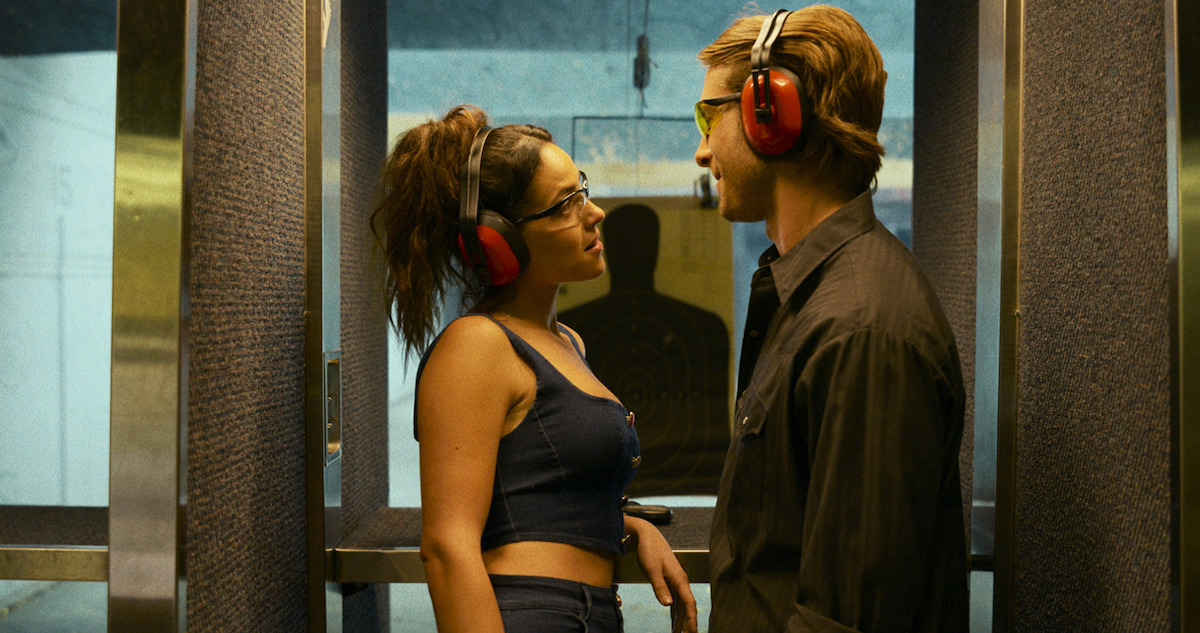
A Richard Linklater hit man movie goes like this: A stranger than fiction story about a college professor named Gary (Glen Powell), who also works part-time for his local police department, where he participates in sting operations. He’s suddenly promoted into the contract killer role, meaning, he must go undercover (with a wire and everything) posing as a hit man, meeting with clients/suspects who wish to pay for his services. His role is to get them to incriminate themselves. Gary is nervous at first, but soon discovers that he’s a natural at this fake hit man stuff. One of the aliases he goes by is named Ron. Gary himself is nerdy and forgettable, but Ron is confident and charismatic. One day (as tends to occur in romantic comedies) Gary/Ron meets an attractive woman named Madison (Adria Arjona) who he falls for. The problem is, Madison wants her husband killed.     

Directed by Richard Linklater, written by Linklater and Glen Powell, and based on the Texas Monthly article by Skip Hollandsworth loosely inspired by the life of Gary Johnson, much care is taken when balancing the romantic comedy aspects of this film, with some film noir, dark humor and a touch of philosophy. Linklater keeps things interesting.

Though the movie is about murderers and deals with some morbid and unsavory situations for a typical romantic comedy, it’s all kept fairly light. I’d describe the overall tone of this as playful, with a second half evolving into something with higher stakes. Culminating in a third act where Linklater brings everything together in one of the single most masterfully constructed scenes of 2024. Like I said, Linklater keeps things interesting.  

Powell and Arjona’s chemistry make their banter really enjoyable to watch and is the basis of a majority of the humorous moments. But this is clearly Powell’s movie, serving as both the narrator and a protagonist who goes through over half a dozen costume and character changes throughout the movie. And for this, he must be commended as he does a solid job in a role that may have traditionally been given to a more comedic performer. 

Final Thought: Linklater is obviously a brilliant filmmaker who can take any story and make it something that will engage the widest swath of audiences. It’s the Linklater touches which separate this movie from your basic romantic comedy, and more importantly creates a film experience that is undeniably fun and an overall enjoyable and downright positive viewing experience.

Follow me on X (Twitter) @moviesmarkus and Instagram @moviemarkus1 

Posted in Movie Review

Bad Boys: Ride or Die

Rating: 2.5 out of 5.

Full disclosure, I tried my best to have fun with this one given my aversion to copaganda. In the past, I’ve been accused of not being able to “just have fun” with movies like these. Can you imagine? I’m the most fun person you know.

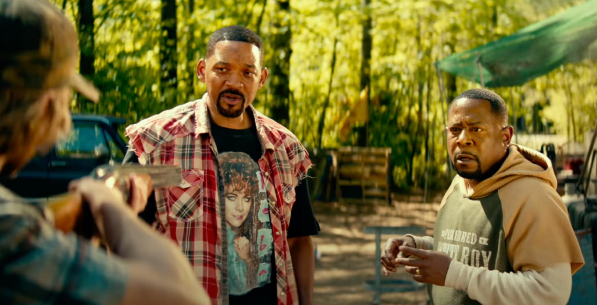
Synopsis: The deceased Captain Howard (Joe Pantoliano) is discovered to be linked to the Mexican cartel. Obviously, he has been framed since in this fictional Miami there are such things as “good cops”. Anyway, the infamous cop duo, Mike Lowrey (Will Smith) and Marcus Burnett (Martin Lawrence) vow to clear his name.

If that synopsis doesn’t interest you, then you’re in luck because the story doesn’t matter at all. The only part of the story that elevates the movie’s entertainment factor is that Marcus has a near death experience (a semi-recycled trope from the last installment) in a sequence reminiscent of the Ancestral Plane scene from Black Panther. He wakes up with a new lease on life. He tells Mike about a premonition he had and shares with him that they are soulmates connected throughout multiple life-times. Marcus also wakes up believing he cannot die. All of this allows for funnier dialogue and leads the duo into some comedic action-based skits.    

But basically, the overall success of Bad Boys: Ride or Die hinges on three things. The first being the relentless swirling and whirling and swooping camera movements. Adil El Arbi and Bilall Fallah are back to direct this installment and they follow a very recognizable Michael Bay template which fans should find comfort in.

The second being the score, which at this point if you are buying a ticket to the fourth chapter of the Bad Boys franchise, you probably enjoy and don’t find repetitive at all.

And lastly (and most importantly) if you enjoy seeing Smith and Lawrence do their buddy cop routine, then you’ll be into this movie. Period. Their chemistry continues to be undeniable. Smith as the shoot first, ask questions later cop and Lawrence as his wisecracking comic relief partner, just works. And I did laugh more than I imagined I would. 

With a cast that includes Rhea Seehorn (Better Call Saul), the female talent is disappointingly wasted here. And most of the action sequences translate on-screen as a bit old fashioned. That being said, I doubt people that came to see the new Bad Boys are thirsting for something modern, innovative, or even ramped up.

Final Thought: With a nearly two-hour runtime, the back and forth between Marcus and Mike is what kept me engaged throughout. As I previously mentioned, I laughed a good amount. But as Bad Boys: Ride or Die nears its climax and audiences are forced to focus almost entirely on a story they undoubtedly discarded around twenty minutes in, it’s easy to see this movie for what it is; an episodic Bad Boys movie without the twists, story development or character development that made Bad Boys for Life much more watchable.

Follow me on X (Twitter) @moviesmarkus and Instagram @moviesmarkus1

Posted in Movie Review

The American Society of Magical Negroes

Rating: 2.5 out of 5.

With a title like this, I just expected more.

A magical negro is a term used to define a Black supporting character who exists to selflessly support the white lead. This character is usually a highly agreeable, subservient and not at all intimidating Black friend, or an old wise Black man or a Black maid or a Black football player who Sandra Bullock takes care of.  The American Society of Magical Negroes presents itself as a satire where this concept is the main focus, which sounds like the set up to a brilliant film.

Immediately framed as Black Harry Potter (down to the whimsical music), with the idea that there’s a secret society of magical Black people who are assigned to make white people feel good about themselves. We are introduced to Aren (Justice Smith) an apologetic, people pleasing young Black man standing in a room full of white people. At one point Aren describes himself by stating, “I’m very nice. It’s like a flaw.”  Within the first five minutes of the movie, he is recruited into said American Society of Magical Negros by Roger (David Alan Grier) who touts himself as “basically a wizard”. Early on, Roger informs Aren that there is nothing more dangerous than an uncomfortable white person, since their discomfort always leads to violence. The idea being that the American Society’s entire mission statement surrounds the idea of self-preservation by way of making things more comfortable for white people and in turn saving the world. Alen joins, but is highly skeptical of their tactics, as he believes to be a magical negro means losing one’s self-worth. This becomes more apparent when Alen is paired with a white client who he must help keep happy by essentially kissing his ass. There is also a love story here that sees Aren falling for the love interest of his client, but it really only works to distract from the film’s satirical premise.    

The more I write about this movie the more frustrated I am with its wasted potential. Much of my viewing experience was spent questioning why things were falling so flat. The concept is undeniably intriguing and worthy of a feature length film. The acting is very much a high point. Smith does a great job of presenting the protagonist as not simply a sad sack, but an actual Black person traumatized by growing up in white society, which I found very relatable. There are also funny moments. The countless movie references are spot on. Grier is a comedic genius and delivers multiple times. When Nicole Byer (who plays the Headmistress) honors Crispus Attucks by saying “He took one for the team”, I legitimately laughed out loud. It should all work, but it just doesn’t. And for that, I blame writer/director Kobi Libii. The choices he makes throughout this project left me no choice. His choice to place the love story above the movie’s satirical framework. A script with a scattershot of comedic moments, opting not to use these jokes as a launching point to develop a film that holds more weight. Again, there are some really good one-liners in this. There are also entire sequences which are on the verge of profound. Conversations which broach white privilege, corporate co-opting of Black culture and the false idea of meritocracy. It all just needed to be expanded upon and incorporated into this story a lot better.     

There is a speech nearing the end made by Aren which makes a powerful statement about what it’s like to be Black in America. The problem is that it’s not enough when we are coming off of recent Black satire the caliber of American Fiction.  It only makes it more obvious how poorly executed The American Society of Magical Negroes is.

Final Thought: I know this film has been getting a ton of hate from conservatives online who haven’t watched the movie, but are quite triggered from the statements the trailer makes. And that’s yet another reason why I wish this was a better movie. I truly believe in better hands The American Society of Magical Negros is talked about with such reverence as something like Hollywood Shuffle. While the movie is nowhere near as bad as you may hear,it is a frustrating watch all the same.  A good satire should make you uncomfortable. This is a very tame film, less concerned with putting a mirror up to society, than with pleasing as wide of an audience as possible. The film itself proclaims being Black but palatable is a bad thing, but then proceeds to create a Black satire with most of the edges cut off.  What I got was Disney+, when what I needed was Paul Mooney.

Follow me on Twitter (X) @moviesmarkus and Instagram @moviesmarkus1

Posted in Movie Review

Origin

Rating: 4 out of 5.

Written and directed by Ava DuVernay, adapted from Isabel Wilkerson’s book Caste: The Origins of Our Discontent, Origin attempts to explain the caste system (to Americans).

Using the 2012 murder of Trayvon Martin as an entry point into this story, we follow Wilkerson (played by Aunjanue Ellis-Taylor), a Pulitzer Prize winning journalist asked to write an article in response to the murder. At first, she declines, but after suffering a series of family tragedies, Wilkerson sets out to write a novel where she hypothesizes that racism in the United States is simply an aspect of caste.  Her research/journey explores the Deep South during Jim Crow, the lead up to the Holocaust in Germany and the caste system in India. She attempts to tie the lives of some of the most persecuted people in history together through the idea that there is an imposed social hierarchy throughout the world, kept intact by violence, called the caste system.

Side Note: Origin, like many of DuVernay’s notable works,is a great introduction to history that has been shielded from many Americans (speaking as one). And this is where she shines, taking a historical event or idea and building an entire film exploring parts of the story not mentioned in text books. Her films give us a fuller history from the perspective of marginalized groups, rightfully documenting a more correct way of examining historical ideas we thought we knew.

The acting is excellent across the board. Especially from the supporting cast, including the likes of Jon Bernthal (who plays Wilkerson’s husband) and Niecy Nash (who plays Wilkerson’s sister), who are the clear standout performances of the movie. But it’s DuVernay’s direction that is the high point of this project. It is through well-constructed sequences that we are introduced to multiple stories of people living during watershed moments in history. These dramatizations succeed in invoking the necessary emotion needed to nail home the greater ideas at play. We witness a book burning in 1930’s Germany, a Black child told he can’t swim with his white friends because of Jim Crow laws and get a brief but powerful look at the history of the Dalit people in India (lead by Dalit scholar Suraj Yengde, who plays himself in the movie). DuVernay uses these and many other sequences to bring Wilkerson’s thesis to life.   

There is also an attempt to tie Wilkerson’s own story into these events that doesn’t quite work as well as I want to believe it should have. The ideas DuVernay portrays and Wilkerson speaks to, translate into something so thought provoking, that when we are asked time and again to reenter Wilkerson’s personal life and/or witness another personal anecdote, these scenes come off as a mix between flat and at times forced. Wilkerson’s story is full of tragedy, but I found myself unable to invest in it as much as I did the rest of the film; and her story is probably half of the two hour and twenty-one-minute runtime. In my opinion, this problem stems from adapting a book like this into a theatrical narrative instead of a documentary. But again, the number of balls DuVernay keeps in the air throughout this film is impressive. The fact that not every aspect was nailed, transforms Origin from a potentially great movie, into a very good movie.  

Final Thought: The ultimate goal of Origin is to bring people together. To unite in class struggle through knowledge of the systems we live in. And while I didn’t think it was as successful of a piece as 13th, Selma or When They See Us, this is clearly DuVernay’s most ambitious work due to its ideas of global connectivity, and really does deserve to be seen in a group or with your family. Origin is a communal movie. And for many it will be another step in breaking through the propaganda of our upbringing. And for that, I’m grateful Origin exists.    

Follow me @moviesmarkus on X(Twitter) and @moviesmarkus1 on Instagram.

Posted in Top Ten List

Top Ten Films of 2023.

10. Monica:

Monica (Trace Lysette) is a trans woman who after years of being away, apprehensively travels back to her hometown to visit her estranged dying mother (Patricia Clarkson). When a Hollywood movie focuses on a marginalized group, more often than not there are large aspects of the story which are sensationalized and exploitative. But thankfully this story was not made for the cisgender gaze. Not bogged down by exposition, we are asked to gather information through nuanced interactions Monica has with the world around her, her sister-in-law, her brother, their children and her mother who may recognize Monica but refuse to acknowledge Monica for who she truly is. Amidst the reality we live in of a violent and ever-present nationwide (worldwide) anti-trans movement, co-writer/director Andrea Pallaoro and writer Orlando Tirado make a conscious decision to present this trans story as a piece of slice of life realism. It’s a decision which pays off.  Trace Lysette, who is on screen for every second of this film, intimately portrays a woman who carries with her the trauma of a tragic situation that is all too common in regards to LGBTQ+ youth. A queer child who is kicked out of the house at a young age; rejected by their own family and loved ones. Now grown and asked to interact with those who’ve ostracized her, Lysette is tasked with giving a performance that is not only personal, but also representative of so many who share very similar stories. And Lysette more than comes through with a powerhouse and award worthy performance. The direction focuses on Monica’s existence; her routines, her mannerisms, her body, her job, her anxiety, her motivations, her hopes and dreams, her joy and pain, and the isolation felt by someone alienated from family. Monica is a triumph of trans storytelling. It’s a somber movie about attempted reconciliation and forgiveness in a situation where neither may be an option. It’s a movie which shows the results of parental abandonment. And above all things, it’s a movie dedicated to spending time with a woman who is trans, as she moves through this world. 

9. John Wick: Chapter 4:

It always struck me as funny that an entire action movie franchise could be built around a man with visibly bad knees. While I’ve liked all of the John Wick movies well enough, I was never into them as much as everyone else was. This final chapter changed all of that. We meet up with John Wick as he attempts to earn his freedom once again, and in doing so must face off against the most ruthless enemy yet. This may sound somewhat routine, but shockingly John Wick: Chapter 4 is not only the best of the bunch, but one of the best action movies I’ve ever seen. Director Chad Stahelski has been at the helm for all four of these and in this final chapter we get to witness him perfect his craft before our very eyes.  Containing the most memorable video game inspired villains, countless impressively long fight sequences with choreography that had my jaw on the floor and a pistols at dawn finale worthy of the samurai/western films Stahelski had attempted to pay homage to throughout the series. Chapter 4 was better than it had any business being.

8. American Fiction:

Monk is a Black novelist who can’t seem to get published anymore. He is told by said publishers that his writing isn’t “Black enough”. So, as a joke he writes a manuscript filled with only the worst Black stereotypes and to his surprise and disgust it gets published and becomes a bestseller. American Fiction is a bit of Robert Townsend and a bit of Spike Lee. A bit of Hollywood Shuffle and a bit of Bamboozled. It’s a comedy examining how Black people must navigate white America in order to achieve monetary success.  Within first time writer/director Cord Jefferson’s superbly crafted script we get a clear picture of how white people fetishize and commodify Black stories, uplifting only the ones that satisfy the stereotypes. This point is captured in what is my favorite line of the year, “White people think they want the truth. They don’t. They just want to feel absolved.”  But it’s not just the dialogue which makes this script so brilliant, it’s the juxtaposition between the two stories it tells. The synopsis contains the satirical portion, where Monk unwittingly becomes famous by writing a novel rife with stereotypes. But the main story is a drama centered around Monk dealing with everyday hardships. Monk is depressed. His mom is sick. And a tragedy has brought his estranged family together for the first time in years. This is the storyline that portrays the Monk character as an actual human being. This storyline interwoven with a satirical one that sees Monk dehumanized, hammers home the point of this entire film. America is not interested in the humanizing of Black people, but only showcasing sensationalized, trauma porn depictions which satisfy the needs of guilt-ridden white people.  American Fiction is a Black movie for Black people, that criticizes Black entertainment made for white people.

7. Napoleon:

I walked out of the theater absolutely fascinated with this film. Admittedly it’s kind of a messy acquired taste, but in retrospect that only reinforced my admiration for Napoleon as an ambitious work of genius. Following the rise and fall of Napoleon Bonaparte (Joaquin Phoenix), director Ridley Scott and writer David Scarpa show an unflattering portrait of a man that would become Emperor of France and have a series of conflicts/wars named after him. Historically regarded as a military genius who was able to build up France’s army into a feared conquering force. He was also known as a war monger, narcissist and a master propagandist. Scott chooses to tell the story of Napoleon as an insecure tyrant on and off the battlefield. Most of the film is focused on his marriage to Joséphine de Beauharnais (Vanessa Kirby) and their abusive and codependent relationship. This relationship is in fact the heart of the movie. I would be remiss if I didn’t mention how epic the battle sequences were, but award worthy sequences are only secondary to the tale of Napoleon and Joséphine.  It’s all so captivating, due to Scott, Phoenix and Kirby’s willingness to take giant swings. Despite the criticism this film is receiving (due to historical inaccuracies) and how it is very apparent while watching that there is a longer (arguably more perfect) version of Napoleon out there (Scott has already promised an over 4-hour long cut, which will be released on Apple TV+), the film that I saw should see award consideration even in its incomplete state.

6. Earth Mama:

This feature length debut from Savanah Leaf follows a pregnant single mother named Gia (Tia Nomore) living in the Bay Area, navigating a system looking to take her children away from her. She’s already had two of her children put into foster care because of prior issues with drugs and her current financial and housing status.  Gia visits her case worker who tells her that though Gia is currently clean and has been attending all of the courses required by social services, the chances of her getting to keep her unborn child is low. Gia explains that she can’t pick up the extra hours of work it would take to bring her financial situation to a level that would get her children returned to her, and satisfy all of the requirements of the state at the same time. Her life consists of getting limited visitation with her children, having to steal diapers she can’t afford and getting constant visits from Child Protective Services who don’t seem to care about her hardships, her mental health or if she will ever see her children again. Gia goes to her mandated classes and listens to others tell their personal stories, all concerning child separation. This class is run by a Miss Carmen (Erika Alexander) who seems to understand and actively tries to help her. Leaf’s presentation is excellent, giving her film a real documentary feel visually and tonally, if only to more intimately focus on this group of women in a non-exploitative or sensationalized way. Humanizing women who are always depicted in a negative light. Showing how the system works and the impossible decisions these women must make within a system built to hurt them. At its core, Earth Mama is about generational trauma brought on by the systemic separation of Black and Brown families in America. As heartbreaking as the story being told is, Leaf maintains an undercurrent of hope throughout. Hope, not from any government intervention, but that which stems from community support. Earth Mama holds true to the idea that “we keep us safe”. 

5. Godzilla Minus One:

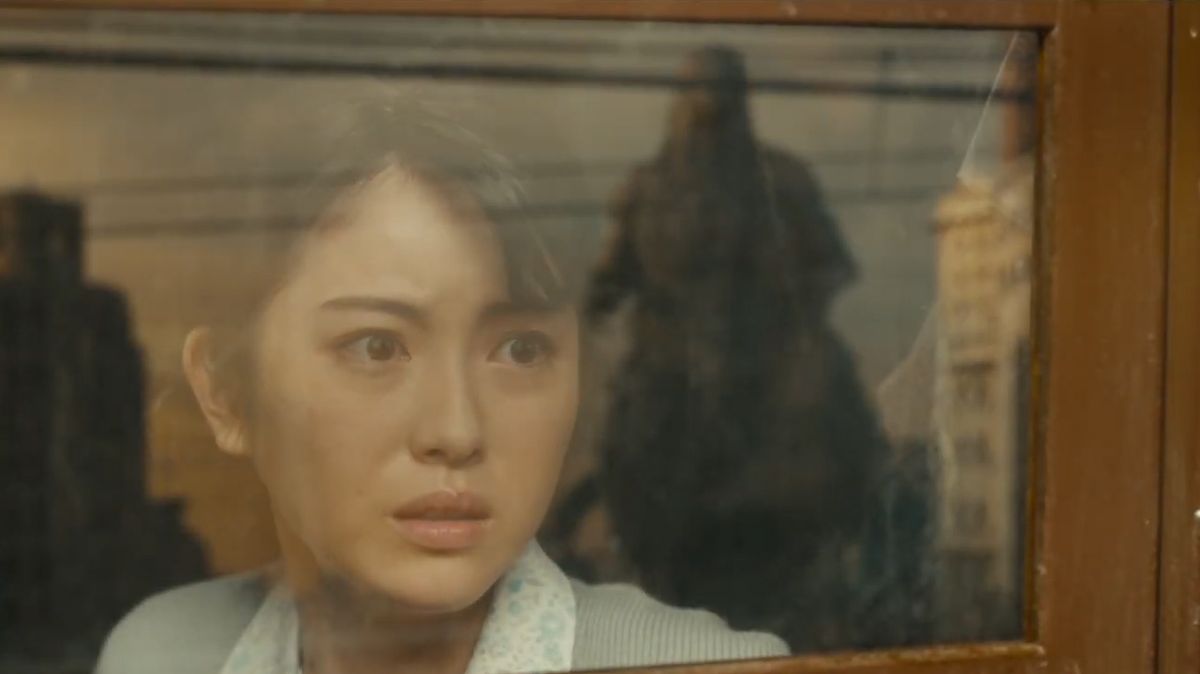
I am nowhere near an expert on Kaiju movies. In fact, I’ve only seen four of the nearly forty movies made starring this prehistoric reptilian monster. So, for me to say that this is the best Godzilla movie I’ve ever seen, maybe doesn’t hold the intended weight. But that doesn’t stop it from being the truth. Godzilla Minus One is everything you come to the movies for. Set in 1945 post-war Japan, a disgraced Japanese Kamikaze pilot Koichi (Ryunosuke Kamiki) returns to his decimated village. He ends up finding companionship with a displaced young woman named, Noriko (Minami Hamabe) who is caring for an infant child. Suffering from PTSD, Koichi takes a job retrieving ocean mines, teaming up with a group of characters that bring much needed levity to the situation. For the first time things are beginning to look up. For the first time there is hope. And that’s when Godzilla comes. Writer/director Takashi Yamazaki very much infuses a real sense of scale, spectacle and horror into the Godzilla visuals and destruction, as the attacks on land and sea beg to be experienced on the biggest screen possible. And while this aspect is important for any Godzilla film, the pre-Godzilla storyline is so strong, containing nuanced characters you actually care about, that this film could’ve worked without a monster at all. Though Yamazaki makes sure to highlight how his humans vs. Godzilla plot works to not necessarily remake the wheel, but reemphasize why Godzilla films are so great to begin with.  

4. Poor Things:  

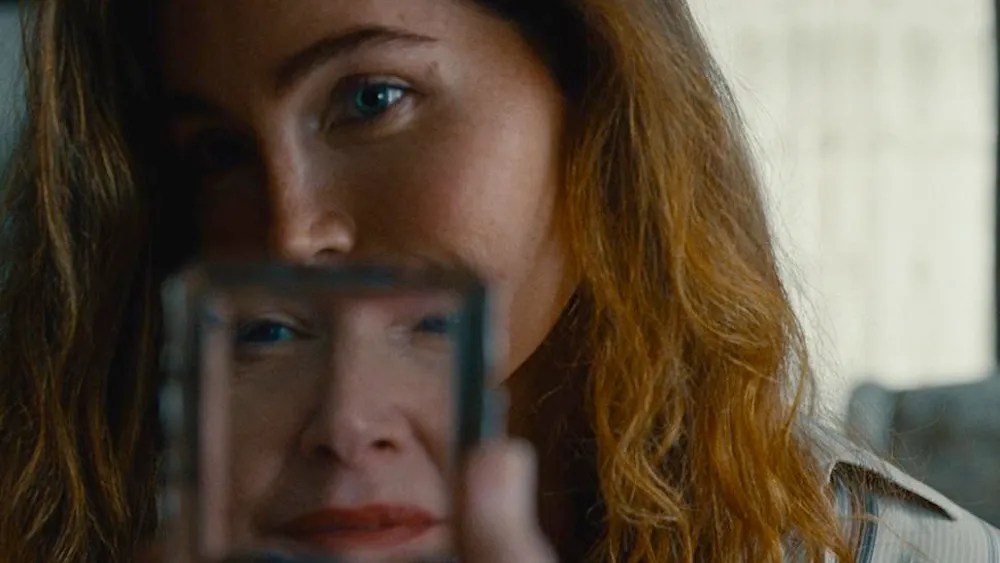
Poor Things is set in an alternative Europe where the steampunk aesthetic is a reality and stunning costume design is everywhere you look. We are introduced to an elderly surgeon/ mad scientist Dr. Godwin Baxter (Willem Dafoe), referred by those around him as God, who lives with a bunch of mutant creations, as well as Bella (Emma Stone). Bella is technically also one of his creations. He keeps her trapped in the house, though initially she doesn’t realize it as he has given her the brain of an infant. Dr. Baxter then hires one of his students to document Bella’s ability to learn and grow, which she does at a rapid clip.  Soon Bella desires her freedom, believing the best way to acquire more knowledge is through experiencing life. This desire which leads her on an odyssey through Europe with the pompous Duncan Wedderburn (Mark Ruffalo, in one of the most hilarious roles of the year) who instantly becomes obsessed with her. The more autonomy Bella gains, the more frustrated the men

around her become, as most every man in this openly believe women are naive and should be protected, reprimanded, imprisoned and/or experimented on. Bella’s liberation is sexually graphic and politically charged, and it’s absolutely thrilling to watch. As she brazenly navigates the world of insecure men, it becomes a real joy witnessing Bella gain her liberation. By the end of this journey Emma Stone has given the best performance of her career, Tony McNamara has written a fuck the patriarchy script with echoes of Mary Shelley’s Frankenstein that should win him an Oscar, and director Yorgos Lanthimos has created a feminist allegory that stands as a fitting culmination to his bizarre and visually striking filmography thus far.

3. Beau Is Afraid:

Filmed as a horror, delivered as a dark absurdist comedy and best described as an odyssey of guilt or guilt-horror, Beau Is Afraid is bizarre and demented in all the ways I love. And it’s all so Ari Aster. Opening with Beau’s birth and his first contact with the pain of existing, Beau Is Afraid sees adult Beau (Joaquin Phoenix) a man riddled with anxiety and crippled by insecurity, living alone in an apartment within a hellscape of a city. He lives his life in fear of everything. His only truth seems to be the knowledge that all things could potentially kill him; even having an orgasm. On his way to the airport to visit his mother, Beau accidentally leaves his keys in the front door, and upon going back for them he discovers they’ve vanished…or have been taken. This anxiety event vaults Beau into a nearly three-hour surrealist journey fueled by parental guilt and highlighted by a series of nightmarish interactions, profound moments of self-discovery, the best production design of 2023 and Beau being continuously blamed for things he never did. Beau is tricked, chased, shot at, drugged, kidnapped, drugged again and then the movie gets crazy. With a dash of Freud and whole lot of Kafka-inspired humor in a Lord of the Rings format, Beau Is Afraid is an unhinged therapy session that deserves just as much acclaim as Aster’s other films, if not more.  

2. How to Blow Up a Pipeline:

A small group of young people (some self-proclaimed climate activists, some not) from all across the United States, come together in West Texas with the goal of blowing up an oil pipeline. Adapted from Andreas Malm’s nonfiction book, “How to Blow Up a Pipeline: Learning to Fight in a World on Fire”, in which it is argued that sabotage (property damage) is the most effective form of “local climate activism”, this movie continues in the spirit of its source material, presenting an unapologetic call to direct action.  Director Daniel Goldhaber along with co-writers Ariela Barer (who also plays the lead character) and Jordan Sjol’s choice to construct this story as a heist-thriller was a stylized stroke of genius, adding an additional layer of tension onto a story containing sky-high stakes from inception. Very much coming across as a collective passion project, the filmmakers as well as a cast which includes some very engaging performances from the likes of Lukas Gage (The White Lotus), Sasha Lane (American Honey), Jayme Lawson (The Woman King) and Barer herself, take careful consideration in continuously highlighting the revolutionary, communal and anarchist culture and reasoning at the heart of this feature. In the midst of what is a fast-paced film, we are asked to sit with beautiful shots of desert landscape, if only to reaffirm what it’s all for. We get flashbacks that accurately portray how an entire generation could be pushed to these lengths. How to Blow Up a Pipeline asks only one question. What constitutes true and effective activism during a time of immediate crisis? And this question is asked in the most edge-of-your-seat way possible, without sacrificing its “by any means necessary” message. If you know me, you know this is definitely my kind of heist movie.

1. Past Lives:

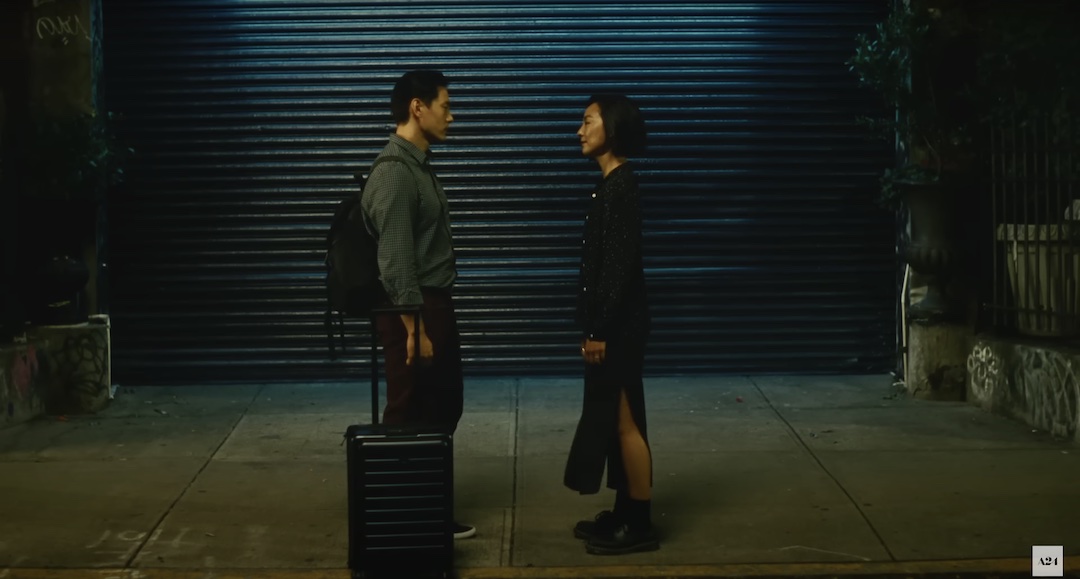
Is there such a thing as a soulmate? Is there such a thing as fate? In writer/director Celine Song’s feature debut, she examines these notions when telling the story of two childhood sweethearts, Nora (Greta Lee) and Hae Sung (Teo Yoo), who are separated when Nora’s family leaves South Korea. They lose touch but not their connection, as throughout the years they correspond via the internet, holding on to their unwavering attraction. It isn’t until over twenty years later that they mutually agree to meet when Hae Sung decides to travel to New York, where Nora now lives with her husband Arthur (John Magaro). More than just your average love triangle drama, Song creates a quiet masterpiece, which through her characters, her direction and some stellar performances, tells the story of the passage of time as it pertains to the fate of two individuals. It’s not until the second half of the movie that these two see each other as adults, but during every moment Nora and Hae Sung share the screen, Song constructs a space where the world falls away and her characters are allowed to live the purity of their bond, albeit knowing that at any moment the real world will come crashing down upon them as time moves forward.  Holding true to its thematic concepts of the allure of forbidden love, the idea of fate and our cultural connection between the past and present, Past Lives is both visually and tonally brilliant enough to be considered a theatrical cousin to a movie like In the Mood for Love. Hence, my favorite film of the year.

Movies that just missed my list (In order):

30. Are You There God? It’s Me, Margaret.

29. Creed III

28. Killers of the Flower Moon

27. The Killer

26. Dicks: The Musical

25. The Royal Hotel

24. Anatomy of a Fall

23. Blue Jean

22. The Blackening

21. Baby Ruby

20. The Creator

19. The Mission

18. Barbie 

17. The Holdovers

16. Dream Scenario

15. Monster

14. The Angry Black Girl and Her Monster

13. They Cloned Tyrone

12. Radical

11. Spider-Man: Across the Spider-Verse

Follow me on X (Twitter) @moviesmarkus and Instagram @moviesmarkus1

Posted in Movie Review

Fallen Leaves

Rating: 3 out of 5.

Not surprisingly the new film from Aki Kaurismäki (the writer/director with the best name in cinema) is ending up on people’s favorites list. As the credits rolled, I sat there knowing for certain that Fallen Leaves holds a charm that becomes undeniable; “becomes” being the key word there. This charm is coupled with Kaursmäki’s ability to make mundane or uninteresting things, absolutely pop in a way that is nothing short of masterful.  

It’s a love story set in Helsinki following two depressed people, Holappa (Jussi Vatanen) and Ansa (Alma Pöysti). They initially lock eyes at a local karaoke bar, but a series of whimsical mishaps keeps them apart for a while. The story is fairly formulaic, as a way to highlight interactions we are supposed to invest in. Holappa and Ansa both have a best friend they interact with throughout. During these interactions we get a taste of the dry humor that overtakes the movie. In fact, all interactions in the film are dry. At times darkly dry, but always dry and always from stone-faced characters, abruptly starting and stopping conversations, be they meaningful or meandering.

Unfortunately, because of this dryness and my inability to connect with the characters until later into the movie, a majority of Fallen Leaves (around an hour of the hour and twenty-one-minute runtime)was a series of aspects I highly enjoyed, mixed with a singular aspect which kept me from connecting until the very end. Did I mention how dry this movie is?  

My fragmented viewing experience made this a stunted watch. At times while the characters were talking about nothing or making with the “funny”, my mind wandered, fixating on a vibrant red couch or the shade of green on a work uniform, or the lighting or the blocking of a particular scene. And so, I sat in the theater for the longest time deciding on whether to admire the scenery, the set design and other technical aspects which are done to perfection, or make another failed attempt at connecting with deadpan characters.

Final Thought: Eventually I was more than a little charmed, finding the final twenty minutes beautiful and profound in ways that made me immediately want to rewatch the entire thing. This epiphany came during a song preformed at the Karaoke bar by the Finnish group Maustetytöt. From this pop song all of the pieces came together for me. Expressed via nihilistic lyrics justifying why the characters act the way they do, while also extending a metaphorical hand of relatability from said characters to the audience. After this, my eyes suddenly became open to Kaurismäi’s entire concept of finding love in a sea of despair, as a universally shared emotion. I do look forward to a second viewing.

Follow me on X(Twitter) @moviesmarkus and Instagram @moviesmarkus1

Posted in Movie Review

El Conde

Rating: 3.5 out of 5.

Director Pablo Larraín and Netflix comes through with one of the more bizarre concepts of 2023. A black and white black-comedy about Augusto Pinochet, the former Chilean dictator, now depicted as a 250-year-old French-born vampire.

In this tale, Pinochet begins his life as Claude Pinoche (Jamie Vadell), growing up as a child-vampire in a Parisian orphanage, before becoming an officer under Louis XVI and witnessing the beheading of Marie Antoinette. After which he vows to fight against all revolutions. Faking his own death, Pinochet travels the world and as a soldier, fights against revolutions in Haiti, Russia and Algeria, before making his way to Chile, staging the infamous coup d’etat of 1973 and becoming dictator of Chile. Only to (later in life) fake his death once again and live out his existence on a sad little farm as a depressed old man, with his wife (Gloria Münchmeyer) and Russian assistant (Alfredo Castro). All of this is shown as a prelude, told through narration which continues throughout the movie, acting as exposition.

The rest of this film sees Pinochet whining about how unfairly he was treated/remembered by the Chilean people and going on about how he wishes he were dead. His spoiled children come for a visit to discuss their inheritance. And a nun (Paula Luchsinger) pretends to be an accountant in order to get close to the family and potentially kill Pinochet.

Though a good quarter of the movie is exposition, if you don’t know who Pinochet was or a little about Chilean history going in, then El Conde may likely become tedious. One could blame this on Pinochet not being as recognizable of a figure (to Americans) as the focuses of Larraín’s previous films, Princess Diana and Jackie Kennedy. This absurdist comedy about a South American fascist will garner even less overall interest from those not willing to brush up on their history, as the Chilean director helming this project doesn’t seem too concerned with producing a movie accessible to those audiences. Obviously, those who are interested in this section of history will be able to stick with it long enough to get the most out of this satirical material.

In Larraín’s own words, the tone should come off as a mixture of satire and farce. And he does nail that combo. The characters are bratty and narcissistic in ways that are easy to watch in a comedic setting. With stand out performances from Münchmeyer and Luchsinger, I’d go so far as to say El Conde mimics a Wes Anderson film, only bleaker.

The cinematography from Edward Lachman (Far from Heaven, Carol) has this dreamlike/other worldly feel throughout, really emphasizing the modern fable component. There are magical realism sequences which are visually transcendent and an entire mood onto themselves.

Final Thought: The analogy of Pinochet being a bloodthirsty eternal vampire and the fact that the echoes of his ultra-violent regime are still felt in Chile to this day, works very well. The film itself is gruesome, as it should be given that the violence on-screen represents one of the most sadistic men who ever lived. I’ll say it again and again, I’m very happy to see unflattering depictions of tyrants. But outside of just making fun of the man, this movie stands as a cautionary tale about the result of fascism being allowed to fester. Playing with the literal notion that murder keeps fascists young. As thoroughly impressed as I was with the majority of El Conde, the tale Larraín tells is not as interesting as the grand setup would have one believe.    

Follow me on X(Twitter) @moviesmarkus and @moviesmarkus1

Posted in Movie Review

May December

Rating: 2.5 out of 5.

Todd Haynes (Dark Waters, Carol), a director not known for shying away from heavy subject matter, takes on an infamous story ripped from 90’s tabloids. Well, sort of. The script itself is a fictionalized account of the Mary Kay Letourneau story and takes place twenty years after said events.

May December centers around an actress named Elizabeth (Natalie Portman) who is staying at the home of Gracie (Julianne Moore) and Joe (Charles Melton) to shadow them as research for her upcoming film. Twenty years prior, Gracie had been a teacher who had sex with Joe, who was in seventh grade (thirteen years old) at the time. She had gotten pregnant, gone to prison, given birth in prison and after she was released, Gracie and Joe were married.  

Gracie is portrayed as a passive aggressive, unapologetic and insecure woman in her mid-fifties. Joe is portrayed as a passive, obedient, man in his mid-thirties who has recently begun to question his past trauma. Elizabeth is the central character, portrayed as initially unassuming before forcibly building a connection and subsequent obsession with both Gracie and Joe. And though the entire process of mimicking and maybe humanizing a pedophile seems to disgust most everyone she comes into contact with, her reckless nature and a performance from Portman that deserves to be highlighted and dissected, does justify why an already captivating story is told through interactions with an interloper.

Up to this point in my review, May December sounds like an absolute must-see. And if it wasn’t for choices Haynes makes, it would’ve been. It is obvious that the story is compelling as is, but Haynes chooses to add an extra overdramatic layer of sauce onto an already sauced dish. This includes the addition of an aggressively melodramatic score, which is ridiculously distracting and treats the subject matter facetiously. Also, the addition of a sexual tension element between Elizabeth and certain characters came off as so completely forced that it all feels like a Brian De Palma or Paul Verhoeven film; which may not sound like a bad thing, but is very ill-fitting and non-complimentary in regards to the telling of this particular story. There are scenes in the back half of this movie which attempt some Ingmar Bergman that works a bit better. The film also keeps you intentionally at a distance. And maybe in Haynes’ mind this is for the best. Although, it comes off as very mismanaged, as we aren’t allowed to connect with anyone onscreen.

Final Thought: With a script written by Samy Burch that makes it a point to examine how an adult relationship built on childhood sexual assault affects not only those directly involved, but family, friends and offspring, this is a film with a strong foundation. Haynes is the single reason why May December isn’t as potent as it could’ve been. It’s that simple. Sometimes good directors inexplicably fumble.

Follow me on X(Twitter) @moviesmarkus and Instagram @moviesmarkus1