Posted in Top Ten List

My Top Ten Favorite Movies of 2024

Written by Markus Robinson

Movies that just missed my list (11-25):

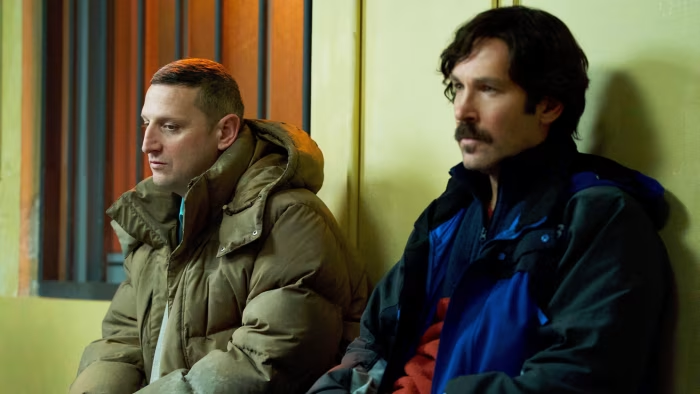
25. Challengers

24: Lisa Frankenstein

23. Inside Out 2

22. Green Border

21. Evil Does Not Exist

20. Your Monster

19. The First Omen

18. Ghostlight

17. Thelma

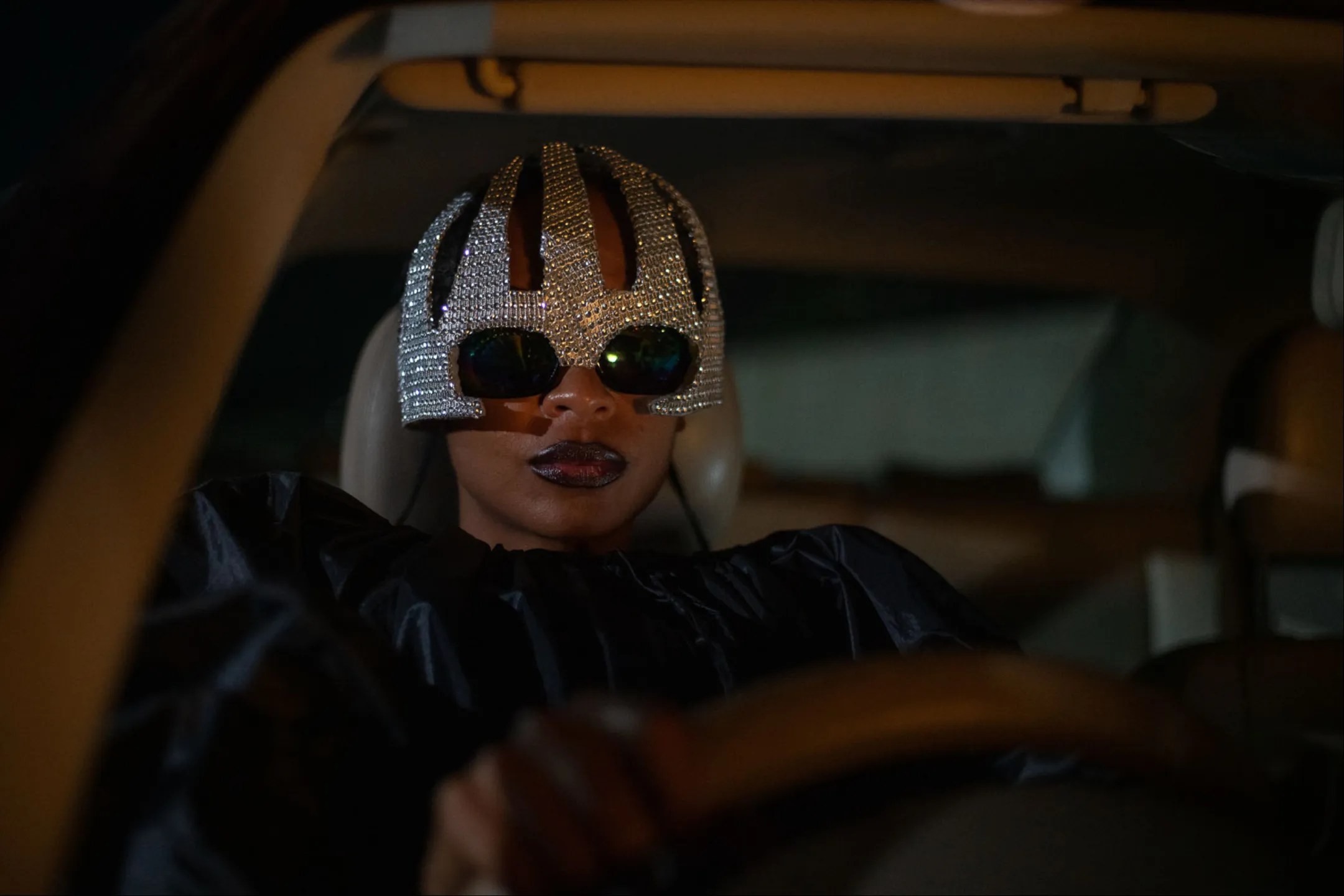
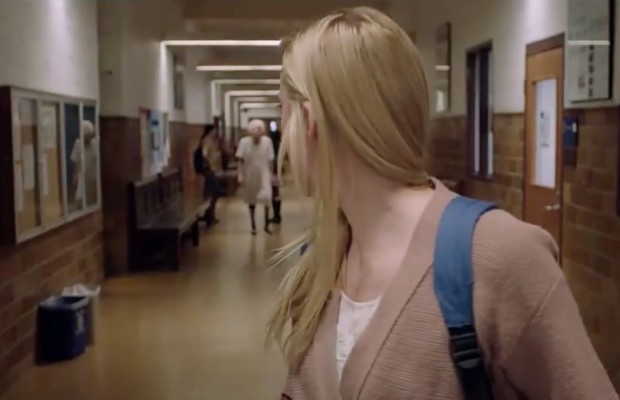
16. I Saw the TV Glow

15. The Substance

14. Exhibiting Forgiveness

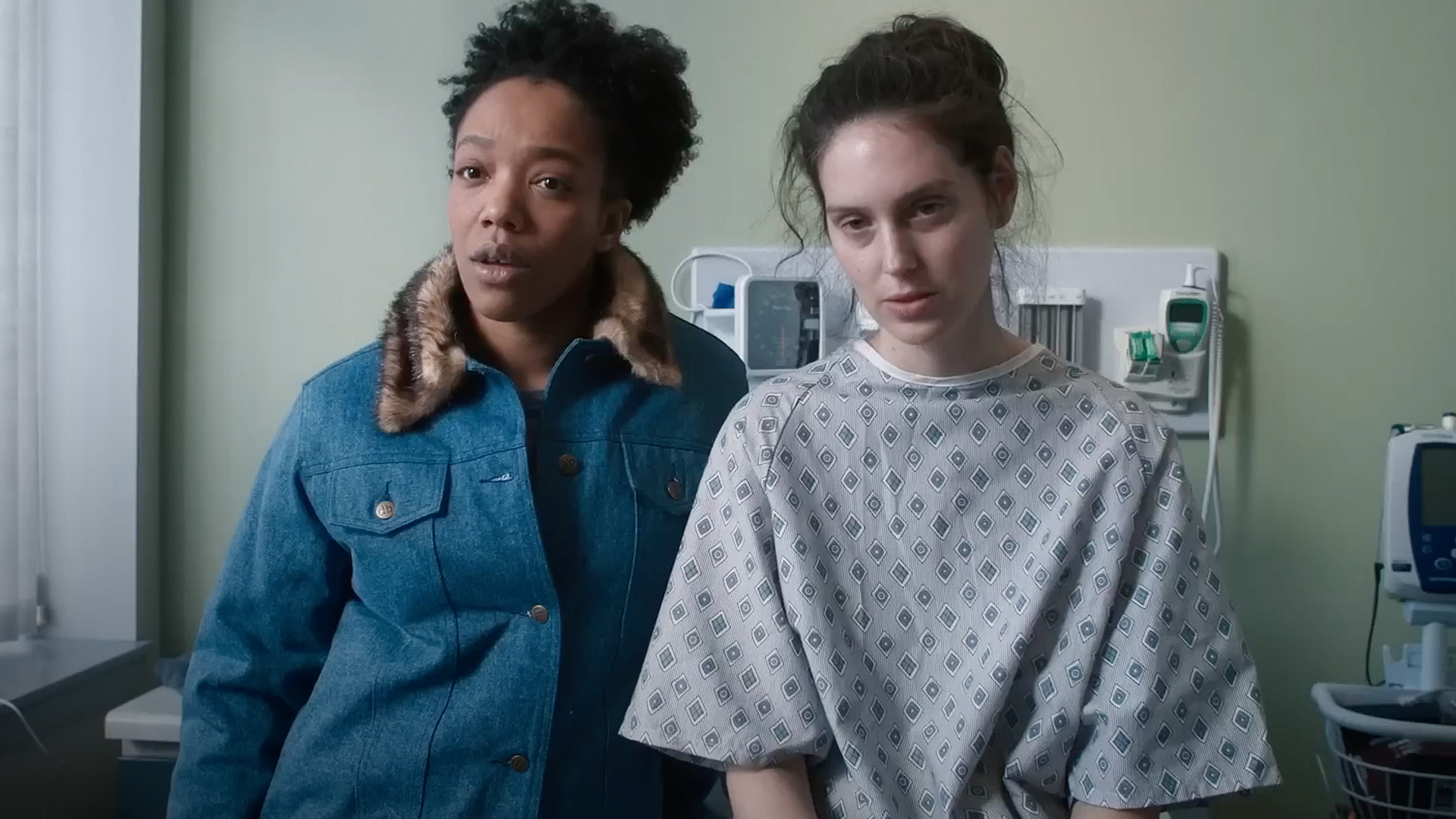
13. A Different Man

12.  Sing Sing

11. Hundreds of Beavers

Top Ten

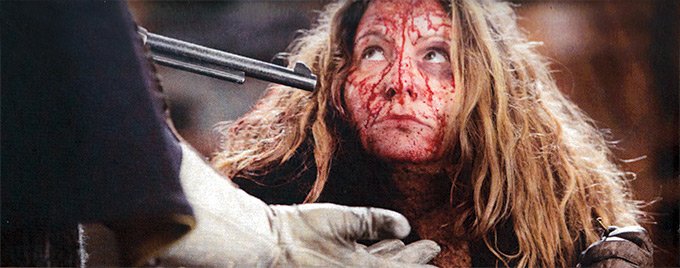
10. Love Lies Bleeding

A lesbian love story set in small town 1980’s USA (Louisville). Jackie (Katy O’Brian) is an idealistic female body builder, passing through town with dreams of winning an upcoming body building competition in Las Vegas and earning enough money to make it to California. Lou (Kristen Stewart) is a women hardened by the corrupt town she calls home, as well as a secret life she’s desperately attempting to get away from. Lou works at a gym and it’s love at first sight when she spots Jackie from across the room. They quickly move in together finding hope in each other’s existence. But in this town full of violent men (the most dangerous of these men is Lou’s estranged father (Ed Harris), a psychotic gangster) their love story will be tested. What the movie becomes is a violent revenge story with surrealist elements. And truthfully, the story itself is pretty sparse. But it’s the direction from Rose Glass that allows Love Lies Bleeding to be a far more intriguing film than it undoubtably was on paper. She presents her unabashedly sexual, queer, and at times grotesque vision of the quest for the American dream quite well, centering two leads who give two commanding performances.  Glass makes it a point to focus on these strong women who are not at all helpless, but surrounded by an environment made unsafe due to the brutality of men.

9. Smile 2

I was a fan of the original, but honestly didn’t expect much from Smile 2. I don’t think many did. But as you’ve probably figured out by now, not only did I enjoy this sequel, but I was blown away by how much better it was than the original. Parker Finn is back writing and directing Smile 2 and he definitely went into this production with a specific vision on how to expand the story. Continuing only days after the last film ends, the smile demon virus thing has infected pop icon Skye Riley (played in award worthy fashion by Naomi Scott) as she is about to launch a global comeback world tour, having been out of the public eye in the wake of a huge scandal. If you don’t remember how this whole smile demon works, it’s basically an entity that jumps from host to host by making the infected kill themselves in front of a witness, who then becomes infected themselves by said demon. The newly infected are then terrorized by hallucinations of smiling people for a couple of days (the demon feeds on fear) and then the process starts all over again. There are so many things that Finn gets right here. This movie is nonstop horror entertainment. When I say non-stop, I mean I saw this movie at 10pm (way past my bedtime) and I stayed wide awake, eyes glued to the screen the entire time. The horror choreography aspect of this is fantastic as well, some sequences reminding me of Roman Polanski’s Repulsion, including one horror dance sequence which was uncomfortably amazing. But the best move Finn makes is having his protagonist be a pop star. It’s an absolute stroke of genius. We not only get a great dramatic performance from Scott, but a vocal performance as well. Yes, there are songs and they are low-key bangers. This could’ve easily been a horror musical. Her being a pop star also gives us a completely satisfying ending that made me immediately want a Smile 3. In fact, with a runtime of two hours and seven minutes, Smile 2 is one that I could’ve watched two more hours of.

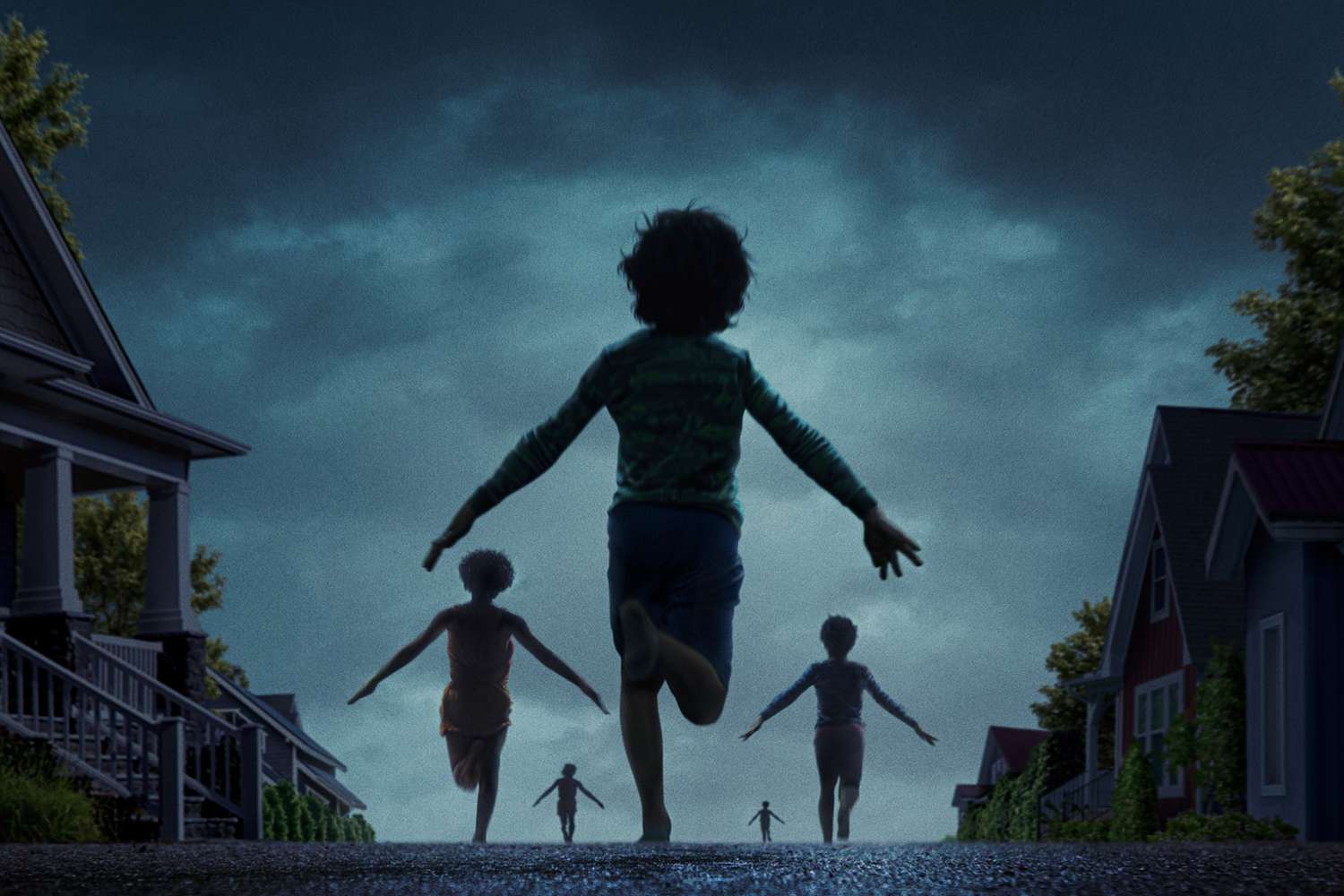
8. We Grown Now

As a Black man, throughout my decades of movie watching there are things I don’t come across nearly as much as I’d like to. One of which are sensitive Black movies centering around boys. And so, when I find one, it goes right onto my list. We Grown Now was that movie for me in 2024. Set in Chicago’s Cabrini-Green housing in 1992, a place known for being one of the largest public housing communities in the nation. This is a sensitive movie about two young Black boys growing up in that community, processing the world around them. They are best friends and inseparable. Malik (Blake Cameron James) is a dreamer, believing there is a greater world outside of the projects. He lives with his grandmother, little sister and mom (Jurnee Smollett, who is also a producer on this film). His mom struggles as the main breadwinner, with a goal of getting a job that moves them out of Cabrini-Green for good. Eric (Gian Knight Ramirez) lives with his father (Lil Rel Howery) and older sister who is about to leave for college. He is a depressed and defeated child. His grades are low and he has come to believe that he was born in Cabrini-Green and will die there. Writer/director Minhal Baig gives us a personal look into their lives, as we watch the toll this place takes on them. The film’s slower pace asks us to spend some time with Malik and Eric as they watch the people they respect go through hardships and as they themselves process loss, violence, trauma, joy and love. In one scene we watch them cut class and visit an art museum. In another they both stand in front of the fence of the public housing complex they live in and shout “I exist”. Sure, it’s overly sentimental at times, but the movie and this type of storytelling feels completely lived in. These people existed and I was grateful for every moment I had with them.

7. The People’s Joker

The People’s Joker tells the coming of age story of an aspiring clown/comedian who later goes by the name Joker the Harlequin (Vera Drew), as she comes out as a trans woman and finds her place in the world. All of this is set in a version of the DC universe where Batman is a bad guy and an Alex Jones-style political commentator (voiced by Tim Heidecker) is continuously playing on the television set. As a child she is sent to Arkham Asylum by her verbally abusive mother and given a drug that dulls her to the world. As an adult, this becomes her way of masking. Deciding to leave home for the big city (Gotham) to become a comedian (during a time where Batman has outlawed comedy) she befriends a group of “misfits” (all Batman villains) and decides to start an anti-comedy stand up theater in order to skirt the law. There is also a love story subplot that is so perfectly not for the cis-gaze. The love story is presented as the most personal aspect of the film while still keeping true to the notoriously abusive dynamic between the Joker and Harley Quinn in the comics.  Director/co-writer/editor and star of this movie, Vera Drew has constructed a unique trans story told by way of parody and created by the very community it’s portraying (imagine that). And how she gets around the copyright laws is nothing short of brilliant. Paying homage to the DC Universe while also paying respect to the trans community by way of humanizing portrayals, the literal bleeping out of a deadname, a plethora of references and cutting humor pointed at the heteronormative world and visuals that are aesthetically counterculture; utilizing a mixture of green screen, animation and puppetry. The People’s Joker is the best written satire I saw all year and couldn’t imagine this story being told any other way.

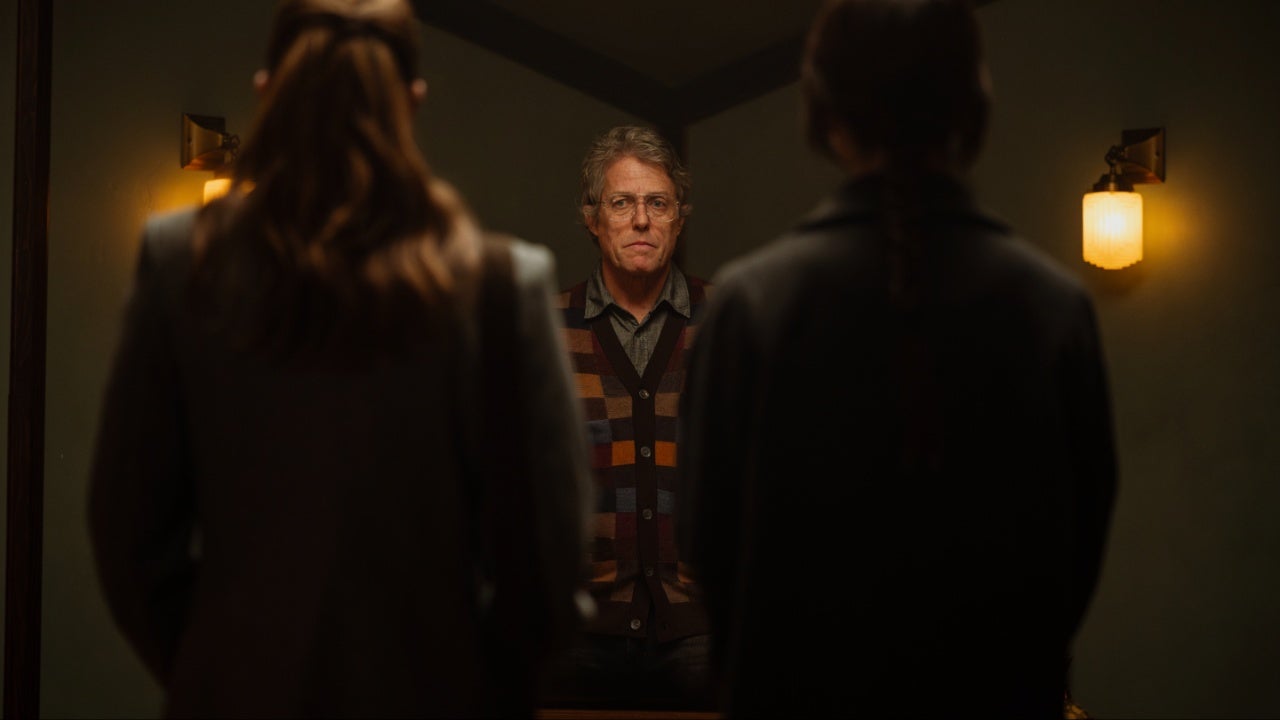
6. Heretic

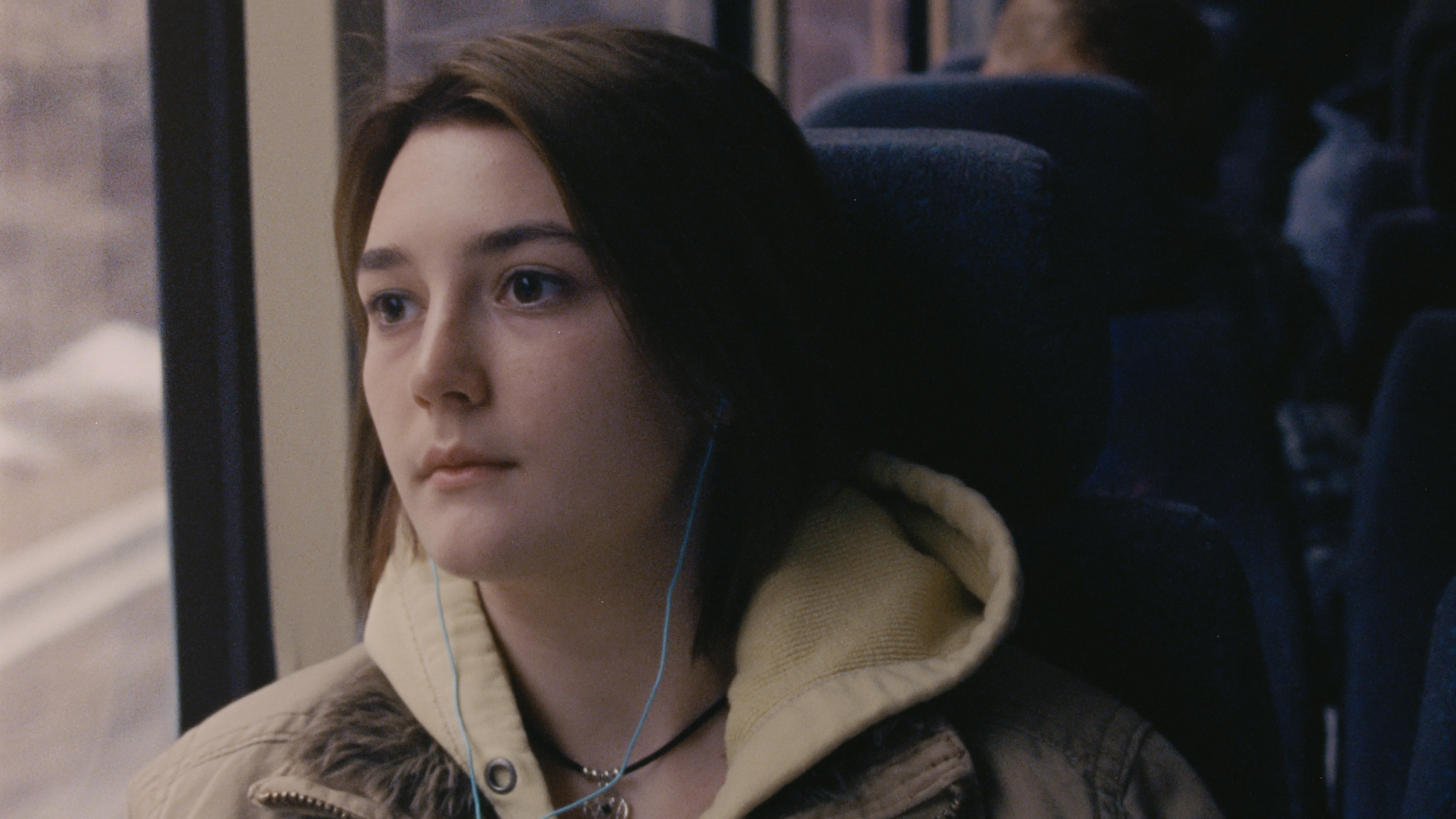
Heretic tells the story of two Morman missionaries, Sister Paxton (Chloe East) who was born into the church and Sister Barnes (Sophie Thatcher) who is a convert. They arrive at Mr. Reed’s house on a rainy afternoon, as he’s requested to hear about the church. Mr. Reed is played by Hugh Grant in my favorite performance of his career.  Grant’s performance is completely irresistible and even though he’s essentially a wolf luring in these little red riding hood characters, it’s nothing short of a delight to watch him effortlessly take over every scene he’s in. Anyway, he invites them in, but they are reluctant at first, informing him that they need another woman present in order to enter his home. He assures them that his wife is in the other room baking a blueberry pie. They enter eager to get out of the rain. Mr. Reed is one part hospitable and charming and one part creepy debate lord. Once the girls begin to talk with him, they quickly realize that he knows more about religion than they do. It seems to be his obsession. The girls become uncomfortable with the types of questions he begins asking them. At times he ridicules their faith and at one point he claims to have discovered the one true religion. Also, there is still no sign of his wife. And a candle on the coffee table which Mr. Reed had lit is labeled “blueberry pie”. Soon after, they discover they are locked in. But Mr. Reed gives them an option for escape. Two doors in the back of his house. One marked “belief” and the other marked “disbelief”. They simply have to choose. Why I spent so much on this set-up is because it’s absolutely indicative of how tantalizing, meticulous and wonderfully intricate this cat and mouse script is throughout. Starting off as a horror of politeness and complicity, as the movie evolves filmmakers Scott Beck and Bryan Woods navigate us through what becomes a theological thriller that was absolutely made for people like me. If you’re a little nerd and this kind of religious debate stuff is enjoyable to you, then Heretic will scratch that itch mighty good.

5. Wicked: Part 1

Who am I fooling? Everyone reading this has already seen Wicked, so I’ll make this short. Wicked is basically The Wizard of Oz fan fiction, “and make it a musical”. And it’s everything I could’ve asked for from a big-screen adaptation, is what I said both times I paid to see this in theaters. It begins with Galinda (Ariana Grande) announcing the death of the Wicked Witch, who we discover is named Elphaba (Cynthia Erivo). The film is told as a flashback, recounting the young misunderstood Elphaba, treated badly because she was born with green skin and her subsequent and unlikely friendship with Galinda. This is a two hour and forty minute “part one” that again, I saw twice because it’s so good. Also, being instantly engaging doesn’t hurt. Props to director Jon M. Chu for delivering a vision that sucks audiences in whether you’ve seen the stage play or not.  Every single choreographed musical number works in the exact way you need it to in order to compliment these beloved songs. Nobody is Kristin Chenoweth, but Grande gets damn close, nailing the cadence and mannerism that define her as this self-absorbed lead mean girl. She earns every hair toss. Erivo is a powerhouse both vocally and theatrically. Jeff Goldblum is Goldbluming. In fact, when he enters the film in the final thirty minutes is when things really take flight (pun intended). Not to say that the first two-plus hours wasn’t selling, but the third act is perfection and is everything everyone you know has hyped it up to be. If you cry at the end of this, I DO NOT BLAME YOU.  Side Note: There are many sociopolitical themes throughout the film which elevate the story into something very politically relevant, but you know my left leaning ass loved that the idea of manufacturing consent comes into play more than a few times throughout.

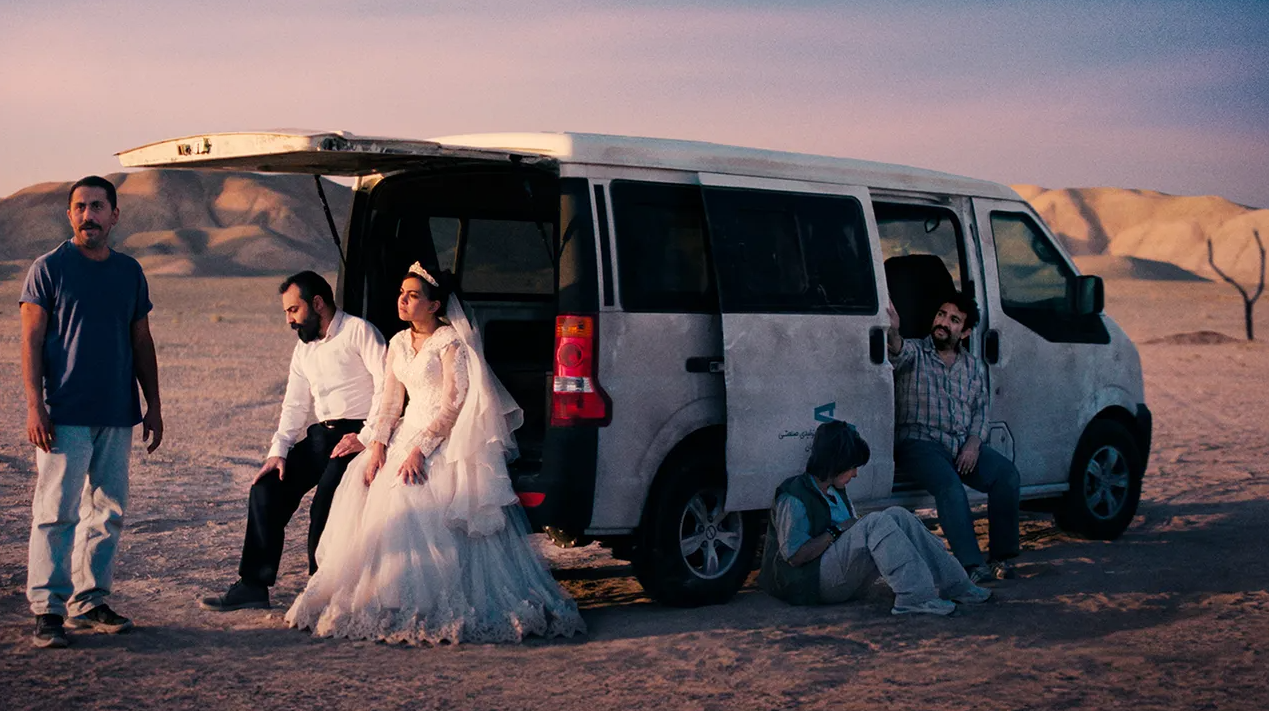
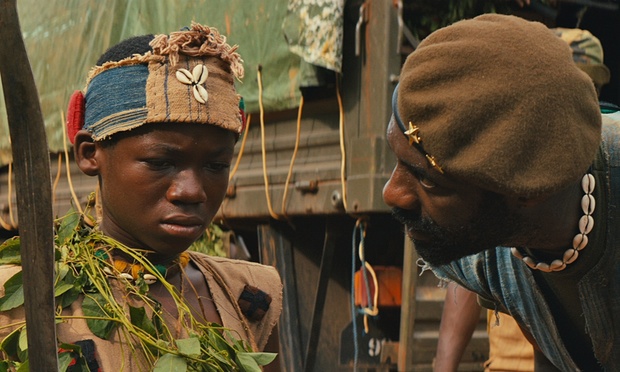
4. lo Capitano

Nominated for an Academy Award in the Best International Feature category during last year’s Oscars and released in the states in 2024, lo Capitano tells the story of two Senegalese teenagers, Seydou and his cousin Moussa who have been secretly saving money to travel to Europe with dreams of becoming famous musicians. When Seydou tells his mom he wants to leave, she becomes enraged and forbids him to go, informing him that many have died doing what he’s thinking about doing. Others tell the boys similar things, reenforcing the idea that this journey is a death sentence, not only by way of the elements but also the dangers that arise from soldiers, thieves and smugglers looking to take advantage of travelers. But these two are persistent and leave in secret to begin an odyssey that will take them across the Sahara and the Mediterranean. The way director Matteo Garrone chooses to frame the beginning of this film is almost like a Disney live action. Everything is lighthearted and hopeful. These teenagers are presented as just that; kids. They are relatable, they crack jokes and listen to music with their friends and are innocent to the ways of the world. In the beginning their enthusiasm is infectious. This is what makes the brutal reality of what they see and go through during their journey so hard to watch at times.  There were more than a few moments when I audibly gasped. In addition to the unflinching storytelling, Garrone’s use of magical realism is done so beautifully and with utmost respect for all of the immigrants who set out on treks like this every day and don’t make it. This viewing experience is elevated even more by the performance of Seydou Sarr who plays the lead, giving a powerhouse performance that allows audiences to feel every second of his anxieties, fears and hope. This movie does not shy away from the more brutal aspects of immigrant journeys. It may sound silly, but I’m grateful that no punches are pulled. I haven’t felt this way about an immigration story since I saw Cary Joji Fukunaga’s Sin Nombre.

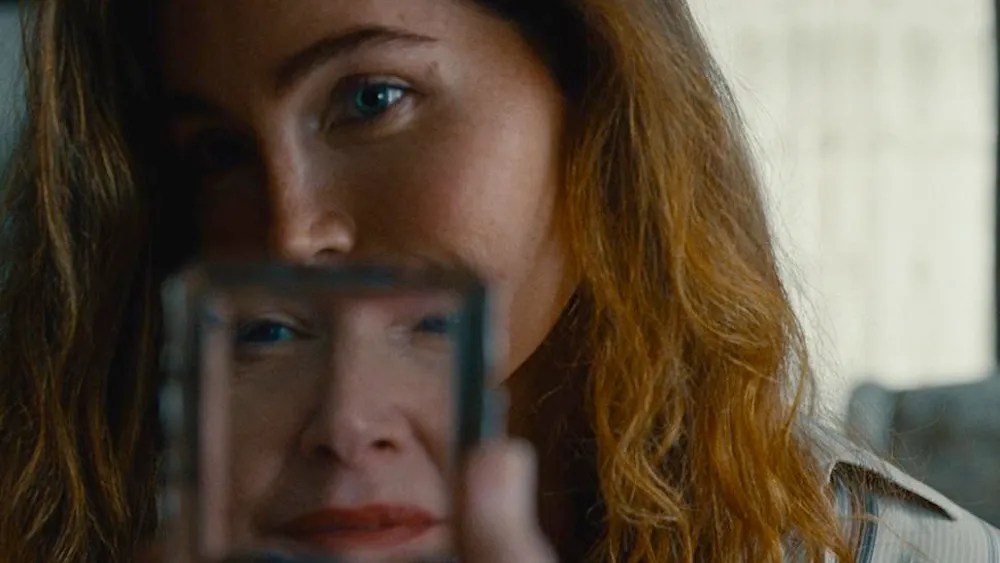
3. Babygirl

Romy (Nicole Kidman) is the CEO and founder of a large company. In public she must maintain an outward veneer of confidence and dominance, as she works around a slew of older male executives. In her private life she is unsatisfied physically and emotionally. She wants nothing more than to be dominated in a very specific and high-risk style of BDSM. She loves her husband and kids and feels the need to keep this part of herself repressed, as this is more than an embarrassment for her. There are points in this movie where she goes so far as to proclaim a hatred for herself and this part of her which she sees as dark and monstrous and the thing that will never allow her to lead a “normal” life. One day a handsome young intern enters the scene and she becomes drawn to his effortless assertiveness and dominance.  This reminded me so much of Michael Haneke’s The Piano Teacher, a film equally as daring and (at times) uncomfortable as what writer/director Halina Reijn has delivered here. Nicole Kidman gives my favorite performance of the year; one which is completely vulnerable and exposed. As Reijn maintains a show don’t tell examination of this “fetish”, we watch as her protagonist is dominated and degraded and then given very specific forms of affection and praise. For many of the sexual sequences the camera is right up in Kidman’s face. While she has orgasms, while she sobs post orgasm, the camera is unblinking. Through Kidman’s performance we see everything from the visual pain and anxiousness which comes from a reluctance to be seen as vulnerable, to her full-on embrace of the transformation that happens when this intern helps her fantasies become reality. This is an absolute masterclass of acting from Kidman.  What I believe Reijn and Kidman have achieved here is something quite interesting and layered and controversial and more than simply a throw away romance novel. It supersedes expectations on so many fronts. Including making this character highly flawed. Romy is a character that we are meant to root for and sympathize with, but also who engages in flawed, unethical and morally questionable activities in order to navigate the even crueler and oppressive world around her. Babygirl has so much to say about shame, sexuality and women.  

2. Late Night with the Devil

In the 70’s a late-night talk show called Night Owls hosted by Jack Delroy (David Dastmalchian) gains national popularity, but is always coming in second to Johnny Carson’s Tonight Show. After Delroy’s wife passes away, he disappears from the public eye. He returns in 1977 to plummeting ratings and an expiring contract. A desperate Delroy plans a Halloween episode that will air during sweeps week which he is positive will get him enough attention to finally push him into that number one spot in the ratings. His idea is to showcase a young girl who is supposedly possessed by the devil. This is technically a found footage film and so we know this night doesn’t go well from the very beginning. In fact, during a brief prologue we find out that the episode we are about to see is known as the television event that shocked the nation. Feeling like a total time capsule of a movie, filmmaking duo Cameron and Colin Cairnes take us to 1977 and for 90 minutes create an atmosphere that feels as if we are sitting at home in front of our televisions watching an authentic late-night talk show program. The authenticity factor is taken up a notch by Dastmalchian’s performance, nailing the cadence, mannerism and somewhat corny charisma of the stereotypical American host. As for the story itself, it’s a slow but playful burn. As segment after segment passes and unsettling and more unexplainable things being to occur on-set, our anticipation for the possessed girl to enter the story grows more and more. The Cairnes make this form of storytelling look effortless. While there were many entertaining horror movies in 2024, as someone who grew up on late-night talk shows, Late Night with the Devil is my favorite of the lot. Though this isn’t technically the scariest horror movie of this year, the combination of a very personal nostalgia and my love for a good creepy tale, allowed this to be such a comfort watch for me.     

1. Didi

Many of the films on my list are completely interchangeable with one another (in a good way). But my top slot is usually reserved for the movie (if there is one) that has something I relate to on a deeply personal level, over any other film. In 2024, that film was Didi. Filmmaker Sean Wang’s coming of age story, set in Fremont, California (Bay Area, stand up) follows Chris (also known as Didi, which is a term of endearment meaning “younger brother” in Mandarin) during the summer before high school. Chris is an acne ridden, braces having, voice cracking every five seconds, stubborn and outgoing, but also awkward kid who just wants to fit in. He hangs with his friends. They talk about girls and film themselves doing stupid shit for YouTube all day long. The movie takes place in 2008, so YouTube was still a relatively new thing. There is also a heavy use of MySpace and instant messenger throughout. But being a teenager is hard. And Wang does well to capture the frustrations and anxieties that come with being that age. As well as making the character of Chris, a teenage boy that at times is very unlikable, making nonsensical decisions that lead to mistakes which hurt the feelings of the people who love him. These aspects are what gives this movie life. Not only does Wang capture the time and place, the clothing, the lingo and the technology, but he captures the teenage point of view. This is the best coming of age movie of 2024. And if you grew up anytime around this era and/or grew up in an immigrant household then Didi will hold a special place in your heart.  

Follow me on Twitter (X) @moviesmarkus and Instagram @moviesmarkus1

Posted in Top Ten List

Top Ten Films of 2023.

10. Monica:

Monica (Trace Lysette) is a trans woman who after years of being away, apprehensively travels back to her hometown to visit her estranged dying mother (Patricia Clarkson). When a Hollywood movie focuses on a marginalized group, more often than not there are large aspects of the story which are sensationalized and exploitative. But thankfully this story was not made for the cisgender gaze. Not bogged down by exposition, we are asked to gather information through nuanced interactions Monica has with the world around her, her sister-in-law, her brother, their children and her mother who may recognize Monica but refuse to acknowledge Monica for who she truly is. Amidst the reality we live in of a violent and ever-present nationwide (worldwide) anti-trans movement, co-writer/director Andrea Pallaoro and writer Orlando Tirado make a conscious decision to present this trans story as a piece of slice of life realism. It’s a decision which pays off.  Trace Lysette, who is on screen for every second of this film, intimately portrays a woman who carries with her the trauma of a tragic situation that is all too common in regards to LGBTQ+ youth. A queer child who is kicked out of the house at a young age; rejected by their own family and loved ones. Now grown and asked to interact with those who’ve ostracized her, Lysette is tasked with giving a performance that is not only personal, but also representative of so many who share very similar stories. And Lysette more than comes through with a powerhouse and award worthy performance. The direction focuses on Monica’s existence; her routines, her mannerisms, her body, her job, her anxiety, her motivations, her hopes and dreams, her joy and pain, and the isolation felt by someone alienated from family. Monica is a triumph of trans storytelling. It’s a somber movie about attempted reconciliation and forgiveness in a situation where neither may be an option. It’s a movie which shows the results of parental abandonment. And above all things, it’s a movie dedicated to spending time with a woman who is trans, as she moves through this world. 

9. John Wick: Chapter 4:

It always struck me as funny that an entire action movie franchise could be built around a man with visibly bad knees. While I’ve liked all of the John Wick movies well enough, I was never into them as much as everyone else was. This final chapter changed all of that. We meet up with John Wick as he attempts to earn his freedom once again, and in doing so must face off against the most ruthless enemy yet. This may sound somewhat routine, but shockingly John Wick: Chapter 4 is not only the best of the bunch, but one of the best action movies I’ve ever seen. Director Chad Stahelski has been at the helm for all four of these and in this final chapter we get to witness him perfect his craft before our very eyes.  Containing the most memorable video game inspired villains, countless impressively long fight sequences with choreography that had my jaw on the floor and a pistols at dawn finale worthy of the samurai/western films Stahelski had attempted to pay homage to throughout the series. Chapter 4 was better than it had any business being.

8. American Fiction:

Monk is a Black novelist who can’t seem to get published anymore. He is told by said publishers that his writing isn’t “Black enough”. So, as a joke he writes a manuscript filled with only the worst Black stereotypes and to his surprise and disgust it gets published and becomes a bestseller. American Fiction is a bit of Robert Townsend and a bit of Spike Lee. A bit of Hollywood Shuffle and a bit of Bamboozled. It’s a comedy examining how Black people must navigate white America in order to achieve monetary success.  Within first time writer/director Cord Jefferson’s superbly crafted script we get a clear picture of how white people fetishize and commodify Black stories, uplifting only the ones that satisfy the stereotypes. This point is captured in what is my favorite line of the year, “White people think they want the truth. They don’t. They just want to feel absolved.”  But it’s not just the dialogue which makes this script so brilliant, it’s the juxtaposition between the two stories it tells. The synopsis contains the satirical portion, where Monk unwittingly becomes famous by writing a novel rife with stereotypes. But the main story is a drama centered around Monk dealing with everyday hardships. Monk is depressed. His mom is sick. And a tragedy has brought his estranged family together for the first time in years. This is the storyline that portrays the Monk character as an actual human being. This storyline interwoven with a satirical one that sees Monk dehumanized, hammers home the point of this entire film. America is not interested in the humanizing of Black people, but only showcasing sensationalized, trauma porn depictions which satisfy the needs of guilt-ridden white people.  American Fiction is a Black movie for Black people, that criticizes Black entertainment made for white people.
7. Napoleon:

I walked out of the theater absolutely fascinated with this film. Admittedly it’s kind of a messy acquired taste, but in retrospect that only reinforced my admiration for Napoleon as an ambitious work of genius. Following the rise and fall of Napoleon Bonaparte (Joaquin Phoenix), director Ridley Scott and writer David Scarpa show an unflattering portrait of a man that would become Emperor of France and have a series of conflicts/wars named after him. Historically regarded as a military genius who was able to build up France’s army into a feared conquering force. He was also known as a war monger, narcissist and a master propagandist. Scott chooses to tell the story of Napoleon as an insecure tyrant on and off the battlefield. Most of the film is focused on his marriage to Joséphine de Beauharnais (Vanessa Kirby) and their abusive and codependent relationship. This relationship is in fact the heart of the movie. I would be remiss if I didn’t mention how epic the battle sequences were, but award worthy sequences are only secondary to the tale of Napoleon and Joséphine.  It’s all so captivating, due to Scott, Phoenix and Kirby’s willingness to take giant swings. Despite the criticism this film is receiving (due to historical inaccuracies) and how it is very apparent while watching that there is a longer (arguably more perfect) version of Napoleon out there (Scott has already promised an over 4-hour long cut, which will be released on Apple TV+), the film that I saw should see award consideration even in its incomplete state.

6. Earth Mama:

This feature length debut from Savanah Leaf follows a pregnant single mother named Gia (Tia Nomore) living in the Bay Area, navigating a system looking to take her children away from her. She’s already had two of her children put into foster care because of prior issues with drugs and her current financial and housing status.  Gia visits her case worker who tells her that though Gia is currently clean and has been attending all of the courses required by social services, the chances of her getting to keep her unborn child is low. Gia explains that she can’t pick up the extra hours of work it would take to bring her financial situation to a level that would get her children returned to her, and satisfy all of the requirements of the state at the same time. Her life consists of getting limited visitation with her children, having to steal diapers she can’t afford and getting constant visits from Child Protective Services who don’t seem to care about her hardships, her mental health or if she will ever see her children again. Gia goes to her mandated classes and listens to others tell their personal stories, all concerning child separation. This class is run by a Miss Carmen (Erika Alexander) who seems to understand and actively tries to help her. Leaf’s presentation is excellent, giving her film a real documentary feel visually and tonally, if only to more intimately focus on this group of women in a non-exploitative or sensationalized way. Humanizing women who are always depicted in a negative light. Showing how the system works and the impossible decisions these women must make within a system built to hurt them. At its core, Earth Mama is about generational trauma brought on by the systemic separation of Black and Brown families in America. As heartbreaking as the story being told is, Leaf maintains an undercurrent of hope throughout. Hope, not from any government intervention, but that which stems from community support. Earth Mama holds true to the idea that “we keep us safe”. 

5. Godzilla Minus One:

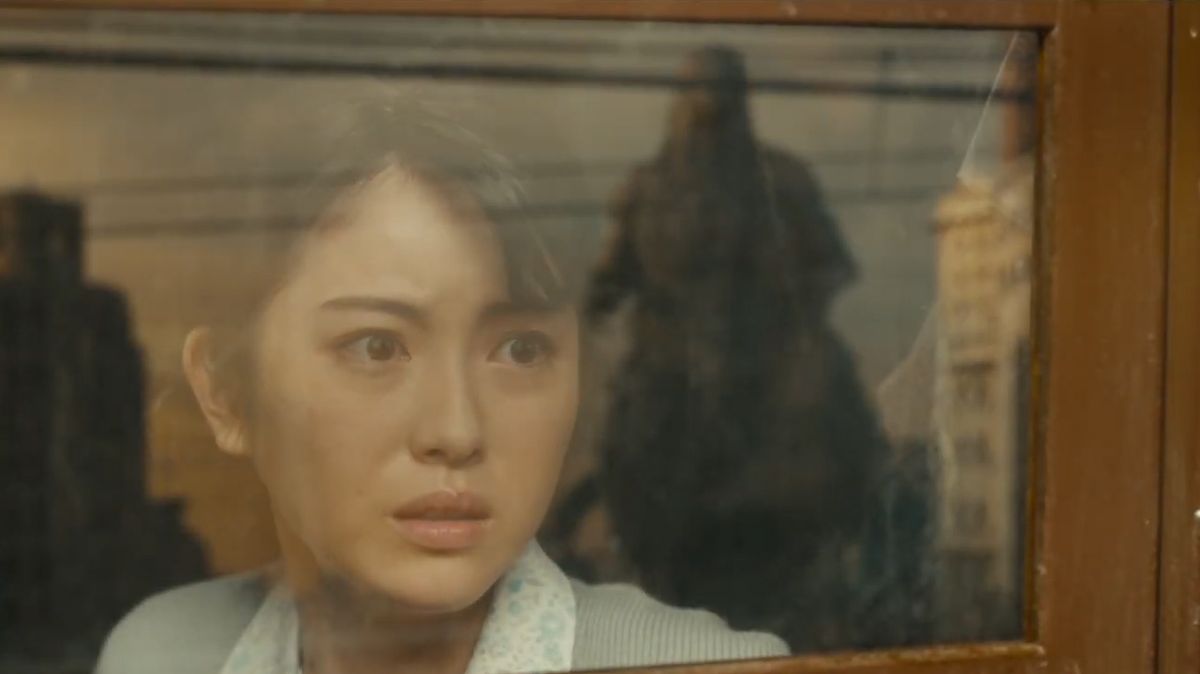
I am nowhere near an expert on Kaiju movies. In fact, I’ve only seen four of the nearly forty movies made starring this prehistoric reptilian monster. So, for me to say that this is the best Godzilla movie I’ve ever seen, maybe doesn’t hold the intended weight. But that doesn’t stop it from being the truth. Godzilla Minus One is everything you come to the movies for. Set in 1945 post-war Japan, a disgraced Japanese Kamikaze pilot Koichi (Ryunosuke Kamiki) returns to his decimated village. He ends up finding companionship with a displaced young woman named, Noriko (Minami Hamabe) who is caring for an infant child. Suffering from PTSD, Koichi takes a job retrieving ocean mines, teaming up with a group of characters that bring much needed levity to the situation. For the first time things are beginning to look up. For the first time there is hope. And that’s when Godzilla comes. Writer/director Takashi Yamazaki very much infuses a real sense of scale, spectacle and horror into the Godzilla visuals and destruction, as the attacks on land and sea beg to be experienced on the biggest screen possible. And while this aspect is important for any Godzilla film, the pre-Godzilla storyline is so strong, containing nuanced characters you actually care about, that this film could’ve worked without a monster at all. Though Yamazaki makes sure to highlight how his humans vs. Godzilla plot works to not necessarily remake the wheel, but reemphasize why Godzilla films are so great to begin with.  

4. Poor Things:  

Poor Things is set in an alternative Europe where the steampunk aesthetic is a reality and stunning costume design is everywhere you look. We are introduced to an elderly surgeon/ mad scientist Dr. Godwin Baxter (Willem Dafoe), referred by those around him as God, who lives with a bunch of mutant creations, as well as Bella (Emma Stone). Bella is technically also one of his creations. He keeps her trapped in the house, though initially she doesn’t realize it as he has given her the brain of an infant. Dr. Baxter then hires one of his students to document Bella’s ability to learn and grow, which she does at a rapid clip.  Soon Bella desires her freedom, believing the best way to acquire more knowledge is through experiencing life. This desire which leads her on an odyssey through Europe with the pompous Duncan Wedderburn (Mark Ruffalo, in one of the most hilarious roles of the year) who instantly becomes obsessed with her. The more autonomy Bella gains, the more frustrated the men

around her become, as most every man in this openly believe women are naive and should be protected, reprimanded, imprisoned and/or experimented on. Bella’s liberation is sexually graphic and politically charged, and it’s absolutely thrilling to watch. As she brazenly navigates the world of insecure men, it becomes a real joy witnessing Bella gain her liberation. By the end of this journey Emma Stone has given the best performance of her career, Tony McNamara has written a fuck the patriarchy script with echoes of Mary Shelley’s Frankenstein that should win him an Oscar, and director Yorgos Lanthimos has created a feminist allegory that stands as a fitting culmination to his bizarre and visually striking filmography thus far.

3. Beau Is Afraid:

Filmed as a horror, delivered as a dark absurdist comedy and best described as an odyssey of guilt or guilt-horror, Beau Is Afraid is bizarre and demented in all the ways I love. And it’s all so Ari Aster. Opening with Beau’s birth and his first contact with the pain of existing, Beau Is Afraid sees adult Beau (Joaquin Phoenix) a man riddled with anxiety and crippled by insecurity, living alone in an apartment within a hellscape of a city. He lives his life in fear of everything. His only truth seems to be the knowledge that all things could potentially kill him; even having an orgasm. On his way to the airport to visit his mother, Beau accidentally leaves his keys in the front door, and upon going back for them he discovers they’ve vanished…or have been taken. This anxiety event vaults Beau into a nearly three-hour surrealist journey fueled by parental guilt and highlighted by a series of nightmarish interactions, profound moments of self-discovery, the best production design of 2023 and Beau being continuously blamed for things he never did. Beau is tricked, chased, shot at, drugged, kidnapped, drugged again and then the movie gets crazy. With a dash of Freud and whole lot of Kafka-inspired humor in a Lord of the Rings format, Beau Is Afraid is an unhinged therapy session that deserves just as much acclaim as Aster’s other films, if not more.  

2. How to Blow Up a Pipeline:

A small group of young people (some self-proclaimed climate activists, some not) from all across the United States, come together in West Texas with the goal of blowing up an oil pipeline. Adapted from Andreas Malm’s nonfiction book, “How to Blow Up a Pipeline: Learning to Fight in a World on Fire”, in which it is argued that sabotage (property damage) is the most effective form of “local climate activism”, this movie continues in the spirit of its source material, presenting an unapologetic call to direct action.  Director Daniel Goldhaber along with co-writers Ariela Barer (who also plays the lead character) and Jordan Sjol’s choice to construct this story as a heist-thriller was a stylized stroke of genius, adding an additional layer of tension onto a story containing sky-high stakes from inception. Very much coming across as a collective passion project, the filmmakers as well as a cast which includes some very engaging performances from the likes of Lukas Gage (The White Lotus), Sasha Lane (American Honey), Jayme Lawson (The Woman King) and Barer herself, take careful consideration in continuously highlighting the revolutionary, communal and anarchist culture and reasoning at the heart of this feature. In the midst of what is a fast-paced film, we are asked to sit with beautiful shots of desert landscape, if only to reaffirm what it’s all for. We get flashbacks that accurately portray how an entire generation could be pushed to these lengths. How to Blow Up a Pipeline asks only one question. What constitutes true and effective activism during a time of immediate crisis? And this question is asked in the most edge-of-your-seat way possible, without sacrificing its “by any means necessary” message. If you know me, you know this is definitely my kind of heist movie.

1. Past Lives:

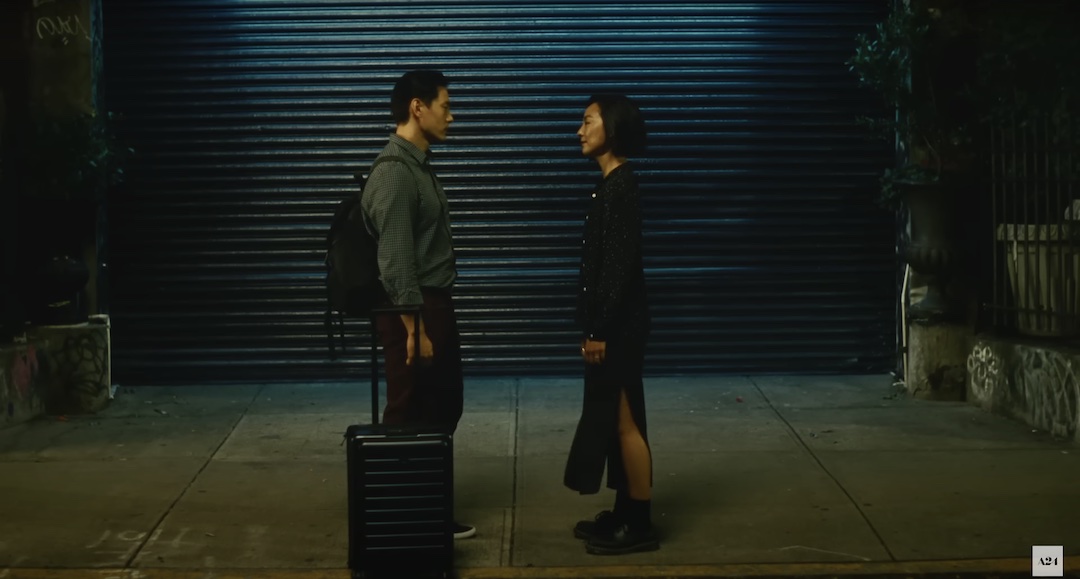
Is there such a thing as a soulmate? Is there such a thing as fate? In writer/director Celine Song’s feature debut, she examines these notions when telling the story of two childhood sweethearts, Nora (Greta Lee) and Hae Sung (Teo Yoo), who are separated when Nora’s family leaves South Korea. They lose touch but not their connection, as throughout the years they correspond via the internet, holding on to their unwavering attraction. It isn’t until over twenty years later that they mutually agree to meet when Hae Sung decides to travel to New York, where Nora now lives with her husband Arthur (John Magaro). More than just your average love triangle drama, Song creates a quiet masterpiece, which through her characters, her direction and some stellar performances, tells the story of the passage of time as it pertains to the fate of two individuals. It’s not until the second half of the movie that these two see each other as adults, but during every moment Nora and Hae Sung share the screen, Song constructs a space where the world falls away and her characters are allowed to live the purity of their bond, albeit knowing that at any moment the real world will come crashing down upon them as time moves forward.  Holding true to its thematic concepts of the allure of forbidden love, the idea of fate and our cultural connection between the past and present, Past Lives is both visually and tonally brilliant enough to be considered a theatrical cousin to a movie like In the Mood for Love. Hence, my favorite film of the year.

Movies that just missed my list (In order):

30. Are You There God? It’s Me, Margaret.

29. Creed III

28. Killers of the Flower Moon

27. The Killer

26. Dicks: The Musical

25. The Royal Hotel

24. Anatomy of a Fall

23. Blue Jean

22. The Blackening

21. Baby Ruby

20. The Creator

19. The Mission

18. Barbie 

17. The Holdovers

16. Dream Scenario

15. Monster

14. The Angry Black Girl and Her Monster

13. They Cloned Tyrone

12. Radical

11. Spider-Man: Across the Spider-Verse

Follow me on X (Twitter) @moviesmarkus and Instagram @moviesmarkus1

Posted in Top Ten List

My Top Ten Films of 2022

Written by Markus Robinson

Introductions are dumb. Let’s get right into this. The following are my picks for the ten best movies of 2022.   

10. Nanny: A horror take on Ousmane Sembene’s 1966 classic “Black Girl”, only this time told as a modern examination of female African immigrants living in America. “Nanny” tells the story of a Senegalese immigrant named Aisha who takes a nanny position for an upper-class white family in New York. With her own child back in Africa, Aisha’s goal is to raise enough money so he can come live with her. But the longer she works in this abusive and exploitative nanny position, the more nightmares she has, as if something is attempting to get her attention. This could be considered horror in the same way “The Babadook” is, where the horror is less about the monster and more about the situational trauma. The way writer/director Nikyatu Jusu filmed her mostly Black cast visually reminded me of “Moonlight”. And I already stated how “Nanny” takes its story almost directly from arguably the most influential African film of all time. “Nanny” is a movie which takes from the best and executes this reimagining with haunting proficiency.

9. Happening: Adapted from Annie Ernaux’s autobiographical novel, “Happening” takes place in 1960’s France when abortion was illegal. Broken down into weeks, the story is a race against time, following a young woman named Anne as she attempts to obtain an illegal abortion. Along the way she is abandoned by friends, confronted by people who are against a woman’s right to choose and doctors who attempt to sabotage her. Director Audrey Diwan keeps the camera fixed to our protagonist, making this an increasingly uncomfortable and painful watch, witnessing firsthand what someone seeking an illegal abortion must go through. With this past year seeing the overturning of Roe v. Wade, “Happening” may be the most important film on this list.

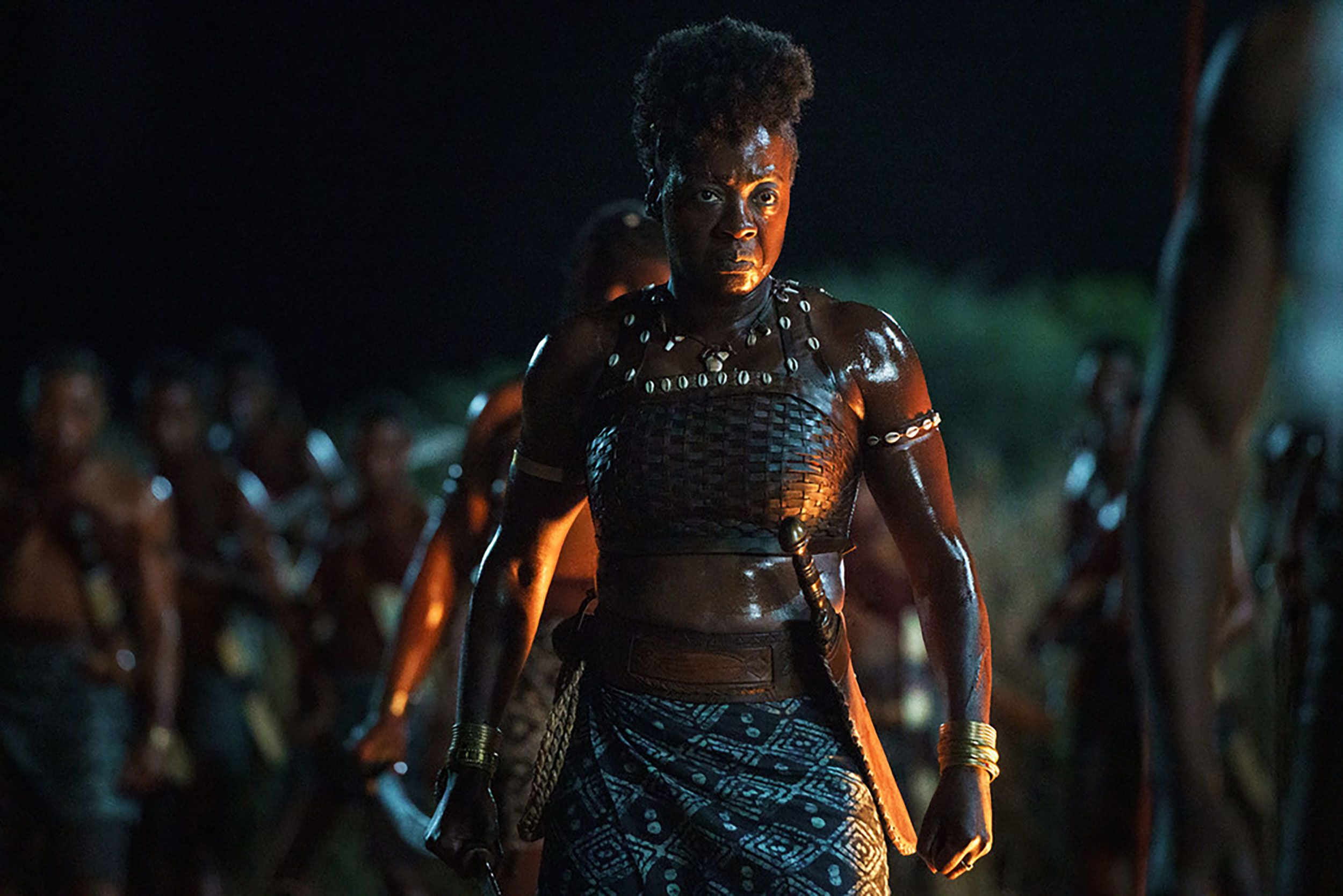
8. The Woman King: Viola Davis, the action star? A film which caught me completely off-guard, director Dina Prince-Bythewood’s “The Woman King” is a superior theater going experience on almost every level. Taking place in 1823 West Africa, this film tells the story of Nanisca (Viola Davis), the leader of an all-female unit of warriors in the Kingdom of Dahomey. Through theater shaking battle sequences Prince-Bythewood works to showcase her love and admiration for these physically dominant female characters throughout the film. But it’s not just about the action, as there really are only three or four big action sequences. It is the smaller scenes of levity and female-centric bonding centered around trauma, loss and triumph which really carry this two hour plus film. “The Woman King” has so much going for it. From the battle sequences, to the character building, to the historical stakes felt throughout, to Viola Davis becoming an action star before our very eyes, there is something for everyone. For me there was also something deeper. “The Woman King” depicts its relationship between elder Black female characters and younger Black female characters as analogous to the fractured connection between Africa and every single person stolen from her during this horrific time in history. A profound theme handled with such care, that I wish more people would actually experience this movie before making their own statements about “The Woman King”.

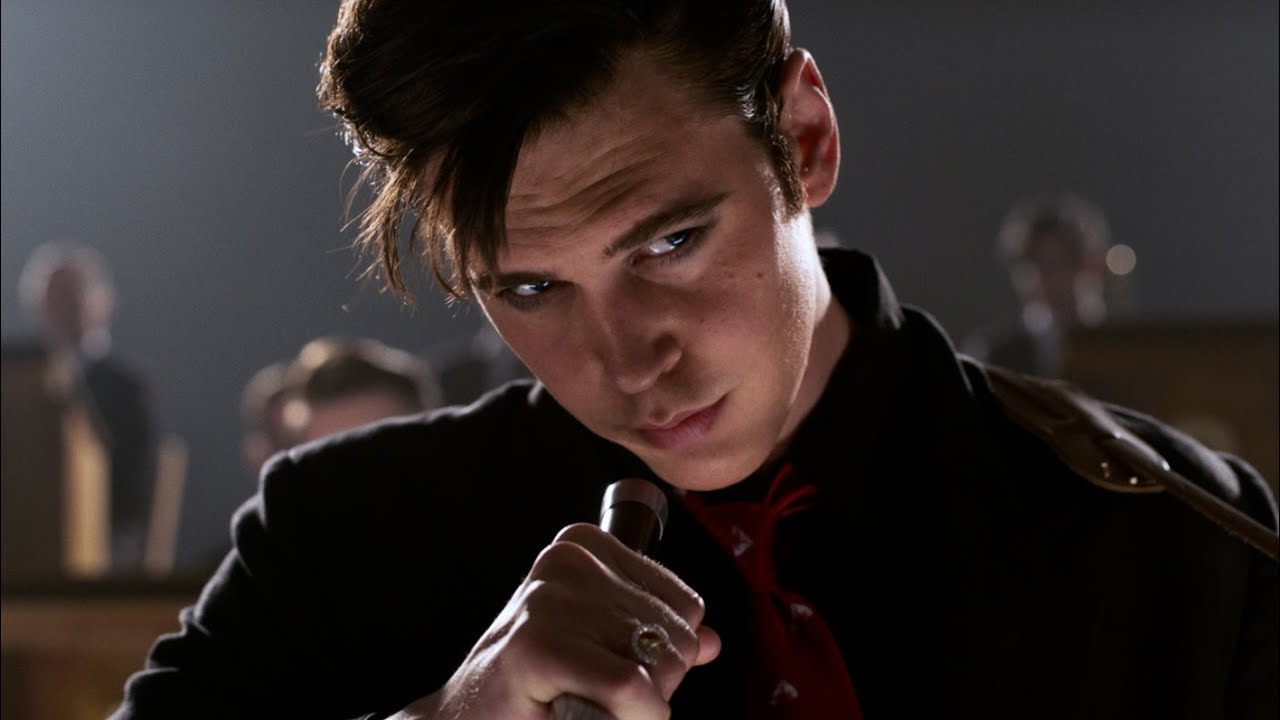
7. Elvis: As someone who isn’t an Elvis fan and couldn’t care less if a new generation was introduced to a historical figure some refer to as the “King of Rock & Roll”, but also as someone who knows a lot about the man’s life, this was always going to be a tough sell. I mean, another Elvis movie? (Sigh). With so much Elvis content in the world (documentaries, biopics, etc.) and many “notable” impersonations throughout cinematic history, going into 2022’s “Elvis” all I wanted was something different. And what director Baz Luhrmann (Romeo + Juliet, Moulin Rouge!) gave me was different and so much more. No matter how you feel before you watch “Elvis”, it’s undeniable how effective the film is. Austin Butler gives an Oscar worthy lead performance as Elvis. Luhrmann delivers sequences which transport audiences into the crowd of an Elvis performance, giving us the most accurate taste of not only what it looked like, but more importantly what it must have felt like. I never really understood why people of a certain generation were so starstruck by Elvis. Luhrmann makes it make sense using his own unique visual flair, dousing the story with a flamethrower of larger-than-life visual effects, a modern score and the “electricity in the air” feeling which constitutes a Baz Luhrmann cinematic event. This is the best Baz Luhrmann film I’ve ever seen.

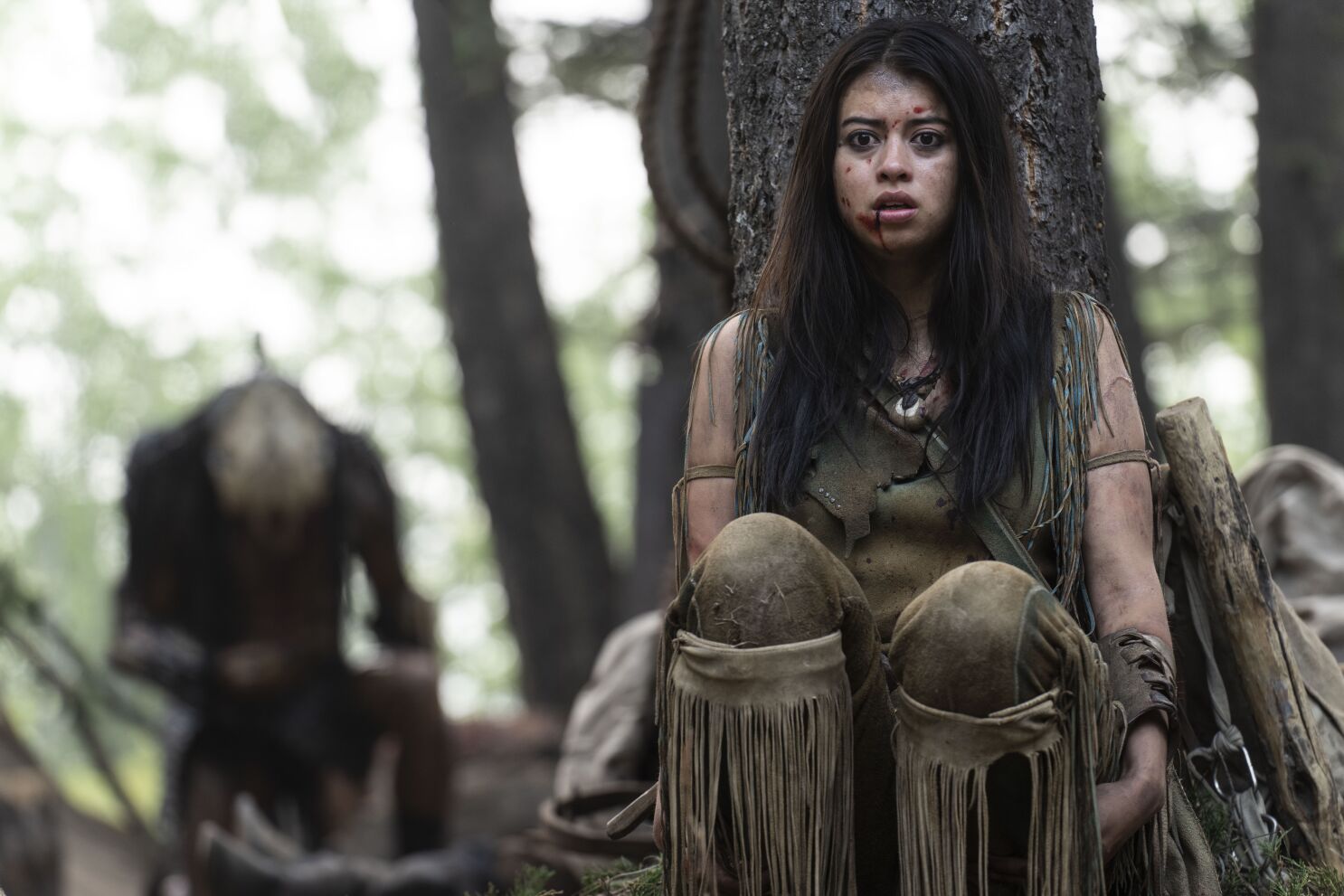
6. Prey: A “Predator” prequel that is on par with the 1987 classic. Taking place in the Northern Great Planes in 1719, “Prey” tells the story of a young warrior of the Comanche Nation (played by rising star, Amber Midthunder) as she fights to protect her tribe against a predatory alien who has crash-landed on earth. This is very much a “Predator” movie, meaning it holds a pretty simple cat and mouse setup, with lots of bloody action and an “against all odds” montage leading to a final battle. What separates this installment is a couple of things. Writer Patrick Aison and director Dan Trachtenberg (10 Cloverfield Lane) do an excellent job of placing the focus on the story’s Native characters and how they are portrayed. And using a villain as ruthless and bloodthirsty as the Predator as a foreshadowing event for the Indigenous fight against European colonizers, was a stroke of genius. “Prey” also sees a slew of talented indigenous actors at the helm. Representation continues to be addressed and championed. As the Predator series is an established media property, this installment, with this story and this cast is a big deal. But how it chooses to represent the indigenous community is an even bigger deal.

5. Resurrection: If you know me, you know I have a tendency to gravitate into the morbid underbelly of cinema from time to time. And so, I present, “Resurrection”. A woman (Rebecca Hall) living with her teenage daughter in the city, suddenly begins to see a man from her past showing up in random places, seemingly attempting to intimidate her. Although he doesn’t approach her at first, her terrified reaction says it all. Soon her world begins to spiral, as a secret from her past comes back to haunt her. This is a movie that has been highlighted by many for the intense central performance of Rebecca Hall. And yes, her performance drives this movie forward, as the story veers more and more into the bizarre. It’s the story from writer/director Andrew Semans which takes a common thriller and puts a surreal and disturbing twist on it, pushing said twist to its natural conclusion; a conclusion I wasn’t able to wash off. This movie does what a good horror should do. It gives us a monster while delivering statements on real world issues. In the case of “Resurrection”, the film is actually about trauma stemming from a relationship where grooming is involved.   

4. Triangle of Sadness: Socialism and Capitalism are on a cruise together. That’s the setup to the joke writer/director Ruben Östlund’s attempts to tell in his new dark comedy “Triangle of Sadness”. And though it’s not subtle and longer than some may believe necessary, and the antagonists are billionaires and other wealthy criminals, so it was never hard to root against them, every so often a movie comes out that I believe was made just for me. This is that movie. It warmed my anti-capitalist heart.  The story is simple. A couple of models (her career is taking off, while his is on the back-end) find themselves on vacation on a yacht with a group of ultra-rich couples. Also on this cruise are the staff who are instructed to never say “no” and told by management there is nothing better in life than tips. With humor, ranging from political class analysis to pronged barf and feces sequences, “Triangle of Sadness” is a relentless and superbly written bashing of the social elites and patriarchal structure, in what amounts to a two hour and twenty-seven-minute love letter to the working class. Here for this!    

3. Cow: Documenting the life cycle of dairy cows, director Andrea Arnold (Fish Tank, American Honey) gives us a glimpse into a world that the public rarely see. For the most part this documentary consists of handheld close-ups of everything from the birth of a cow, to the eyes of the mother cow as she frantically searches for her young after its removal, to the udders of a cow as milking machines are hooked-up to them for hours at a time. We also see the insemination process. “Cow” not only shows the physical toll this process takes on these cows, but also displays the slow spiritual death that occurs within these animals as they are used and abused for years until they are no longer viable. Animal rights films which usually get a lot of exposure are the larger Netflix documentaries, where we are witness to mass animal genocide. But there is a place for smaller movies like “Cow”. Documentaries which follow a few animals at a time, in this same world, under these same conditions, but allowing audiences to form a bond and empathize with the individual a bit better. What Arnold does here is allow for this empathy to occur by showing us every part of this process. 

2. Vortex: This is a movie about the brutalities of getting old. This is a movie about the effect on those watching someone slowly deteriorate. The story is an unflinching look into the decline of an elderly couple, played by Françoise Lebrun and Dario Argento (both of which gave my favorite performances of 2022). The woman suffers from dementia and her husband who has his own health problems, acts as her caregiver. Written and directed by Gaspar Noé (a filmmaker who is more known as a provocateur) “Vortex” is shot entirely in split screen; meaning there are two separate scenes going on at once during almost the entirety of the film. This may all sound more than a little overwhelming, but Noé makes it work so naturally that I couldn’t imagine “Vortex” filmed any other way. As for the content, it’s devastating. There are sequences depicting what dementia looks like physically, but Noé also highlights the in-between moments surrounding “next step” conversations. How do you have a conversation with an elderly parent who is ill, about seeking help or about any end-of-life discussions? Noé gives us these moments and asks you not to turn away. “Vortex” is this filmmaker’s most compassionate and most personal film. It’s also his most hopeless. This isn’t a movie I’d watch again, but a masterpiece I couldn’t leave off of this list.

1. Black Panther: Wakanda Forever: While the Black Panther films are technically located inside the Marvel Cinematic Universe, they both stand as fully formed and evolved enough to not only live outside of this world, but thrive. With “Wakanda Forever”, writer/director Ryan Coogler uses this stage as equal parts in memoriam to the great actor Chadwick Boseman and as an attack on white supremacy, with a healthy dose of Black female empowerment for good measure. In this sequel, Wakanda stands exposed to threats of intervention from the United States and other world powers and find themselves with an opportunity to join forces with the leader of an underwater empire called Tolokan. Selfishly, “Wakanda Forever” holds a higher place in my heart than its predecessor due to my half-Black, half-Mexican heritage. Coogler really goes mask off, making it clear early and often that this is a story about colonization and the shared historical trauma of two nations worlds apart. He does his best to keep his characters grounded in realism; real people having real conversation regarding the Black and Brown experience, which is usually the antithesis of how Marvel characters are written. This movie is so much better than your favorite MCU movie.

Movies that just missed my list (in order):

30. Decision to Leave

29. Kimi

28. Men

27. Thirteen Lives

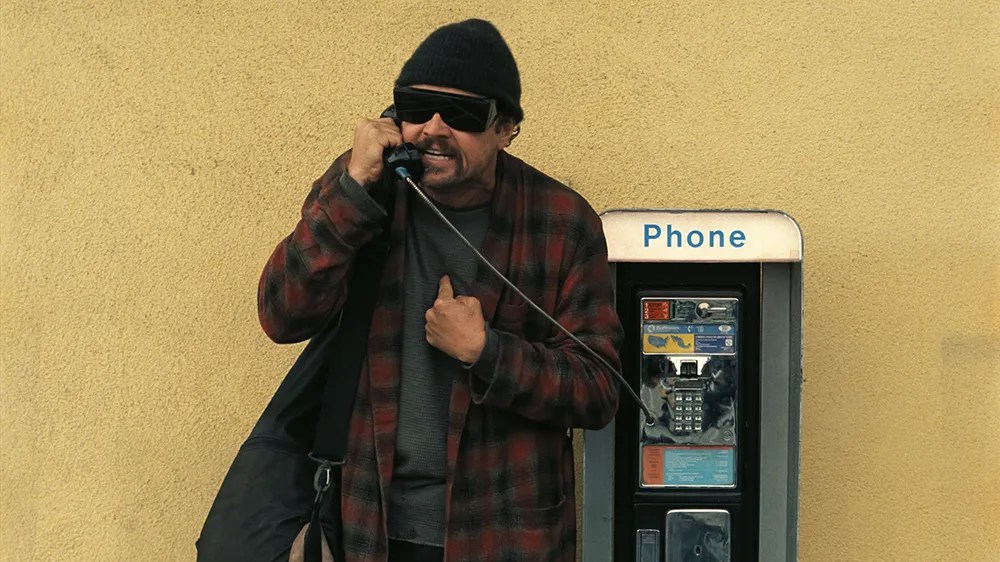
26. Neptune Frost

25. Barbarian

24. Cha Cha Real Smooth

23. Mad God

22. The Banshees of Inisherin

21. The Black Phone

20. All Quiet on the Western Front

19. Top Gun: Maverick

18. Turning Red

17. The Batman

16. Everything Everywhere All at Once

15. RRR

14. Good Luck to You, Leo Grande

13. Tar

12. Fire Island

11. The Fabelmans 

Follow me on Twitter @moviesmarkus and Instagram @moviesmarkus1

Posted in Top Ten List

My Top Ten Films of 2021

I hate long intros, so let’s get right into this list. In a year packed with more film excellence than 2020 (for obvious reasons) the following are what I’d say were the ten best films of 2021.

10. Don’t Look Up:

A movie that warmed my anti-capitalist heart, “Don’t Look Up” reaffirms that nobody in power cares about you, social media is a distraction, and we are stuck in a patriarchal society that hates women and wouldn’t believe them even if a female scientist had evidence of a comet hurdling towards earth to kill us all. Moral of the story…welcome to earth (specifically the United States). 

In what is an allegory for the climate crisis, this story sees a scientist (Jennifer Lawrence) discover that a comet is going to hit the earth in six months and fourteen days. This will be an apocalyptic level event. She and a colleague (played by Leonardo DiCaprio) alert the proper authorities and even the President, but nobody seems to take the scientists seriously until the comet suddenly becomes a capitalistic opportunity. This is a comedy.

Writer/director Adam McKay absolutely hits the mark here, creating a giant timely reference. In his “fictionalized” version of the United States billionaires run the world, the main stream media only cares about headlines and so do influencers and so does the President. And also, dumb people hate science. This is the most Terry Gilliam film I’ve seen in a while, with a sprinkle of Coen brothers realness.

9. CODA:

This may be the strangest film on my list, not for any other reason than its damn formulaic and damn uplifting. I’m usually very much into downer films.

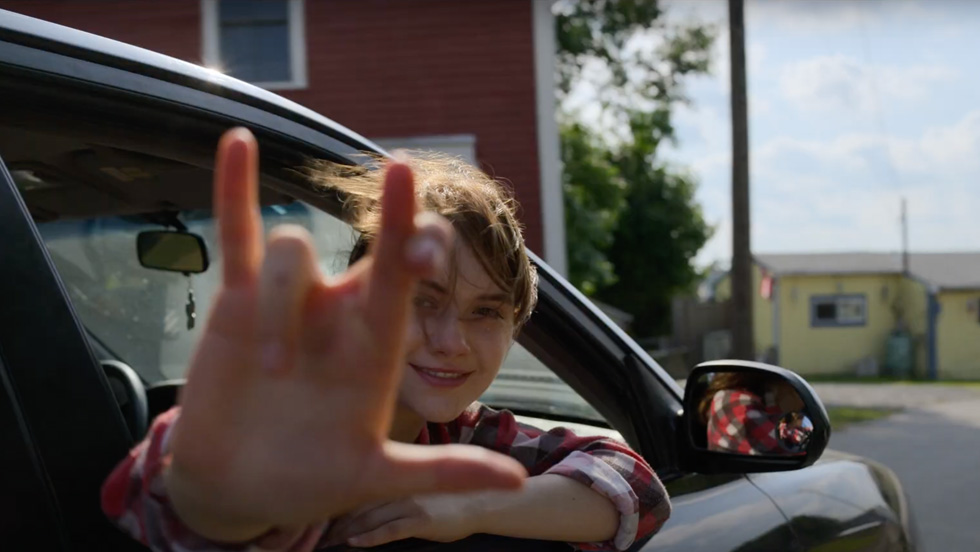
“CODA” stands for “Child of Deaf Adults”. It follows a high schooler named Ruby who is the only person in her family who isn’t deaf. One day she decides to join a music class, as she is a very talented singer but doesn’t seem to realize it yet. An eccentric teacher sees potential in her and spends the movie trying to challenge her to go off to music school. But as the only non-deaf person in her family, she feels that her destiny is to stay and take care of her parents. F-O-R-M-U-L-A-I-C! That said, the formula works quite well.  Very Disney in tone, with every loose end tied up by the end, “CODA” is undeniably heartfelt, funny and contains real gravity and stakes.

The characters are all likeable and we root for them the entire time. The acting is quite effective (the mother is played by Marlee Matlin) and the director does a great job of spotlighting deaf dialogues, with scenes of real deaf actors communicating for entire scenes without vocal breaks; which sounds like an obvious move in a film with this subject matter, but it’s something that really isn’t seen in film today. Sure, there are plot holes. And yes, movies like this may not make a lot of people’s top ten, but it’s really not up for debate how well this gets you right in the feels and never let’s go.

8. Spencer:

“Spencer” portrays Princess Diana, trapped at the end of a loveless marriage, surrounded by the most powerful family in the world, hopelessly marching towards the gallows, accompanied by a Jonny Greenwood orchestral score which swings back and forth between avant-garde jazz and classical; a decision which wonderfully complements a woman who famously stood in between two worlds. Beginning with a screen text which reads “A fable from a true tragedy”, visionary director Pablo Larrain (Jackie) gives us a brief glimpse into the life of Diana, as she attempts to break free from a world that at first glance could be mistaken for a fairytale.  His vision gives us something different, more surreal and far less narrative driven. The camera floats alongside Diana as she ventures outside on her own, almost getting lost amongst the seemingly never-ending world around her. And inside the estate Larrain creates a very claustrophobic feel, as the walls of opulence close in on the princess; establishing this as a fully immersive Diana experience. But also layered, because as much of a movie about Diana as “Spencer” is, it very much attempts to be a film about women trapped under the weight of the patriarchy. For as we root for Diana’s rejection of this life, Larrain quietly but consistently reminds us all about how these fairytales tend to end. 

Also, Kristen Stewart plays Diana in the role that will win her an Academy Award, creating a character all her own, not so much doing an impression, but an interpretation, giving a very Meryl Streep level performance.  And so it goes, a Kristen Stewart movie has finally made it onto one of my top ten lists. I totally get it. I’m late getting on this bandwagon.  

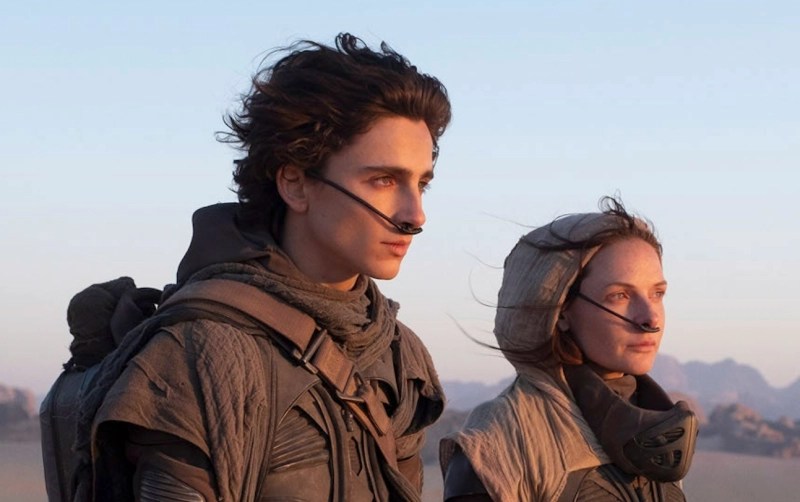
7. Dune (part one):

Denis Villeneuve makes perfect sci-fi. I need this on a tee-shirt.

Writer/director Denis Villeneuve (Blade Runner 2024, Arrival) adapts Frank Herbert’s notoriously difficult to adapt “greatest science fiction novel of all time”. (Seriously, look up the history of attempts to adapt “Dune).

The film sees House Atreides gain power over the planet Arrakis aka Dune; a desert planet filled with many dangers, including massive Godzilla-sized worms (sandworms); calling them worms may be selling these visually grandiose creatures short. This planet is also the home to a native peoples called Fremen and a valuable mineral referred to as “spice”, which makes interstellar travel possible. The story soon finds Paul Atreides (the youngest member of this house) encountering conflict involving spice mining, double crossing, and the aforementioned big ass worms. But Paul is no ordinary duke. He may or may not be a messiah of sorts, whether he wants to be or not.      

As expected, there is a ton of exposition which I saw and accepted as necessary in order to adapt a book like “Dune”; even again when you take into account that it’s a two hour and thirty-five-minute “part one”. Villeneuve handles the pre-action stuff by acknowledging the extensive exposition and (with the help of cinematographer Greg Fraser) establishes his brand of spectacular visual effects from minute one. This along with Han Zimmer’s score, carry the first hour of this movie until everyone is up to speed.  While there are many reasons why this film works, it’s greatest achievement will not be the film’s adaptation integrity, but the fact that as a visual sci-fi experience it works for the masses. And with a world this complex, this is the best compliment I can give.  

6: Titane:

The hardest sell on this list. Even though “Titane” is an award-winning film, it’s not one for everyone and will definitely turn people off who aren’t into extreme visuals. Also, even though I saw this film months ago, I will admit that I still don’t fully understand everything the director was trying to say and am eager for a second viewing. So, why would a film that I’m not totally sure I understood, be on this list?

Allow me to explain: Written and directed by Jula Ducournau, this is a horror film which follows a woman who develops a sexual attraction to cars after a childhood car accident. This car accident has left her with a titanium plate in her head. As an adult she works as a dancer, dancing atop classic cars for men. She has become a celebrity to these men, who find her as irresistible as she finds them repulsive. One night, she kills an aggressive fan after he chases her to her car. After which, she has intercourse with a car. After that she goes on a killing spree. Mid-spree she discovers she is pregnant with what we can only assume is a car baby. As she attempts to evade the police, she hides disguising herself as the long-lost son of a local fire chief. And then things get weird.

How am I doing selling this movie?

On its face “Titane” can be shrugged off as a body horror, extreme cinema and nonsensical slasher. But like Ducournau’s previous picture “Raw” there is so much more going on with this movie than just surface and visuals (the visuals are beautifully shot by the way). At its core this movie challenges and addresses gender stereotypes, toxic masculinity, childhood trauma and transphobia in very profound ways.

It’s easy to say that this is simply a movie about a woman who kills. And I think that’s the point. This brilliantly chaotic piece of filmmaking seems to being saying that if all you see is the violence or the sex, and/or all you get out of this movie is “a woman dresses like a boy”, this may say something more negatively about you than you’d like to admit.

5. Shiva Baby:

An anxiety attack told in one hour and seventeen minutes, “Shiva Baby” is a dark comedy about a woman in her early twenties named Danielle who finds herself at a Jewish funeral with her overbearing parents, her ex-girlfriend and her “sugar daddy”, who turns out is married with an infant.

Written and directed by Emma Seligman, as much as “Shiva Baby” is a comedy of unfortunate events, it’s filmed at times like a zombie movie (frantic soundtrack and all) as Danielle, unable to leave this situation, is surrounded by a crowded room full of flippantly passive aggressive family conversation, random family friends touching her stomach and commenting on how she’s “too skinny” and the aforementioned crying infant.

The movie is sharp, hilarious and had me on the edge of my seat. It’s basically the party sequence from “The Graduate”, just cranked up to eleven.

4. Gunda:

The only documentary on my list and it’s the anti-meat one, shot in black and white. Sounds about right.

Directed by vegetarian Viktor Kosakovskiy and produced by vegan Joaquin Phoenix, “Gunda” is a nature documentary without narration and without any soundtrack (all sounds are diegetic). It’s about ninety minutes long and in it we follow a group of animals; some who are living on an animal sanctuary and others who are living on a farm. The animals prominently featured are a mother pig and her newborn piglets. The film opens with a scene of a mother pig feeding her newborn litter. And we follow the mom and her children as the newborns grow.

The point of this film is animal activism. As a vegan I have seen all the slaughterhouse videos. I have seen cruel and unspeakable acts by humans towards living sentient creatures. These videos are commonplace in the community and used as ways to open people’s eyes to the atrocities of animal agriculture. And it does work sometimes. “Gunda” gives an alternative to videos of brutality and throat slashing violence. And it does it majestically.

I believe there is a place for film like “Gunda” which makes the same case (if not stronger) for animal sentience. It shows that a piglet or calf, etc. will suckle from their mother’s teat, will play like puppies and will look to their mothers for guidance when navigating a large field, if you let them. Also, a mother pig or a cow, etc. will feed and raise their young, if you let it. 

While there is no blood and no slaughterhouse shown in this film, there is a third act which will have audiences emotionally distraught as we begin to understand the fate which awaits these creatures.

3. Luca:

“Luca” is the story of a young boy sea monster named Luca (voiced by Jacob Tremblay) who has become infatuated with seeing what lies above the surface and on the coastal Italian town of Portorosa. He is told by his parents that good kids (sea monsters) don’t venture to the surface. But when another boy sea monster his own age, Alberto (voiced by Jack Dylan Grazer) sparks his curiosity by showing him that he can venture onto land and change into human form once on the surface, Luca soon discovers that this place may be where he’s meant to be.

This is a whimsical Pixar Italian folktale for sure, with all that entails. High quality animation, entertaining story with lots of levity, but also themes of fear, loss and acceptance told in a way that a child can digest. That said, it’s not hard to see “Luca” for what it is, with a particularly tender relationship between these two boys at its forefront and telling a story where these boys must hide their identity for fear of being hurt; where on multiple occasions they are referred to as “kids who are different”. While the plot of “Luca” could be seen as more simplistic than others in the Pixar canon, it’s more than a little exciting to finally see a film like this. An animated film which carries the same Pixar award worthy standards, and also celebrates an LGBTQ+ story; even if the corporate machine behind it attempts to gaslight us all, denying this watershed moment.     

This is one of the most important movies in the history of animated film.  

2. West Side Story:

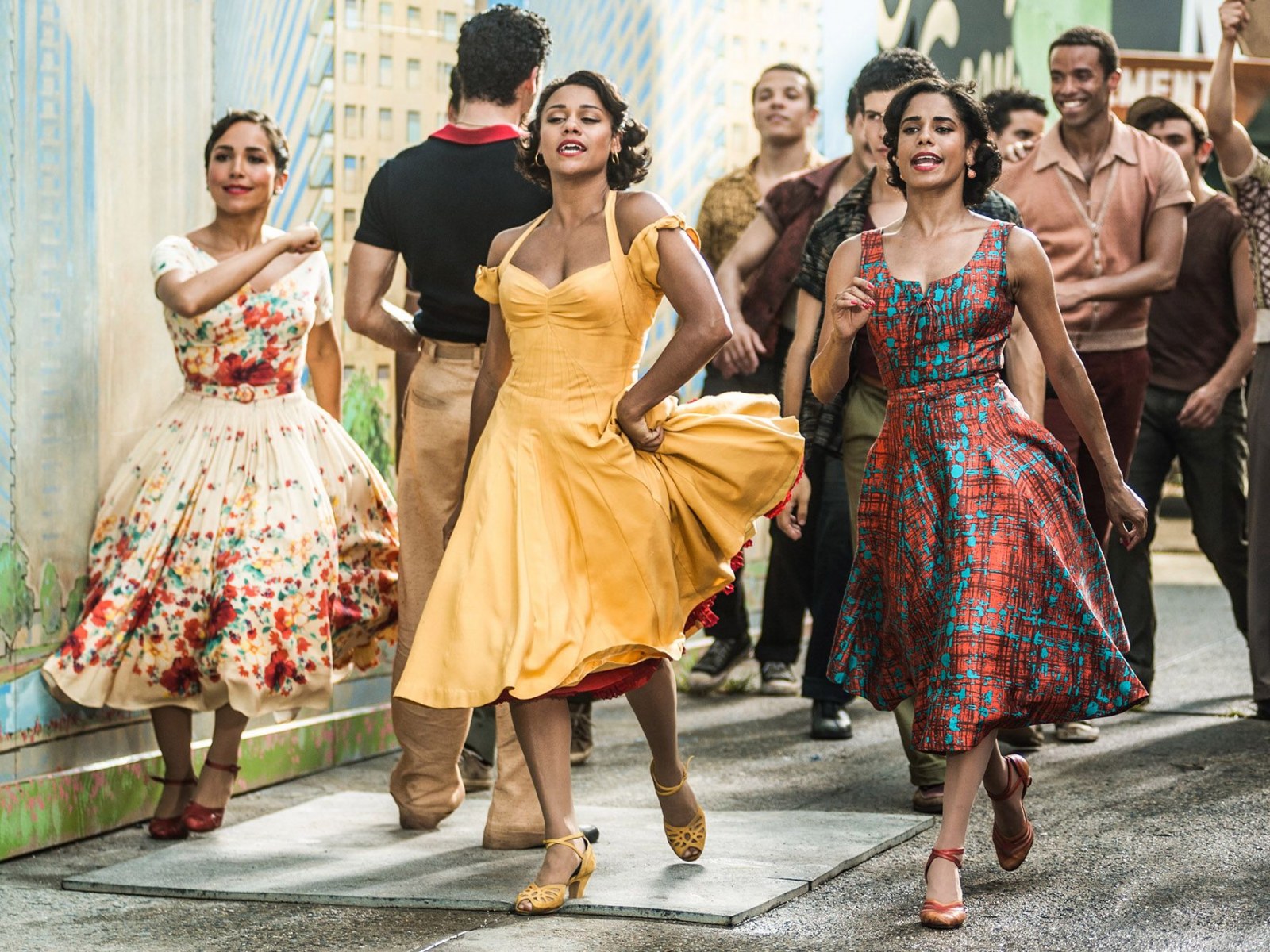
How do you make arguably the greatest musical in history even better? Let Steven Spielberg have a go. This remake of the 1961 film and/or the 1957 Broadway production, is a masterclass.

We all know this Romeo and Juliet inspired story. Boy (Ansel Elgort) and girl (Rachel Zegler) from different sides of the tracks (one white, the other Puerto Rican) fall in love despite their families wishes and fighting ensues. Anyway, expectations were high and expectations were exceeded.

Spielberg and writer Tony Kushner actually add elements to the source material, which in another director’s hands would be catastrophic. But every element added gives this version more life and context and allows the characters to become more three dimensional. It’s undeniable.    

Spielberg continues, giving audiences camerawork which seems to dance and glide alongside choreography so breathtaking that it made the entire theater vibrate. 

He also gives us Latino characters speaking Spanish without the addition of subtitles, a move which may not seem like much to some, but to those who never looked to the original for representation, this is one of the touches which reinforces that this is also a Latino story. Furthermore, this film contains far more Afro-Latino representation than Lin-Manuel Miranda’s “In the Heights” (big eyes emoji).

This acclaimed filmmaker is asked to remake a legendary film. And what he does is make it his own while also pausing at times to reenact iconic shots, paying homage by creating sequences which look visually as though we are back watching the 61’ version; giving us fans all the nostalgia feels. 

Watching this movie reminded me why Steven Spielberg is the greatest director alive.

1. Last Night in Soho:

If anyone could fit this much movie into one experience it would be Edgar Wright.

In this female lead horror, with the best soundtrack of the year, writer/director Edgar Wright tells the story of Ellie (Thomasin McKenzie), a young woman from the country who gets a chance to go to London to pursue her dream of becoming a fashion designer. It’s alluded that she’s had some sort of breakdown in the past and that London might be overwhelming for her. Ellie rents a room in an old house and when she falls asleep, she begins to have dreams (or visions) where she is transported to 1960’s London, where she seems to become this other woman, an aspiring singer played by Anya Taylor-Joy. Ellie becomes enamored as each night she falls asleep and lives through this mysterious other woman. But theses dreams turn to nightmares, as she discovers that London has a darker side and the true monsters in this horror story are men.

Visually this film is delicious, with every stylized sequence popping and grabbing and pulling the audience into the film, just as the protagonist is pulled into 1960’s London. The script is perfect, fluidly sliding in, out and around the horror genre, building into a quite unexpected mystery.  

“Last Night in Soho” is the culmination of every Wright movie. It is a masterpiece which gave me the same feeling I got the first time I watched Hitchcock.

Follow me on Twitter @moviesmarkus and on Instagram @moviesmarkus1

Here are 15 movies that didn’t make my top ten list, but I still enjoyed and would recommend.

11. Eternals

12. Violet

13. Summer of Soul (…Or, When the Revolution Could Not Be Televised)

14. Candyman

15. A Quiet Place Part 2

16. Godzilla vs. Kong

17. Benedetta

18. Annette

19. Encanto

20. The Mitchells vs. the Machines

21. C’mon C’mon

22. Judas and the Black Messiah

23. In the Heights

24. The Green Knight

25. Licorice Pizza

Posted in Top Ten List

My Top Ten Films of 2020

2020 will go down in history as the year of COVID, BLM and the rejection (by many) of fascism. 2020 also saw massive lockdowns in many states in the US. And with that, many businesses where forced to shut down and/or modify how they functioned during a pandemic. This was also true for the film industry and the movie theater industry. Many big budget features have been pushed to late 2021 or placed on a streaming service. But that doesn’t mean there were fewer quality movies released this past year. In fact, some excellent and quite relevant movies were released on VoD and streaming services. So, with that said, here are my top ten films of 2020: 

10. Ava: From director Tate Taylor, who’s last film “Ma” was majorly flawed, but highly entertaining, comes a movie about an assassin who has a bounty on her head. Starring Jessica Chastain, John Malkovich, Common, Geena Davis and Colin Farrell, this is a curious pick for sure, only because I wouldn’t say this is a “good movie” on a technical level. In fact, the acting is shockingly average. The plot is not anything new and (in fact) is filled with clichés. Even the fight choreography is clunky at times. So why is this one my list? Thanks to Taylor’s direction, “Ava”, while flawed, is non-stop entertainment. I don’t really know why I enjoyed it as much as I did, but I did. I enjoyed this more than any John Wick film, more than “Hanna”, or the “Taken” films; all of which “Ava” would be considered in the same category as, but on the B-side. A highly rewatchable and easily digestible movie, this may be an instance of right place/right time, arriving just when I needed some mindless entertainment.  

9. Never Rarely Sometimes Always: This independent film focuses on an American teenager who must travel to obtain a legal abortion. The point of this movie is to recreate an accurate depiction of what a teenager must go through in certain areas of the country, in order to have a safe abortion without parental consent. As viewers, we go through this process with her. Writer/director Eliza Hittman really takes her time with this journey, forcing us to look on as this girl meets with a financial advisor, has multiple sonograms, sees a counselor and on the way navigates a large city full of lecherous men. Reminding me of 2003’s “Thirteen”, “Never Rarely Sometimes Always” is a not so gentle reminder of how dangerous it is to be a teenage girl.  

8. Red, White and Blue: John Boyega gives a performance rivaling his own in “Detroit”, in this the third in a series of five Steve McQueen feature length films to come out in 2020. “Red, White and Blue” is the true story of Logan Leroy, a young Black forensic scientist in London who wants to become a cop after his father is assaulted by two police officers. Exploring both sides of what we would now call the “Defund the Police” argument and also the dichotomy of being a Black cop, this isn’t itself a pro-cop or anti-cop film, but more a fascinating character study of two opposing Black viewpoints and how they each see the purpose of police in their communities.   

7. The Forty-Year-Old Version: Filmed in black and white on what looked to be a shoe-string budget, Redha Blank, writes, directs and stars in this film about a struggling Black female New York playwright, who may or may not be having a “mid-life” crisis when one day she decides to pursue a career as a rapper.  This is a film that drips with love for the culture, feeling like early Spike Lee, but with a more comedically awkward tone. Blank puts it all out there with a character who works in a field run by white gate-keepers, attempting to tell a story of Harlem as she sees it, the whole-time hurtling sexism, ageism and the pressure to write “poverty porn”. It does take about twenty minutes to get going, but once it does “The Forty-Year-Old Version” is hilarious, personal and profound in a way that really caught me off guard.  

6. Possessor: Uncut: Set in an alternate universe where assassins take control of (inhabit) unsuspecting people’s bodies using brain-implant technology, in order to execute targets without it being traced back to them. “Possessor” sets a high bar conceptually. And it not only delivers, but will age as a sci-fi achievement on the same level as “Blade Runner”. That’s right. I said it. Starring the brilliantly eccentric Andrea Riseborough and Christopher Abbott giving dueling performances, while technically never actually being in the same room, and directed by Brandon Cronenberg, there is a ton of mind-bending goodness to feast on. It is also the most explicit movie on this list, in every aspect. But what else would you expect from a Cronenberg?

5. Sound of Metal: A profoundly emotional journey following the life of a young metal drummer who suddenly loses his hearing. Director and co-writer Darius Marder does a spectacular job of putting the audience into the shoes of a person struggling with sudden deafness, by focusing not only on how the world feels to someone who is deaf, but also how deafening the world truly can be. The sound mix is superb and Riz Ahmed gives one of the best performances I’ve seen all year. The only real flaw (if I had to find one) is that I wish it was longer.  “Sound of Metal” is tragic (not a spoiler) even in its happiest most redemptive moments. Most of the things I loved about a movie such as “Whiplash” or “The Place Beyond the Pines”, are things I loved about this.

4. The Devil All the Time: Just to be upfront, this form of woefully depressing, life is meaningless storytelling is right up my alley; if you couldn’t tell by a list rife with downers. Adapted from Donald Ray Pollock’s acclaimed debut novel by writer/director Antonio Campos, and set between World War II and the onset of the Vietnam War, this “Hillbilly Gothic” tale follows the lives of three groups of people, a war vet and his son, a couple of evangelical preachers and a couple of serial killers, all seemingly trapped in a hyper-religious area within the Bible Belt, whose lives intersect in random and vicious biblical ways. With tons of moving parts, Campos does a superb job of methodically maintaining this ever changing two hours plus story of relentless despair, while teasing us with unattainable hope. Sounds like a blast, right?   

3. The Assistant: A snapshot of one day in the life of a young female assistant working for a powerful (but never physically depicted) executive. Written and directed by Kitty Green in a way that really emphasizes the silent suffering of one female employee trapped in an abusive workspace, in order to amplify the voices of many women who work in equally abusive environments. “The Assistant” showcases what an everyday hostile work environment looks like. We watch a mounting drip, drip, drip of uncomfortable and abusive actions made against this woman, as she absorbs every blow for the good of her career. “The Assistant” is a film where, if you relate to the protagonist at all, it will leave you absolutely decimated. 

2. Ma Rainey’s Black Bottom: Based on a play by August Wilson, “Ma Rainey’s Black Bottom” is quite a simple concept on the surface. Set in 1920’s Chicago, we follow Ma Rainey (the “Mother of the Blues”) and her band during a single recording session. Like any great piece of art, there are layers. These layers tell a generational tale of the Black experience in the United States. “Ma Rainey’s Black Bottom” is less a biopic, than it is a movie about trauma; Black trauma. Much like “A Raisin in the Sun” we are forced into a dingy claustrophobic environment and made to witness multiple generations of black people struggle to make sense of things, as the world around them continues to take and take. Also, the performances for Viola Davis who plays the titular Ma Rainey and the late Chadwick Boseman who plays a young trumpet player with big dreams and a whole lot of unresolved anger, will both garner award considerations, if not victories.

1. Da 5 Bloods: Great war movies look to not only humanize, but to tell all sides of the story. This is Spike Lee’s most award worthy Joint since “Malcolm X”.  Following four Black Vietnam vets, who travel back to current day Vietnam in order to recover the remains of their fallen squad leader and also a secret chest full of buried gold bars they’d hidden during the war, Lee makes the forgotten casualties of war (dead or alive) his main focus. With a cast that includes Delroy Lindo and the late Chadwick Boseman, it takes no time for the dialogue to become deep, critical and cutting towards a society which has always used poor Black labor to advance and conquer. The movie soon becomes less about a quest and more about the systemic long-term effects of colonialism on all victimized persons in that war, American and Vietnamese. A companion piece to something as prolific as “Apocalypse Now”, “Da 5 Bloods” tops my list most of all because it is unapologetically Black Lives Matter.

Follow the me on Twitter @moviesmarkus on Instagram @moviesmarkus1

Posted in Top Ten List

My Top 10 Movies of 2019


It’s the end of the year, so let’s get right into it:


  1. Knives Out: KnivesOutWhen the patriarch of a wealthy family dies under suspicious circumstances, an investigation filled with zany characters as well as twists and turns ensue. More than just pure escapism though, this Clue inspired whodunit has a fun political undertone along with one the strongest and most original scripts of the year. With a star-studded cast, including Chris Evans, Toni Collette, LaKeith Stanfield, Christopher Plummer, Michael Shannon, Jamie Lee Curtis and Daniel Craig, I could say that Daniel Craig’s Southern accent is the standout, but honestly pick your poison. Everyone is great here. Every aspect of this film is highly entertaining. Writer/director Rain Johnson comes through with a stylized comedic murder mystery that should be up for an Oscar or two. And maybe this is the movie which proves to the neckbeards that “The Last Jedi” was pretty great. Or, maybe not…


  1. Jojo Rabbit:jojorabbit Beginning with a montage that compares the frenzy of Hitler’s fan base to Beatlemania, “Jojo Rabbit” shoots immediately into Mel Brooks territory with its “out of bounds” hilarious satire. But it also has that irresistible heart found in other comedies from writer/director Taika Waititi. Set in Germany during WWII, this comedy follows a young boy, Jojo (Roman Griffin Davis) who is a part of Adolf Hitler’s army and has dreams of capturing a Jewish person for Hitler in order to become his best friend. But one day he is confronted with a dilemma, when he discovers that his mother (Scarlett Johansson) has been hiding a teenage Jewish girl in the walls of his home. Also, Jojo has an imaginary friend. It’s Hitler. And it’s played by Waititi himself. So, I get it. This synopsis sounds like it very well could be an unpleasant watch. A heartwarming comedy about a child Nazi? Yikes. At the very least the logistics of making a movie like this sounds insane; let alone getting us (the audience) to laugh, as well as root for its characters. But this is the magic trick performed by Waititi. And it is a great one. Because, by the end, “Jojo Rabbit” becomes this hilarious coming of age story for the whole family.


  1. Joker: joker2“Joker” is an R-Rated stand-alone prequel of sorts about the man who would become the titular Batman villain. This version of the Joker story was not one that I was familiar with and thus I was happy with sitting through two hours plus of this mentally unstable character, as he watches the world burn. Even though plot-wise there isn’t really much more to it than that, there’s a lot here to appreciate. I think we all knew Joaquin Phoenix (The Master, You Were Never Really Here) was going to be an excellent Joker. I mean, the man is an eccentric character in street clothes. And he is spectacular in this. Not any better or worse than Heath Ledger’s 2008 performance as the Joker. Phoenix’s Joker is a whole other beast. From his dance inspired erratic contortions, to his body transformation, to that laugh, with this performance Phoenix reinvents the character so much so, that audiences will actually find themselves rooting for the Joker; unironically. Also, Todd Phillips, the director of the horrid “The Hangover” trilogy, has probably made the best movie he’ll ever make by nailing this fan fiction “Taxi Driver” homage.
 

  1. Under the Silver Lake: Under-the-Silver-Lake-1.1Every year there is one movie like this. A movie that is bizarre and profound, hated and loved in equal measure. A movie where after watching, you may feel as though there is so much more to uncover, while others will proclaim whoever enjoyed this movie to be unbearably pretentious. “Under the Silver Lake” was that movie in 2019 (with a release date having been delayed for months). From writer/director David Robert Mitchell, this begins as a fairly straight forward crime drama/neo-noir, following an unlikable young man (Andrew Garfield) who becomes infatuated with a woman (Riley Keough) whom he sees in his apartment complex; and then one day she disappears. But in very Lynchian style, there is much more (ugliness) when you dig beneath the plastic façade. And as we start to pull back the layers and the story becomes almost too convoluted to find “believable”, that is when the fanboy “cult classic” magic begins. This is a movie that can and should be dissected for some time after its viewing; even if all of the work that goes into post-viewing analysis may be altogether meaningless. This is the love child of “Mulholland Drive” and “Chinatown”, even though rumor has it “Southland Tales” may be the real father.


  1. Booksmart: booksmartThis high school comedy about two super smart female friends having a “life crisis” the day before senior graduation, was said to be the “Superbad” of this generation, but I thought it was much better. It’s the funniest movie of the year, as well as the best “buddy comedy” I’ve seen in ages. And as great as the acting is (Beanie Feldstein is not only hilarious as one of the two leads, but also a sensational actor) I have to equate the fact that this movie reaches teen comedy perfection multiple times, to the direction of Olivia Wilde, who gives us one of the best directed movies of the year.


  1. The Irishman: irishmanThe movie was nearly three and a half hours long, so I’ll keep this one short and sweet. Martin Scorsese directs a movie about a mobster (Robert De Niro) recounting the killing of Union leader Jimmy Hoffa (Al Pacino). For me, this was not only the finality of a trilogy that consists of “Goodfellas” and “Casino”, but it reads as a more complete thought; that means I thought it was better (de-aging aside). Fight me.


  1. Parasite: parasiteSadly, the only foreign film to make my list (sorry, “Monos”) there could be a strong argument made that “Parasite” should be number one for everything it attempts and absolutely nails here. No lie. Watching “Parasite” is like watching a two-hour juggling act. Even though I was a huge fan of 2009’s “Mother”, here writer/director Bong Joon Ho makes his Hitchcockian masterpiece, telling the story (set in South Korea) of an unemployed family that begins to weasel their way into the lives of a disgustingly wealthy family. This movie not only hits on the solid story (stories) aspect you look for in a film (there are literally 3 or 4 different stories going on at once) it also layers in tons of dark comedy and some scathing political satire regarding not only North and South Korean relations, but of South Korean and the United States as well. Now that I’m thinking about it, this probably should be higher on my list…well, maybe next year.


  1. Midsommar: midsommarWriter/director Ari Aster was right. This really was Willy Wonka for perverts. This “horror” film tells the story of a young woman (Florence Pugh, who gives my favorite performance of the year by a female lead) who goes on a trip to Sweden with her boyfriend and his friends, in order to participate in a Coachella-like festival (just with more white people). What “Get Out” did for white people in the suburbs, “Midsommar” will do for white people internationally. It’s that effective. And it’s twisted in all of the right ways. That said, if you think of this as less of a standard horror flick (because it isn’t traditionally “scary”) and more of a relationship/breakup movie, then this two hour plus bright and beautiful looking nightmare will come full circle like an aggressively sadistic yet satisfying joke. Also, the final scene of “Midsommar” solidified Aster as my spirit animal, hitting another twisted homerun in this follow-up to last year’s “Hereditary”.


  1. Luce: luce-movie-octavia-spencer-tgj-600x317My favorite protagonists are highly flawed. Speaking as a Black American, “Luce” is everything I want in a movie. Directed by Julius Onah and co-written by J.C. Lee, this slow-burn thriller tells the story of Luce (Kelvin Harrison Jr.) an honor student, originally from war-torn Eritrea and adopted at age ten by white American parents (played by Naomi Watts and Tim Roth). One day a teacher (Octavia Spencer) becomes suspicious that Luce’s calm and affable exterior may be hiding something a bit more sinister. It’s quite fascinating to see all of the dynamics at play. From the white American parents who struggle with how much to trust their black child, to the black teacher whose ideology comes in direct conflict with Luce’s. And Luce, a character that struggles with his identity as an immigrant person of color, going to a predominately white school, where he is praised for his eloquence and ability to basically make the white people around him feel good about themselves, is a revelation of a character. The beauty of a film like this is that ten different people could watch it and come out with ten differing takeaways. To me this isn’t a story about a sociopath or a star student, but rather a commentary on being black in America; how as a permanent immigrant (based on skin color alone) there is a dichotomy within the community and individual, which causes a schism in mentality and social norms. What does it mean to be a Black American? Is it Obama? Is it a rapper on BET? Is it a Mammy? Is it even an American? Or is it all of these things and none of them at the same time? “Luce” asks all of these questions, while making the bold statement that the Black American is culturally schizophrenic and as James Baldwin once said, “To be a Negro in this country and to be relatively conscious is to be in a rage almost all the time.” To me, “Luce” is an example of how one perfectly tells the story of what it’s like to be black in America.
 

  1. Marriage Story: Marriagestory-1280x533Noah Baumbach writes and directs the most perfect film of the year. “A Marriage Story” contains the best script, the best direction, the best editing, the best all-around performances and honestly, made me cry multiple times. If you haven’t seen this Netflix film yet, I’d describe it as a more expansive version of “Kramer vs. Kramer”. We see a couple (Adam Driver and Scarlett Johansson) who once loved one another, go through a divorce. And then we are made to witness them figuratively cut each other up for a couple of hours. I’ve never been through a divorce myself, but this looked pretty accurate to me; and more vicious and with more bloodshed than most war films. Also, I know what you’re saying, and trust me, a movie that contains not one person of color is not a conventional pick for me; but here we are. What I will say, in my defense, is that this is a movie that punched me in the stomach and when I was on the ground, proceeded to start kicking. Yeah, that sounds like more my type of movie.
 

Just missed my list:

Babu Frik


Follow me on Twitter @moviesmarkus


Posted in Top Ten List

Top 10 Movies of 2015

Daisy-Ridley--Star-Wars-The-Force-Awakens-jpg

Time to start my year anew; a new website for a new year. And what better way to start off the New Year than with a top ten list…a top ten list of last year’s movies, but you get what I’m trying to say.

Narrowly missing my list (in order):
16. Chappie
15. Creed
14. The Martian
13. Brooklyn
12. Predestination
11. Secret in Their Eyes

And now, for the 10 best films of 2015:

10. Jurassic World:Jurassic-World-Chris-Pratt-850x560

The first of two on my list that successfully rebooted an entire franchise in spectacular fashion. Telling this story on a new and much larger theme park, built around Jurassic Park, this much anticipated film gave audiences the “more factor” (more CGI, more dinosaurs, more actual “park”) but for a 4th installment, director Colin Trevorrow more importantly gave fans a fresh story with likeable characters (starring Chris Pratt and Bryce Dallas Howard) all while not diluting the original product; as is the problem with many sequels.

9. The Big Short:the big short

Directed by Adam McKay (who injects some welcome levity, cutting the countless scenes of “make me feel bad” Michael Moore-esque finger wagging) and starring Christian Bale, Steve Carell, Ryan Gosling and Brad Pitt, who collectively attempt to make the housing bubble collapse of nearly 10 years ago somewhat understandable. “The Big Short” gets an “A” for effort, while also standing as the most important movie of the year (and undoubtedly the one the most pretentious among us will claim to fully understand in order to save face). The problem is, much like 2009’s “Up in the Air” (my favorite movie of that year) “The Big Short” will be almost entirely forgotten in a couple of years. Nevertheless, it still deserves a spot on my list because (say it with me) it is the most important movie of this year.

8. The Hateful Eight:hateful-eight-jennifer-jason-leigh

Taking an appropriate spot on my list, “The Hateful Eight” is the newest Quentin Tarantino film that only a Tarantino fan could love. Meaning, you have to look past the aggressive violence (in this case) aggressive abuse towards women and the aggressively defiant use of the “N” word (and the fact that this movie is over 2 ½ hours long) in order to see how well plotted, beautifully filmed (especially the 70mm showings) and exploding with unabashed entertainment value it is. Or, if you’re a Tarantino fan (like I am) you won’t have to look past any of that. Depicting a post Civil War Wyoming blizzard, where a collection of lively characters of feuding races are held up in a cabin for the duration of a storm. Thing is, someone isn’t who they say they are, which leads to arguments, which leads to killing. Oh yes, does it lead to killing. No, “The Hateful Eight” isn’t Tarantino’s best work. But, even an above average Tarantino whodunit is wildly entertaining and superbly unique. In short, it’s still better than watching high octane, zero-substance cinema, like “Mad Max: Fury Road”.

7. Room:room

Not perfect and quite predictable, yet pulls every heartstring in reach. “Room” tells the story of a five year old boy and his mom, who are held prisoner in a shed. The shed is a prison for the mother, but is the only “world” the little boy has ever known. What gets this film on my list is Lenny Abrahamson’s direction (which is absolutely perfect) as she tells this story mostly through the eyes of the child. I dare you to watch this movie and not cry. It’s simply impossible.

6. The Visit:the visit

The first movie on my list which I enjoyed from start to finish and also a surprise entry, as I may be the only critic in America (if not, the world) who enjoyed “The Visit” enough to give it a place on a top ten list, “The Visit” concerns two children who visit their estranged grandparents; and soon enough the grandparents begin to act strange…and violent. I understand that many were more frightened by the fact that this was a film from the much-maligned M. Night Shyamalan. But I am here to tell you, that “The Visit” is a return to Twilight Zone form for M. Night. And yes, the twist was worth it this time.

5. It Follows:it follows

As more and more people got the chance to see “It Follows”, there have been are more and more who claim “It Follows” is more so flawed and dreadfully slow than it is scary and suspenseful. But I (a critic who has championed this film since its release) still stand by my initial praise that this is one of the scariest movies of recent years, not only because the feeling of suspense is palpable throughout the entire film (without rest) not only because the admittedly blunt allegory of a woman who has sex and then is relentlessly chased by an unseen monster is quite inventive (given the rules of this world) but mostly because “It Follows” will stay with you long after your viewing has ended. It will haunt you. It will follow you. And what more could you want out of a horror flick?

4. Star Wars: The Force Awakens: star wars

  Ripe with thirst quenching nostalgia; thanks to director J.J. Abrams, there may not even be a need for explanation as to why “Star Wars: The Force Awakens” gets a spot here. I mean, chances are, out of all the movies on my list, this is the one you’ve seen. But OK, allow me to play devil’s advocate for a second. Maybe this is a film that didn’t deserve a spot in a top ten list of “best films” of the year (let alone, a place so high on my list). I mean, the acting wasn’t anything spectacular, the visuals don’t rival a “space film” like “The Martian”, and the story is basically “A New Hope” warmed-over for a generation who had never seen “A New Hope”. But it’s my list. And I’m not lying when I say that watching “Star Wars: The Force Awakens” was the most fun I had in a theater all year.

3. Sicario:sicario

Directed by Denis Villeneuve, I suspect audiences who disliked “Sicario”, disliked it because it wasn’t a shoot-em-up, U.S vs. Mexico, Robert Rodriguez romp. “Sicario” is a calculated film that stands as the most accurate cinematic depiction of a war that’s going on in our very backyard. Concerning Mexican drug cartels and corrupt FBI agents, for me this film was as much eye opening as it was brutally alarming, as I viewed “realistic” U.S./Mexico relations which shook me to my core.

2. Beasts of No Nation:beasts of no nation

Brutal, violent, heartbreaking, unflinching, grotesque, realistic, tragic, “Beasts of No Nation” (not “Beasts of the Southern Wild) a film from the great Cary Fukunaga, stands as the hardest, yet the most beautifully compelling film to watch on my list; one which deserves a second, third and fourth viewing, because of its truthful depiction of a fictional war fought using child soldiers (a savage practice that still occurs today). Wait. You haven’t heard of this movie, you say? A movie that has taken the #2 spot on my list?! Well that might be because the big chain theaters refused to show it, since it was bought by Netflix, with plans of simultaneous release on the big and small screen. I truly believe that because it was released primarily on Netflix, many don’t even know this film exists. What a travesty!

1.Inside Out:Inside-Out-keyboard-642x396

Over the years only one Pixar film has ever reached my #1 spot; “Inside Out” will be the second. I previously stated that “The Big Short” was the most important film of the year, but in that same breath (and I truly believe this) “Inside Out”, an animated film about human emotions, may be the most important children’s film not only of this generation, but ever made. Yes, the animation is high caliber, but it is truly the adult themes made palatable for children and (though fabricated) a creative look at how memories are stored, what happens to our childhood imaginary friends, how a pre-teen sees the world vs. how a child going through puberty sees the world vs. how a grown-up sees the world, which makes “Inside Out” a watershed film in children’s entertainment.

Bonus: The Worst Films of 2015:

age of adaline

I didn’t see a whole lot of bad movies this year, but I did see 7! And here they are (in order):

7. The Lazarus Effect
6. The Loft
5: Taken 3
4. Sinister 2
3. The Green Inferno
2. The Woman in Black 2: Angel of Death
1. The Age of Adaline: (the only one on my list that actually garners a small explanation, seeing how there were people who actually liked it) The story of a woman who gets electrocuted and now can live forever, actually sounds like (in the right hands) it could’ve lead to an interesting narrative. While this isn’t technically the most inept film I saw all year, it was the most boring and lifeless. This is one of those movies where you could leave to use the restroom, go get some popcorn, go out to your car, drive to the nearest Red Robin, have yourself a burger, eat the burger, tip big, drive back to the theater, find your seat and not have missed a damn thing. With the most annoying voice-over narration throughout as the cherry on top; a narration which rocked me into a cinematic coma, “The Age of Adaline” stands as the worst film of 2015.

Follow me on Twitter @moviesmarkus

star-wars-force-awakens-crawl-pic