Posted in Movie Review

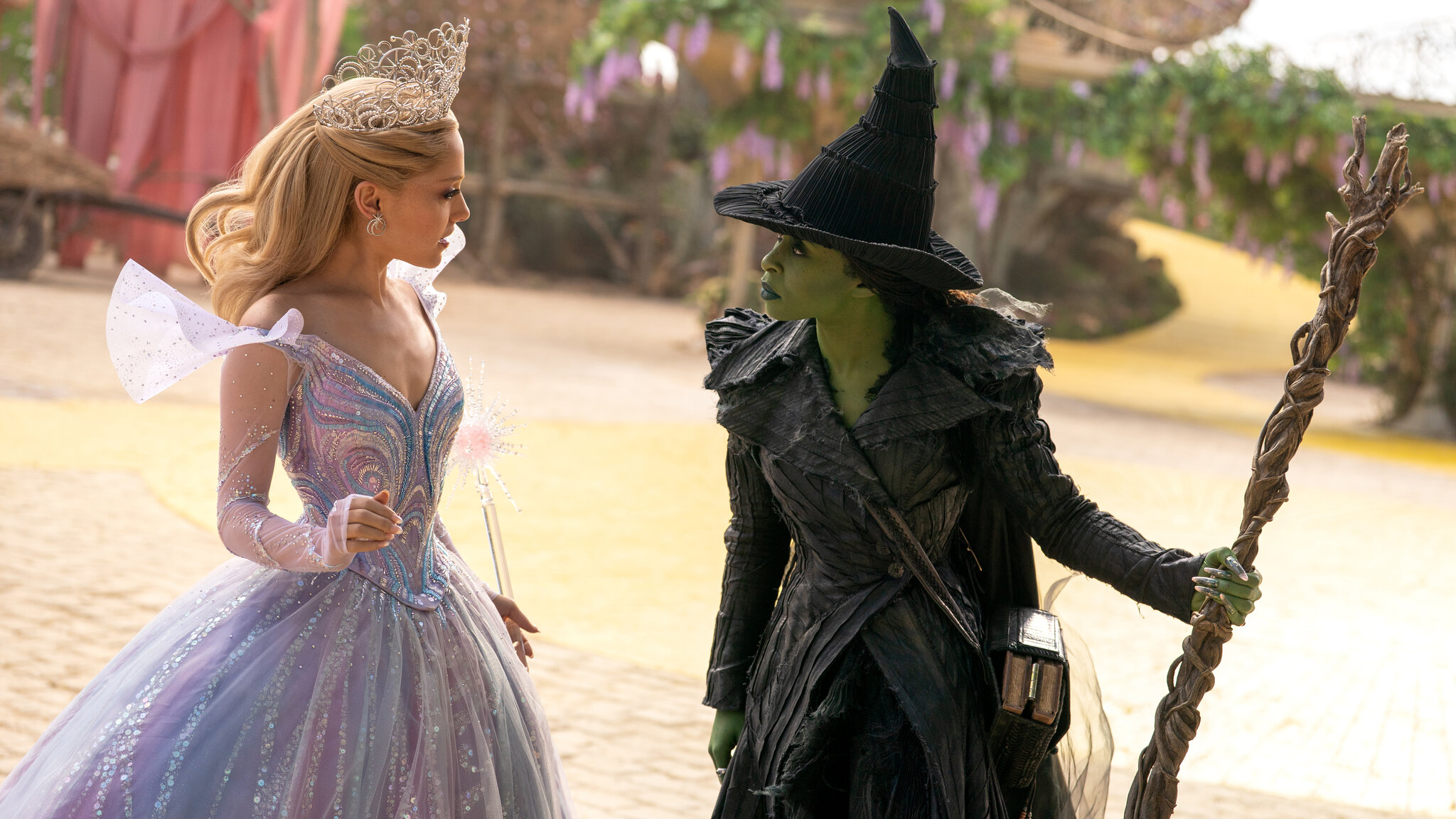
Wicked: For Good

Rating: 3 out of 5.

It’s a pretty flat experience. No need to beat around the bush. The two new songs (not in the stage production) written by the original musical composer Stephen Schwartz (“No Place Like Home” and “The Girl in the Bubble”) are pretty mid compared to the caliber of songs expected from this artist. The rest of the songs don’t really hit either, except “For Good” which director Jon M. Chu couldn’t have ruined if he tried. This entire underwhelming feeling very much speaks to the many directorial missteps from Chu. The film ends up being one more focused on getting to the end of a story, than continuing to build on the aspects of Wicked which connected so strongly with so many. Now, there will definitely be those who will enjoy Wicked: For Good, but the connection/experience won’t be anywhere close to how they felt coming out of the theaters in 2024. 

The story: Desperately attempting to liberate the enslaved animals of Oz, Elphaba (Cynthia Erivo) is now considered an enemy of the state, with Madame Morrible (Michelle Yeoh) proclaiming “she will kill us all” at every given opportunity. The anti-animal propaganda from the Wizard (Jeff Goldblum) is working as the animals who haven’t been captured yet are fleeing, while Elphaba attempts to get them to stay and fight back. Glinda (Ariana Grande) is struggling between becoming the beloved “good witch” she’s always wanted to be and coming to Elphaba’s defense. And Fiyero (Jonathan Bailey) who is set to marry Glinda, still longs for Elphaba.

The two leads continue to have undeniable chemistry and their performances are solid, although every supporting character seems to have been reduced and stripped of anything that made them interesting. The story itself continues to carry the same anti-fascist overtones and personally I did appreciate the darker tone this movie took when displaying sequences of persecution, bigotry and manufacturing consent. This is also a two hour and seventeen-minute movie and to Chu’s credit it never felt particularly long, even during the final hour and change as the storytelling unfortunately stumbles down the yellow brick road towards its finale.  Aside from the final song, this is the portion of the film which I would deem a bit of a clunky mess. While the story makes sense and the final hour plus does promise a spark with the arrival of the Dorothy character, this is also where the pacing begins to jump around wildly making the journey awkward, confusing, rushed with certain details glossed over and hollow during scenes written to elicit a strong reaction. It’s as if an invisible fast forward button was pressed in a frustratingly distracting way.

Final Thought: If watched together, parts one and two would be nearly five hours long. I’ve never seen the Broadway production, but I’ve read it’s under three. I would guess this is the underlying reason as to why Wicked: For Good feels the way it feels. Sure, there are bits and pieces here that work and it looks like hundreds of millions of dollars. And because this story is an extension of the first half, the tale is a good one; maybe only pissing off the “keep politics out of my movies” crowd. It’s clearly not a stand-alone film; God help anyone who tries to follow what’s happening here without having seen part one and 1939’s The Wizard of Oz. Again, I won’t be surprised if someone were to tell me they enjoyed this movie. It’s all just so tied to Wicked that it’s impossible not compare the two. And in doing so, this half of the story is mostly (and it pains me to say this) borderline forgettable.
Posted in Movie Review

Hit Man

Rating: 3.5 out of 5.

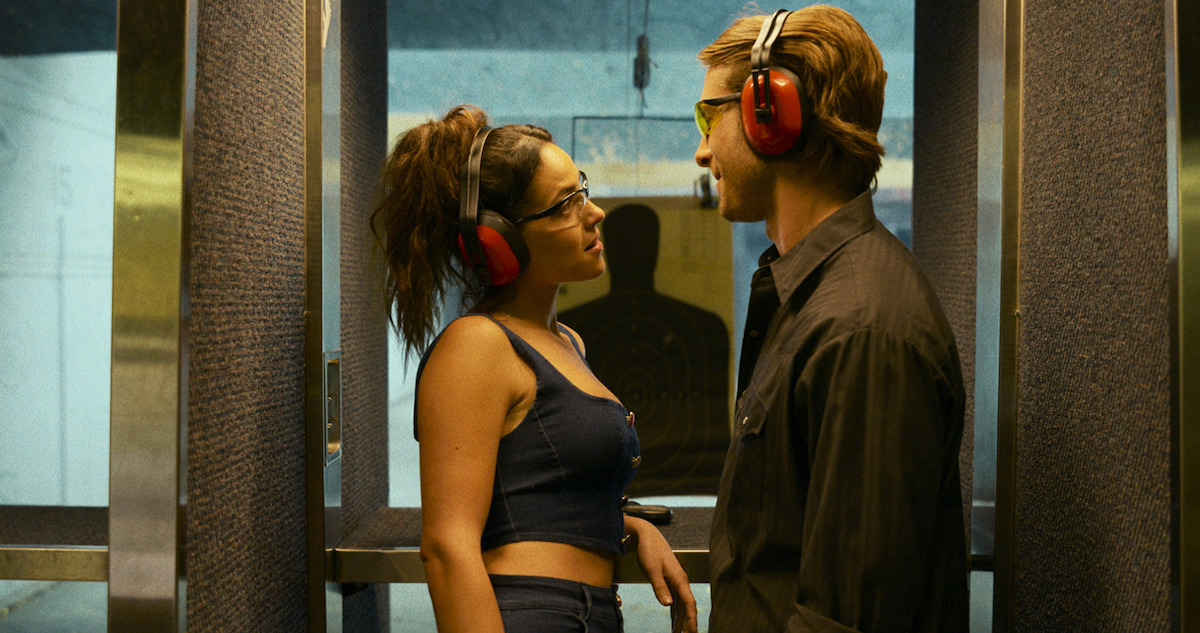
A Richard Linklater hit man movie goes like this: A stranger than fiction story about a college professor named Gary (Glen Powell), who also works part-time for his local police department, where he participates in sting operations. He’s suddenly promoted into the contract killer role, meaning, he must go undercover (with a wire and everything) posing as a hit man, meeting with clients/suspects who wish to pay for his services. His role is to get them to incriminate themselves. Gary is nervous at first, but soon discovers that he’s a natural at this fake hit man stuff. One of the aliases he goes by is named Ron. Gary himself is nerdy and forgettable, but Ron is confident and charismatic. One day (as tends to occur in romantic comedies) Gary/Ron meets an attractive woman named Madison (Adria Arjona) who he falls for. The problem is, Madison wants her husband killed.     

Directed by Richard Linklater, written by Linklater and Glen Powell, and based on the Texas Monthly article by Skip Hollandsworth loosely inspired by the life of Gary Johnson, much care is taken when balancing the romantic comedy aspects of this film, with some film noir, dark humor and a touch of philosophy. Linklater keeps things interesting.

Though the movie is about murderers and deals with some morbid and unsavory situations for a typical romantic comedy, it’s all kept fairly light. I’d describe the overall tone of this as playful, with a second half evolving into something with higher stakes. Culminating in a third act where Linklater brings everything together in one of the single most masterfully constructed scenes of 2024. Like I said, Linklater keeps things interesting.  

Powell and Arjona’s chemistry make their banter really enjoyable to watch and is the basis of a majority of the humorous moments. But this is clearly Powell’s movie, serving as both the narrator and a protagonist who goes through over half a dozen costume and character changes throughout the movie. And for this, he must be commended as he does a solid job in a role that may have traditionally been given to a more comedic performer. 

Final Thought: Linklater is obviously a brilliant filmmaker who can take any story and make it something that will engage the widest swath of audiences. It’s the Linklater touches which separate this movie from your basic romantic comedy, and more importantly creates a film experience that is undeniably fun and an overall enjoyable and downright positive viewing experience.

Follow me on X (Twitter) @moviesmarkus and Instagram @moviemarkus1 

Posted in Movie Review

Bad Boys: Ride or Die

Rating: 2.5 out of 5.

Full disclosure, I tried my best to have fun with this one given my aversion to copaganda. In the past, I’ve been accused of not being able to “just have fun” with movies like these. Can you imagine? I’m the most fun person you know.

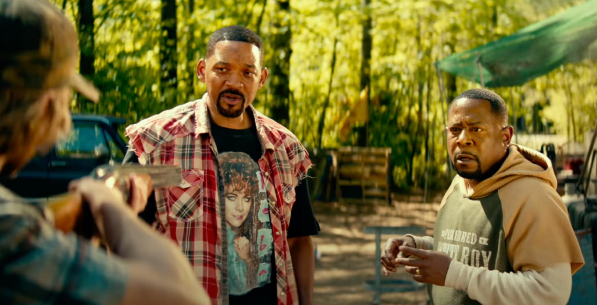
Synopsis: The deceased Captain Howard (Joe Pantoliano) is discovered to be linked to the Mexican cartel. Obviously, he has been framed since in this fictional Miami there are such things as “good cops”. Anyway, the infamous cop duo, Mike Lowrey (Will Smith) and Marcus Burnett (Martin Lawrence) vow to clear his name.

If that synopsis doesn’t interest you, then you’re in luck because the story doesn’t matter at all. The only part of the story that elevates the movie’s entertainment factor is that Marcus has a near death experience (a semi-recycled trope from the last installment) in a sequence reminiscent of the Ancestral Plane scene from Black Panther. He wakes up with a new lease on life. He tells Mike about a premonition he had and shares with him that they are soulmates connected throughout multiple life-times. Marcus also wakes up believing he cannot die. All of this allows for funnier dialogue and leads the duo into some comedic action-based skits.    

But basically, the overall success of Bad Boys: Ride or Die hinges on three things. The first being the relentless swirling and whirling and swooping camera movements. Adil El Arbi and Bilall Fallah are back to direct this installment and they follow a very recognizable Michael Bay template which fans should find comfort in.

The second being the score, which at this point if you are buying a ticket to the fourth chapter of the Bad Boys franchise, you probably enjoy and don’t find repetitive at all.

And lastly (and most importantly) if you enjoy seeing Smith and Lawrence do their buddy cop routine, then you’ll be into this movie. Period. Their chemistry continues to be undeniable. Smith as the shoot first, ask questions later cop and Lawrence as his wisecracking comic relief partner, just works. And I did laugh more than I imagined I would. 

With a cast that includes Rhea Seehorn (Better Call Saul), the female talent is disappointingly wasted here. And most of the action sequences translate on-screen as a bit old fashioned. That being said, I doubt people that came to see the new Bad Boys are thirsting for something modern, innovative, or even ramped up.

Final Thought: With a nearly two-hour runtime, the back and forth between Marcus and Mike is what kept me engaged throughout. As I previously mentioned, I laughed a good amount. But as Bad Boys: Ride or Die nears its climax and audiences are forced to focus almost entirely on a story they undoubtedly discarded around twenty minutes in, it’s easy to see this movie for what it is; an episodic Bad Boys movie without the twists, story development or character development that made Bad Boys for Life much more watchable.

Follow me on X (Twitter) @moviesmarkus and Instagram @moviesmarkus1

Posted in Movie Review

The American Society of Magical Negroes

Rating: 2.5 out of 5.

With a title like this, I just expected more.

A magical negro is a term used to define a Black supporting character who exists to selflessly support the white lead. This character is usually a highly agreeable, subservient and not at all intimidating Black friend, or an old wise Black man or a Black maid or a Black football player who Sandra Bullock takes care of.  The American Society of Magical Negroes presents itself as a satire where this concept is the main focus, which sounds like the set up to a brilliant film.

Immediately framed as Black Harry Potter (down to the whimsical music), with the idea that there’s a secret society of magical Black people who are assigned to make white people feel good about themselves. We are introduced to Aren (Justice Smith) an apologetic, people pleasing young Black man standing in a room full of white people. At one point Aren describes himself by stating, “I’m very nice. It’s like a flaw.”  Within the first five minutes of the movie, he is recruited into said American Society of Magical Negros by Roger (David Alan Grier) who touts himself as “basically a wizard”. Early on, Roger informs Aren that there is nothing more dangerous than an uncomfortable white person, since their discomfort always leads to violence. The idea being that the American Society’s entire mission statement surrounds the idea of self-preservation by way of making things more comfortable for white people and in turn saving the world. Alen joins, but is highly skeptical of their tactics, as he believes to be a magical negro means losing one’s self-worth. This becomes more apparent when Alen is paired with a white client who he must help keep happy by essentially kissing his ass. There is also a love story here that sees Aren falling for the love interest of his client, but it really only works to distract from the film’s satirical premise.    

The more I write about this movie the more frustrated I am with its wasted potential. Much of my viewing experience was spent questioning why things were falling so flat. The concept is undeniably intriguing and worthy of a feature length film. The acting is very much a high point. Smith does a great job of presenting the protagonist as not simply a sad sack, but an actual Black person traumatized by growing up in white society, which I found very relatable. There are also funny moments. The countless movie references are spot on. Grier is a comedic genius and delivers multiple times. When Nicole Byer (who plays the Headmistress) honors Crispus Attucks by saying “He took one for the team”, I legitimately laughed out loud. It should all work, but it just doesn’t. And for that, I blame writer/director Kobi Libii. The choices he makes throughout this project left me no choice. His choice to place the love story above the movie’s satirical framework. A script with a scattershot of comedic moments, opting not to use these jokes as a launching point to develop a film that holds more weight. Again, there are some really good one-liners in this. There are also entire sequences which are on the verge of profound. Conversations which broach white privilege, corporate co-opting of Black culture and the false idea of meritocracy. It all just needed to be expanded upon and incorporated into this story a lot better.     

There is a speech nearing the end made by Aren which makes a powerful statement about what it’s like to be Black in America. The problem is that it’s not enough when we are coming off of recent Black satire the caliber of American Fiction.  It only makes it more obvious how poorly executed The American Society of Magical Negroes is.

Final Thought: I know this film has been getting a ton of hate from conservatives online who haven’t watched the movie, but are quite triggered from the statements the trailer makes. And that’s yet another reason why I wish this was a better movie. I truly believe in better hands The American Society of Magical Negros is talked about with such reverence as something like Hollywood Shuffle. While the movie is nowhere near as bad as you may hear,it is a frustrating watch all the same.  A good satire should make you uncomfortable. This is a very tame film, less concerned with putting a mirror up to society, than with pleasing as wide of an audience as possible. The film itself proclaims being Black but palatable is a bad thing, but then proceeds to create a Black satire with most of the edges cut off.  What I got was Disney+, when what I needed was Paul Mooney.

Follow me on Twitter (X) @moviesmarkus and Instagram @moviesmarkus1

Posted in Movie Review

Origin

Rating: 4 out of 5.

Written and directed by Ava DuVernay, adapted from Isabel Wilkerson’s book Caste: The Origins of Our Discontent, Origin attempts to explain the caste system (to Americans).

Using the 2012 murder of Trayvon Martin as an entry point into this story, we follow Wilkerson (played by Aunjanue Ellis-Taylor), a Pulitzer Prize winning journalist asked to write an article in response to the murder. At first, she declines, but after suffering a series of family tragedies, Wilkerson sets out to write a novel where she hypothesizes that racism in the United States is simply an aspect of caste.  Her research/journey explores the Deep South during Jim Crow, the lead up to the Holocaust in Germany and the caste system in India. She attempts to tie the lives of some of the most persecuted people in history together through the idea that there is an imposed social hierarchy throughout the world, kept intact by violence, called the caste system.

Side Note: Origin, like many of DuVernay’s notable works,is a great introduction to history that has been shielded from many Americans (speaking as one). And this is where she shines, taking a historical event or idea and building an entire film exploring parts of the story not mentioned in text books. Her films give us a fuller history from the perspective of marginalized groups, rightfully documenting a more correct way of examining historical ideas we thought we knew.

The acting is excellent across the board. Especially from the supporting cast, including the likes of Jon Bernthal (who plays Wilkerson’s husband) and Niecy Nash (who plays Wilkerson’s sister), who are the clear standout performances of the movie. But it’s DuVernay’s direction that is the high point of this project. It is through well-constructed sequences that we are introduced to multiple stories of people living during watershed moments in history. These dramatizations succeed in invoking the necessary emotion needed to nail home the greater ideas at play. We witness a book burning in 1930’s Germany, a Black child told he can’t swim with his white friends because of Jim Crow laws and get a brief but powerful look at the history of the Dalit people in India (lead by Dalit scholar Suraj Yengde, who plays himself in the movie). DuVernay uses these and many other sequences to bring Wilkerson’s thesis to life.   

There is also an attempt to tie Wilkerson’s own story into these events that doesn’t quite work as well as I want to believe it should have. The ideas DuVernay portrays and Wilkerson speaks to, translate into something so thought provoking, that when we are asked time and again to reenter Wilkerson’s personal life and/or witness another personal anecdote, these scenes come off as a mix between flat and at times forced. Wilkerson’s story is full of tragedy, but I found myself unable to invest in it as much as I did the rest of the film; and her story is probably half of the two hour and twenty-one-minute runtime. In my opinion, this problem stems from adapting a book like this into a theatrical narrative instead of a documentary. But again, the number of balls DuVernay keeps in the air throughout this film is impressive. The fact that not every aspect was nailed, transforms Origin from a potentially great movie, into a very good movie.  

Final Thought: The ultimate goal of Origin is to bring people together. To unite in class struggle through knowledge of the systems we live in. And while I didn’t think it was as successful of a piece as 13th, Selma or When They See Us, this is clearly DuVernay’s most ambitious work due to its ideas of global connectivity, and really does deserve to be seen in a group or with your family. Origin is a communal movie. And for many it will be another step in breaking through the propaganda of our upbringing. And for that, I’m grateful Origin exists.    

Follow me @moviesmarkus on X(Twitter) and @moviesmarkus1 on Instagram.

Posted in Movie Review

Fallen Leaves

Rating: 3 out of 5.

Not surprisingly the new film from Aki Kaurismäki (the writer/director with the best name in cinema) is ending up on people’s favorites list. As the credits rolled, I sat there knowing for certain that Fallen Leaves holds a charm that becomes undeniable; “becomes” being the key word there. This charm is coupled with Kaursmäki’s ability to make mundane or uninteresting things, absolutely pop in a way that is nothing short of masterful.  

It’s a love story set in Helsinki following two depressed people, Holappa (Jussi Vatanen) and Ansa (Alma Pöysti). They initially lock eyes at a local karaoke bar, but a series of whimsical mishaps keeps them apart for a while. The story is fairly formulaic, as a way to highlight interactions we are supposed to invest in. Holappa and Ansa both have a best friend they interact with throughout. During these interactions we get a taste of the dry humor that overtakes the movie. In fact, all interactions in the film are dry. At times darkly dry, but always dry and always from stone-faced characters, abruptly starting and stopping conversations, be they meaningful or meandering.

Unfortunately, because of this dryness and my inability to connect with the characters until later into the movie, a majority of Fallen Leaves (around an hour of the hour and twenty-one-minute runtime)was a series of aspects I highly enjoyed, mixed with a singular aspect which kept me from connecting until the very end. Did I mention how dry this movie is?  

My fragmented viewing experience made this a stunted watch. At times while the characters were talking about nothing or making with the “funny”, my mind wandered, fixating on a vibrant red couch or the shade of green on a work uniform, or the lighting or the blocking of a particular scene. And so, I sat in the theater for the longest time deciding on whether to admire the scenery, the set design and other technical aspects which are done to perfection, or make another failed attempt at connecting with deadpan characters.

Final Thought: Eventually I was more than a little charmed, finding the final twenty minutes beautiful and profound in ways that made me immediately want to rewatch the entire thing. This epiphany came during a song preformed at the Karaoke bar by the Finnish group Maustetytöt. From this pop song all of the pieces came together for me. Expressed via nihilistic lyrics justifying why the characters act the way they do, while also extending a metaphorical hand of relatability from said characters to the audience. After this, my eyes suddenly became open to Kaurismäi’s entire concept of finding love in a sea of despair, as a universally shared emotion. I do look forward to a second viewing.

Follow me on X(Twitter) @moviesmarkus and Instagram @moviesmarkus1

Posted in Movie Review

El Conde

Rating: 3.5 out of 5.

Director Pablo Larraín and Netflix comes through with one of the more bizarre concepts of 2023. A black and white black-comedy about Augusto Pinochet, the former Chilean dictator, now depicted as a 250-year-old French-born vampire.

In this tale, Pinochet begins his life as Claude Pinoche (Jamie Vadell), growing up as a child-vampire in a Parisian orphanage, before becoming an officer under Louis XVI and witnessing the beheading of Marie Antoinette. After which he vows to fight against all revolutions. Faking his own death, Pinochet travels the world and as a soldier, fights against revolutions in Haiti, Russia and Algeria, before making his way to Chile, staging the infamous coup d’etat of 1973 and becoming dictator of Chile. Only to (later in life) fake his death once again and live out his existence on a sad little farm as a depressed old man, with his wife (Gloria Münchmeyer) and Russian assistant (Alfredo Castro). All of this is shown as a prelude, told through narration which continues throughout the movie, acting as exposition.

The rest of this film sees Pinochet whining about how unfairly he was treated/remembered by the Chilean people and going on about how he wishes he were dead. His spoiled children come for a visit to discuss their inheritance. And a nun (Paula Luchsinger) pretends to be an accountant in order to get close to the family and potentially kill Pinochet.

Though a good quarter of the movie is exposition, if you don’t know who Pinochet was or a little about Chilean history going in, then El Conde may likely become tedious. One could blame this on Pinochet not being as recognizable of a figure (to Americans) as the focuses of Larraín’s previous films, Princess Diana and Jackie Kennedy. This absurdist comedy about a South American fascist will garner even less overall interest from those not willing to brush up on their history, as the Chilean director helming this project doesn’t seem too concerned with producing a movie accessible to those audiences. Obviously, those who are interested in this section of history will be able to stick with it long enough to get the most out of this satirical material.

In Larraín’s own words, the tone should come off as a mixture of satire and farce. And he does nail that combo. The characters are bratty and narcissistic in ways that are easy to watch in a comedic setting. With stand out performances from Münchmeyer and Luchsinger, I’d go so far as to say El Conde mimics a Wes Anderson film, only bleaker.

The cinematography from Edward Lachman (Far from Heaven, Carol) has this dreamlike/other worldly feel throughout, really emphasizing the modern fable component. There are magical realism sequences which are visually transcendent and an entire mood onto themselves.

Final Thought: The analogy of Pinochet being a bloodthirsty eternal vampire and the fact that the echoes of his ultra-violent regime are still felt in Chile to this day, works very well. The film itself is gruesome, as it should be given that the violence on-screen represents one of the most sadistic men who ever lived. I’ll say it again and again, I’m very happy to see unflattering depictions of tyrants. But outside of just making fun of the man, this movie stands as a cautionary tale about the result of fascism being allowed to fester. Playing with the literal notion that murder keeps fascists young. As thoroughly impressed as I was with the majority of El Conde, the tale Larraín tells is not as interesting as the grand setup would have one believe.    

Follow me on X(Twitter) @moviesmarkus and @moviesmarkus1

Posted in Movie Review

May December

Rating: 2.5 out of 5.

Todd Haynes (Dark Waters, Carol), a director not known for shying away from heavy subject matter, takes on an infamous story ripped from 90’s tabloids. Well, sort of. The script itself is a fictionalized account of the Mary Kay Letourneau story and takes place twenty years after said events.

May December centers around an actress named Elizabeth (Natalie Portman) who is staying at the home of Gracie (Julianne Moore) and Joe (Charles Melton) to shadow them as research for her upcoming film. Twenty years prior, Gracie had been a teacher who had sex with Joe, who was in seventh grade (thirteen years old) at the time. She had gotten pregnant, gone to prison, given birth in prison and after she was released, Gracie and Joe were married.  

Gracie is portrayed as a passive aggressive, unapologetic and insecure woman in her mid-fifties. Joe is portrayed as a passive, obedient, man in his mid-thirties who has recently begun to question his past trauma. Elizabeth is the central character, portrayed as initially unassuming before forcibly building a connection and subsequent obsession with both Gracie and Joe. And though the entire process of mimicking and maybe humanizing a pedophile seems to disgust most everyone she comes into contact with, her reckless nature and a performance from Portman that deserves to be highlighted and dissected, does justify why an already captivating story is told through interactions with an interloper.

Up to this point in my review, May December sounds like an absolute must-see. And if it wasn’t for choices Haynes makes, it would’ve been. It is obvious that the story is compelling as is, but Haynes chooses to add an extra overdramatic layer of sauce onto an already sauced dish. This includes the addition of an aggressively melodramatic score, which is ridiculously distracting and treats the subject matter facetiously. Also, the addition of a sexual tension element between Elizabeth and certain characters came off as so completely forced that it all feels like a Brian De Palma or Paul Verhoeven film; which may not sound like a bad thing, but is very ill-fitting and non-complimentary in regards to the telling of this particular story. There are scenes in the back half of this movie which attempt some Ingmar Bergman that works a bit better. The film also keeps you intentionally at a distance. And maybe in Haynes’ mind this is for the best. Although, it comes off as very mismanaged, as we aren’t allowed to connect with anyone onscreen.

Final Thought: With a script written by Samy Burch that makes it a point to examine how an adult relationship built on childhood sexual assault affects not only those directly involved, but family, friends and offspring, this is a film with a strong foundation. Haynes is the single reason why May December isn’t as potent as it could’ve been. It’s that simple. Sometimes good directors inexplicably fumble.

Follow me on X(Twitter) @moviesmarkus and Instagram @moviesmarkus1  

Posted in Movie Review

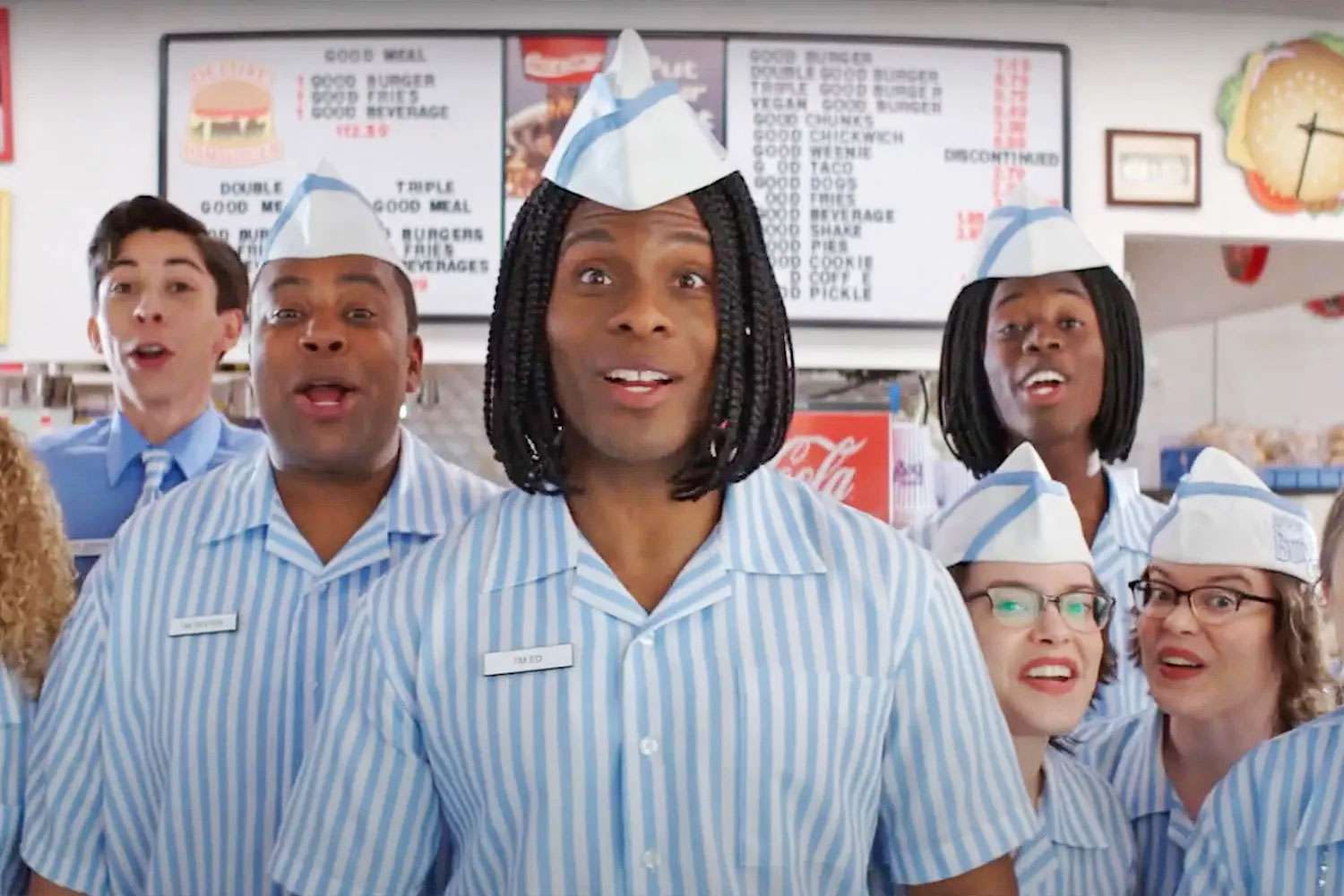
Good Burger 2

Rating: 1.5 out of 5.

Often times there are things I found funny as a child that I look back on and find absolutely cringe now. One of those things was my obsession with the duo of Kenan Thompson and Kel Mitchell.

My secret hope was the guys would take a darker or more subversive approach to the original material (like Barbie or Pee-Wee’s Big Adventure) seeing as their entire fan base are nearing their forties. But this is just the same old garbage, the same old characters but older, doing the same old derpy, screechy slapstick for kids. And what they do is such a specific form of 90’s Nickelodeon comedy, kids today may not only find it unfunny, but childish as well. 

A sequel to the 1997 movie, sees an adult Dex (Kenan Thompson) forced to get a job at his childhood place of employment, Good Burger, which is now somehow owned by his childhood friend and local idiot, Ed (Kel Mitchell). The main storyline centers around Dex being a manipulative money hungry entrepreneur trying to get to Ed’s money. This results in a representative from a huge corporation (played by Lil Rel Howery, who is given nothing to do here) tricking Ed into selling Good Burger.

There is an abundance of recognizable catch phrases, as well as cameos from Nickelodeon has-beens and other “stars”. There’s a gag where Ed has kids that all look and dress like him. And in the final thirty minutes Good Burger 2 does actively criticize automation and unfair labor practices. But don’t be fooled, none of that in any way makes this movie any less of an embarrassment. The production value is absolute trash. This movie looks and feels like it was put together in a week.

Final Thought: Good Burger 2 only works when these two childlike characters enter the real world and interact with “normal” people who seem visibly bothered by their existence.We still have to suffer through these obnoxious characters, but as least we are momentarily given the illusion of others suffering with us. This should’ve been an SNL skit. And even then, it would’ve been too long.  

Follow me on X (Twitter) @moviesmarkus and Instagram @moviesmarkus1

Posted in Movie Review

Napoleon

Rating: 4.5 out of 5.

I walked out of the theater absolutely fascinated with this film. Admittedly it’s kind of a messy acquired taste, but in retrospect that only reinforced my admiration for Napoleon as an ambitious work of genius.

Following the rise and fall of Napoleon Bonaparte (Joaquin Phoenix), director Ridley Scott and writer David Scarpa show an unflattering portrait of a man that would become Emperor of France and have a series of conflicts/wars named after him; the Napoleonic Wars (1803-1815). Historically regarded as a military genius who was able to build up France’s army into a feared conquering force. He was also known as a war monger, narcissist and a master propagandist. Scott chooses to tell the story of Napoleon as an insecure tyrant on and off the battlefield.

Most of the film is focused on his marriage to Joséphine de Beauharnais (Vanessa Kirby) and their abusive and codependent relationship. This relationship is in fact the heart of the movie. I would be remiss if I didn’t mention how epic the battle sequences were, but award worthy sequences are only secondary to the tale of Napoleon and Joséphine.  It’s all so captivating, no matter how deranged things get between them, due to Scott, Phoenix and Kirby’s willingness to take giant swings, resulting in performances which slightly invoke Elizabeth Taylor and Richard Burton in Who’s Afraid of Virginia Woolf? Blasphemy, I know.    

Scott definitely has a specific story he wants to tell here. Within the first forty minutes it is quite apparent where his loyalties lie. And once I understood the satirical framing at play, the unhinged feel of the film became something I never wanted to look away from. The fact that Scott seems more enamored with Napoleon’s toxic relationships with both his wife and the men he leads into battle, than simply retelling another 1000% historically accurate biopic snoozer, is honestly delicious. I sat in my seat and ate it all up. The more awkward, the better.

Final Thought: There is so much packed into this two-hour and thirty-eight-minute film and I wish it would have been longer. If for nothing else than to bring a bit more balance and connective tissue into this near perfect film. While we see Napoleon’s childish personality on full display, a historically relevant look at how close he was to his mother (a well-documented fact) would have added context. Napoleon was also known for being a charismatic leader. We see him lead, but barely get a taste of his charisma, as to why so many men were more than willing to die for him. So, despite the criticism this film is receiving (due to inaccuracies) and how it is very apparent while watching that there is a longer (arguably more perfect) version of Napoleon out there (Scott has already promised an over 4-hour long cut, which will be released on Apple TV+), the film that I saw should see award consideration.

Follow me on X (Twitter) @moviesmarkus and Instagram @moviesmarkus1